
Energy Supply Divergence: Capitalizing on Sector Rotation in a Gasoline-Driven Market
 Aime Summary
The U.S. gasoline market has become a battleground for sector rotation, with energy infrastructure and industrial equities outperforming automakers as refining constraints and geopolitical tailwinds reshape supply dynamics. From 2023 to 2025, gasoline production averaged 4.87 million barrels per day (bpd), a marginal decline despite record crude output of 13.41 million bpd. This disconnect, driven by refining bottlenecks and regional capacity limitations, has created a structural advantage for energy firms while exposing automakers to fuel volatility risks. Investors now face a critical decision: to overweight energy equipment and underweight traditional automotive plays, or to hedge against long-term energy transition risks.
Energy Sector: Export-Driven Resilience and Refining Margins
The U.S. refining sector has emerged as a defensive asset in a volatile market. With refineries operating at 90% of capacity in late 2025, energy majors like ChevronCVX-- (CVX) and Marathon PetroleumMPC-- (MPC) have capitalized on export surges to Europe, where Russia's reduced distillate supply created a demand vacuum. U.S. distillate exports hit 1.2 million bpd in 2025, allowing these firms to maintain refining margins despite domestic gasoline supply constraints.
The EIA projects that distillate inventory tightness will persist through 2026, reinforcing the export-driven model. Energy infrastructure and industrial equities—such as ExxonMobilXOM-- (XOM), ValeroVLO-- (VLO), Schlumberger (SLB), and Baker HughesBKR-- (BHI)—are well-positioned to benefit from increased refining activity and grid modernization. Historical data from the 2023 refinery boom shows energy and industrial firms outperforming the S&P 500 by 6–8% in subsequent quarters, a trend likely to continue as refining utilization rates rise.
Automotive Sector: Fuel Volatility and Margin Compression
Conversely, the automotive industry faces headwinds from gasoline and diesel price spikes. Diesel demand fell 4.9% in August 2025, exacerbating seasonal pressures on agricultural and heating sectors. Automakers like Ford (F) and General Motors (GM) have seen margins compress as diesel prices surged to $3.20 per gallon, increasing costs for diesel-powered logistics and production systems.
Even as automakers transition to electric vehicles (EVs), they remain indirectly exposed to energy markets. EV production relies on energy grids and battery supply chains that are still partially oil-dependent. For example, lithium and cobalt mining operations require significant energy inputs, linking EV manufacturing to fossil fuel price swings. This interdependence makes traditional automakers vulnerable to gasoline volatility, even as they pivot toward electrification.
Regional Diversification and Strategic Hedging
Structural refining constraints highlight the importance of regional diversification. Areas like Idaho, with limited refining capacity, face heightened exposure to localized price shocks. Monitoring gasoline stock levels and refinery utilization rates can serve as early warning indicators for volatility.
For investors, a balanced approach is essential. While energy infrastructure offers short-term resilience, long-term energy transition risks necessitate hedging. Exposure to renewable energy ETFs like ICLN provides a counterbalance, aligning with decarbonization trends while mitigating fossil fuel dependency.
Investment Thesis: Energy Equipment Bullish, Automotive Bearish
The data underscores a clear sector rotation: energy firms with refining capabilities and export access are outperforming automakers. Key metrics to watch include:
- Energy Equipment: Refining margins, distillate export volumes, and EIA inventory reports.
- Automotive: Diesel price trends, operating margins, and EV production costs.
Actionable Steps for Investors:
1. Overweight Energy Infrastructure: Prioritize equities with refining capacity and export exposure (e.g., CVXCVX--, MPCMPC--, XOM).
2. Underweight Traditional Automakers: Avoid firms with high diesel dependency (e.g., F, GM) until EV supply chains decouple from fossil fuels.
3. Hedge with Renewables: Allocate to ICLN or individual solar/wind firms to balance energy transition risks.
The U.S. gasoline market's structural shifts—driven by refining outages, geopolitical dynamics, and export surges—have created a fertile ground for sector rotation. By aligning portfolios with energy supply trends, investors can capitalize on near-term gains while navigating the long-term transition to cleaner energy.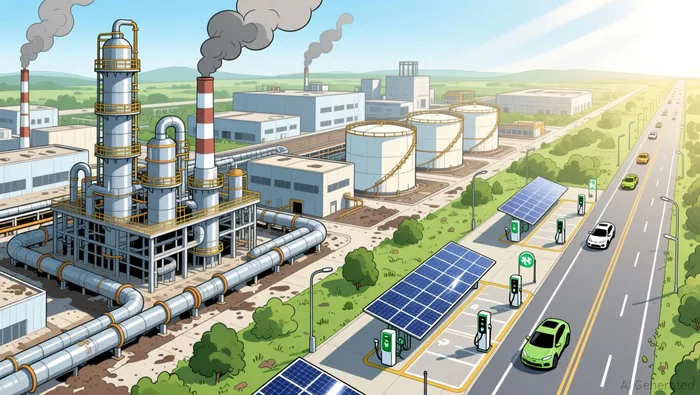

Stay ahead of the market.
Get curated U.S. market news, insights and key dates delivered to your inbox.
AInvest
PRO
AInvest
PRO



Comments
No comments yet