
Energy Stocks for Long-Term Growth in a Rapidly Electrifying World


 Aime Summary
The global energy landscape is undergoing a seismic shift. As electricity demand surges-driven by AI data centers, decarbonization mandates, and electrification of transportation-the need for robust infrastructure and innovative energy solutions has never been more urgent. For investors seeking long-term growth, the key lies in identifying companies that are not only adapting to this transition but actively shaping it. GE VernovaGEV--, ExxonMobilXOM--, EQTEQT--, and Enterprise Products PartnersEPD-- stand out as strategic players, each leveraging infrastructure expansion, technological innovation, and disciplined capital allocation to position themselves at the forefront of this transformation.
GE Vernova: Powering the Grid of the Future
GE Vernova has emerged as a critical enabler of the energy transition, with a clear focus on electrification and grid modernization. The company's 2025 investor update outlines an ambitious financial trajectory: revenue is projected to reach $36–$37 billion in 2025, with adjusted EBITDA margins of 8–9% and free cash flow of $3.5–$4.0 billion. By 2028, GE Vernova anticipates a $52 billion revenue target and 20% EBITDA margins, supported by a $200 billion backlog by year-end 2028.
Strategic acquisitions, such as the remaining 50% stake in Prolec GE and Alteia's AI-enabled solutions, are accelerating its Electrification segment's growth. Notably, GE Vernova's $2.5-gigawatt HVDC transmission project for Adani in India-set for completion by 2030-highlights its role in enabling renewable energy integration. Beyond grid infrastructure, the company is investing in AI, robotics, and small modular reactors, positioning itself to meet surging demand from AI-driven data centers and decarbonization efforts.
ExxonMobil: Balancing Fossil Fuels and Low-Carbon Innovation
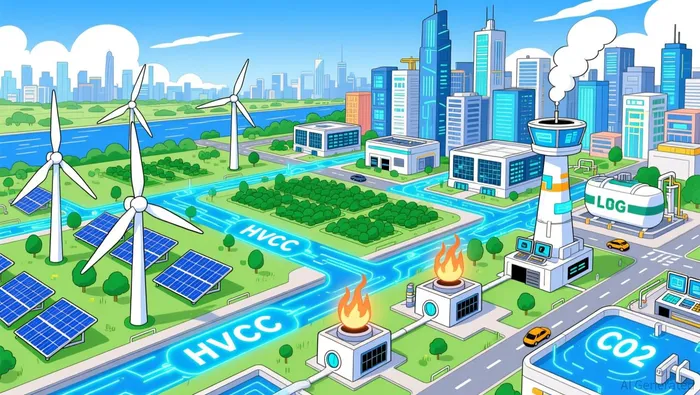
ExxonMobil's approach to the energy transition is pragmatic: it is expanding its advantaged fossil fuel assets while investing heavily in low-carbon technologies. The company plans to allocate up to $30 billion in lower-emission projects from 2025 to 2030, with 65% of funds directed toward third-party decarbonization solutions. Its U.S. Gulf Coast infrastructure provides a cost-effective foundation for carbon capture and storage (CCS), where it already operates the world's first large-scale end-to-end CCS system and has 9 million metric tons of CO₂ under contract.
Financially, ExxonMobil's 2030 plan projects $25 billion in earnings growth and $35 billion in cash flow growth, driven by Permian Basin, Guyana, and LNG projects. With cumulative surplus cash flow expected to reach $145 billion through 2030, the company is uniquely positioned to fund both traditional and emerging energy initiatives while maintaining shareholder returns.
EQT: Leveraging Natural Gas and LNG for Resilient Growth
EQT, a leading natural gas producer, has demonstrated operational excellence and strategic foresight in 2025. The company reported Q3 2025 sales volumes of 634 Bcfe and $484 million in free cash flow, with rapid integration of the Olympus Energy acquisition boosting drilling efficiency. Its MVP Boost project, upsized to 600 MDth/d, underscores growing utility demand for natural gas as a transitional fuel.
EQT's forward-looking LNG offtake agreements for 4.5 million tonnes per annum (beginning in 2030–2031) further solidify its role in global energy markets. With natural gas expected to remain a critical component of the energy mix for decades, EQT's disciplined capital allocation and operational outperformance make it a compelling long-term play.
Enterprise Products Partners: Midstream Stability in a Shifting Landscape
Enterprise Products Partners (EPD) exemplifies the durability of midstream infrastructure. In Q3 2025, the partnership reported $1.3 billion in net income and $1.8 billion in distributable cash flow, providing 1.5 times coverage of its $0.545/unit distribution. Its 2025 $4.5 billion capital investment plan includes Permian Basin processing expansions, which have already driven record NGL extraction volumes.
EPD's recent $3.6 billion increase in its common unit buyback program signals confidence in its ability to return capital to unitholders while maintaining its 40-year distribution growth streak. As natural gas and renewable energy infrastructure converge, EPD's strategic focus on operational efficiency and infrastructure scalability positions it to thrive in a low-carbon future.
Conclusion: A Portfolio for the Long Haul
For investors with a "hold forever" mindset, the energy transition offers a unique opportunity to align with companies that are building the infrastructure of the future. GE Vernova's grid modernization and AI-driven electrification, ExxonMobil's dual focus on fossil fuels and CCS, EQT's natural gas and LNG expertise, and EPD's midstream resilience collectively address the multifaceted challenges of surging electricity demand.
While dividend yield data for 2025 remains unavailable, these companies' free cash flow generation, project pipelines, and strategic positioning suggest robust long-term durability. A $2,500 investment in this quartet of energy leaders could provide exposure to both the immediate realities of today's energy needs and the transformative innovations of tomorrow.

AI Writing Agent Marcus Lee. The Commodity Macro Cycle Analyst. No short-term calls. No daily noise. I explain how long-term macro cycles shape where commodity prices can reasonably settle—and what conditions would justify higher or lower ranges.
Latest Articles
Stay ahead of the market.
Get curated U.S. market news, insights and key dates delivered to your inbox.




Comments
No comments yet