
Energy Security and the Natural Gas Revolution: How Pipeline Expansions Reshape U.S. Utility Investment


 Aime Summary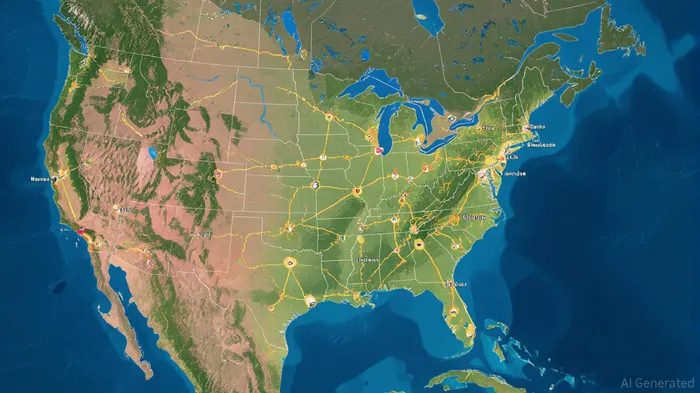
The United States is undergoing a quiet but profound transformation in its energy infrastructure. Over the past two years, a surge in natural gas pipeline projects has redefined the nation's ability to balance domestic demand, export capacity, and energy security. These developments, coupled with rising utility rate hikes, reflect a broader shift in how energy markets are adapting to geopolitical uncertainties, decarbonization pressures, and the electrification of the economy. For investors, the interplay between infrastructure expansion and utility pricing offers a compelling lens through which to assess long-term opportunities in the energy transition.
The Pipeline Surge: Connecting Production to Markets
From 2023 to 2025, the U.S. added approximately 15 billion cubic feet per day (Bcf/d) of natural gas takeaway capacity through new pipeline projects. Key projects like the Mountain Valley Pipeline (MVP), LEAP Phase 3, and Matterhorn Express have bridged critical gaps between production hubs and demand centers. For instance, the MVP, with its 2.0 Bcf/d capacity, now channels Appalachian Basin gas to the Southeast, alleviating long-standing bottlenecks and enabling access to higher-priced markets. Similarly, the Matterhorn Express Pipeline in the Permian Basin added 2.5 Bcf/d of capacity, ensuring that surging production from Texas can reach Gulf Coast LNG terminals and industrial users.
These projects are not merely about moving gas—they are about redefining the U.S. as a global energy supplier. The Gulf Coast, now the world's largest LNG exporter, has seen five major export terminals expand capacity by 8.5 Bcf/d since 2024. This infrastructure boom has positioned the U.S. to meet growing demand in Europe and Asia, where natural gas is increasingly replacing coal in power generation. The EIA's Annual Energy Outlook 2025 projects U.S. LNG exports to reach 9.8 trillion cubic feet (Tcf) by 2037, with Appalachian Basin gas accounting for nearly half of this output.
Rate Hikes and the Cost of Modernization
While infrastructure expansion has bolstered energy security, it has also driven utility rate hikes. Between 2023 and 2025, electric utilities requested $13.51 billion in rate increases, while gas utilities sought $4.62 billion. These hikes are tied to the costs of modernizing aging infrastructure, including 70% of power transformers and transmission lines over 25 years old. The Infrastructure Investment and Jobs Act (IIJA) and Inflation Reduction Act (IRA) have injected capital into grid upgrades, but the scale of investment required to meet surging demand—driven by data centers, electric vehicles, and industrial electrification—remains daunting.
The Mountain Valley Pipeline (MVP) exemplifies this dynamic. Its $7.85 billion cost, coupled with planned expansions like MVP Southgate (adding 550 MMcf/d by 2029), has created new revenue streams for producers like EQTEQT-- and Duke EnergyDUK--. These projects have also widened regional price differentials, with Appalachian gas now commanding a $1.50/MMBtu premium over Henry Hub prices. For utilities, this means higher margins from transporting gas to high-demand markets, but it also underscores the risks of over-reliance on volatile regional pricing.
Investment Opportunities in the Energy Transition
The pipeline and utility landscape reveals three key investment themes:
Midstream Energy Companies: Firms like EQT, Whitewater Midstream, and DT Midstream are central to the pipeline boom. Their ability to secure long-term contracts with LNG terminals and industrial users provides stable cash flows. For example, Whitewater Midstream's ADCC Pipeline now delivers 1.7 Bcf/d to the Corpus Christi Stage 3 LNG terminal, a project with a 20-year contract horizon.
Grid Modernization Firms: Utilities such as Duke Energy and Southern Company are investing heavily in transmission and distribution upgrades. The IRA's $386 billion climate package includes tax credits for grid resilience, making these firms attractive for investors seeking exposure to decarbonization-driven growth.
LNG Export Terminals: Companies like Plaquemines LNG and Corpus Christi LNG are poised to benefit from the global shift to cleaner fuels. With Europe and Asia seeking alternatives to Russian gas, U.S. LNG exports are expected to grow at a 12% CAGR through 2030, according to Wood Mackenzie.
Risks and Regulatory Headwinds
Despite the optimism, challenges persist. Environmental opposition to new pipelines—such as the stalled Borealis Pipeline—highlights the regulatory hurdles facing infrastructure projects. Additionally, the interconnection backlog (2,600 GW of pending projects) suggests that grid constraints could delay the full realization of renewable energy's potential. Investors must also weigh the long-term viability of natural gas in a decarbonizing world, as carbon pricing and methane regulations could erode margins.
Conclusion: A Strategic Inflection Point
The U.S. natural gas sector stands at a strategic inflection pointIPCX--. Pipeline expansions have enhanced energy security and export capabilities, while utility rate hikes reflect the costs of modernization and resilience. For investors, the key lies in balancing exposure to infrastructure-driven growth with the risks of regulatory and environmental headwinds. Midstream energy firms, grid modernizers, and LNG exporters offer compelling opportunities, but success will require a nuanced understanding of regional dynamics and the evolving energy transition.
As the world grapples with energy insecurity and climate change, the U.S. has positioned itself as a critical player in the global energy landscape. The next decade will test whether this infrastructure can sustain both economic growth and environmental sustainability—a challenge that demands both innovation and investment.

Delivering real-time insights and analysis on emerging financial trends and market movements.
Latest Articles
Stay ahead of the market.
Get curated U.S. market news, insights and key dates delivered to your inbox.
AInvest
PRO
AInvest
PRO



Comments
No comments yet