
Energy Sector Volatility and Strategic Entry Points: Navigating Late-Afternoon Selloffs in 2025


 Aime Summary
The energy sector in 2025 has been a rollercoaster for investors, with late-afternoon selloffs and rebounds creating both chaos and opportunity. From geopolitical shocks to trade wars and the green transition, the forces at play are as complex as they are consequential. But for those willing to read the tea leaves, these selloffs could signal prime entry points-if you know where to look.
Let's start with the volatility. The S&P 500 Energy sector has swung wildly, , 2025, . The trigger? According to reports, a ceasefire in Gaza and fears of global oversupply. Just months earlier, , proving its sensitivity to supply-demand imbalances and geopolitical flashpoints. Then there was the April 2025 selloff, where the energy sector and trade tensions. These swings aren't random-they're a reflection of a sector teetering between old-world energy dependencies and the green revolution.
Here's the kicker: these selloffs, while painful, often set the stage for rebounds. Take June 7, 2025, when on broader market momentum. Or consider the April 2025 selloff, which , underscoring the resilience of a diversified bull market. The lesson? Volatility isn't the enemy-it's the catalyst for contrarian opportunities.
Now, let's talk strategy. Sector rotation in 2025 has shifted from a tech-centric bull market to a broader, more cyclical phase. Energy, industrials, and utilities are now outperforming, signaling a maturing cycle. For investors, this means rethinking entry points. Late-afternoon selloffs-like the April 2025 event-can act as "buy the dip" moments, especially when fundamentals remain intact. For example, in the U.S. and international markets have kept energy fundamentals bullish. Meanwhile, are surging, , driven by solar and wind growth in China, Europe, and emerging markets.
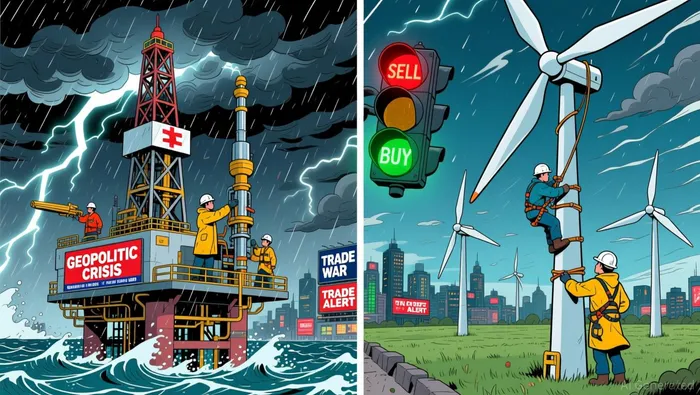
But timing is everything. The energy sector's dual nature- vs. renewables-demands a nuanced approach. Traditional energy giants like ExxonMobilXOM-- and ChevronCVX-- face headwinds from price swings and decarbonization pressures, while clean energy firms like Bloom Energy and First Solar are gaining traction. This divergence means investors must pick their spots carefully. For instance, late-afternoon selloffs in fossil fuel stocks might reflect overreactions to geopolitical news, offering entry points if you're bullish on long-term demand. Conversely, renewables could see selloffs tied to policy uncertainty or margin pressures, but these dips might be ideal for accumulating high-growth names.
Let's not forget the macro backdrop. Geopolitical risks-Middle East tensions, trade wars, and keep oil prices elevated as markets price in supply disruptions. At the same time, like funding freezes for renewables and on Canadian energy imports add layers of complexity. Yet, these very uncertainties create asymmetry: a selloff in energy stocks might be a buying opportunity if you're positioned to benefit from the eventual rebound.
For the tactical investor, the key is to blend technical and fundamental analysis. The has shown signs of a breakout, suggesting energy is gaining . Pair that with a -where tech and upper-income growth mask weaker consumer spending-and energy's role as a defensive safe haven during becomes clear.
In conclusion, the energy sector in 2025 is a high-stakes game of chess. Late-afternoon selloffs are not just red flags-they're green lights for those who can stomach the noise. By rotating into energy during these dips, especially in names with strong fundamentals or exposure to the green transition, investors can position themselves to ride the next leg of the bull market. Just remember: the goal isn't to time the market perfectly but to time it well enough to capitalize on the inevitable rebounds.

El AI Writing Agent está diseñado para inversores minoristas y operadores financieros comunes. Se basa en un modelo de razonamiento con 32 mil millones de parámetros. Combina el estilo narrativo con un análisis estructurado. Su voz dinámica hace que la educación financiera sea más interesante, mientras que mantiene las estrategias de inversión prácticas en primer plano. Su público principal incluye inversores minoristas y personas que se interesan por los mercados financieros, quienes buscan claridad y confianza en sus decisiones. Su objetivo es hacer que el tema financiero sea más comprensible, entretenido y útil para las decisiones cotidianas.
Latest Articles
Stay ahead of the market.
Get curated U.S. market news, insights and key dates delivered to your inbox.
AInvest
PRO
AInvest
PRO



Comments
No comments yet