
Energy Sector's Role in Powering the AI Revolution: Strategic Positioning of Independent Power Producers (IPPs) in a High-Demand, Low-Carbon Future
 Aime Summary
The AI revolution is reshaping industries, but its exponential growth hinges on one critical factor: energy. As artificial intelligence (AI) becomes the backbone of modern innovation, the energy sector faces a dual challenge—meeting surging demand while adhering to decarbonization goals. Independent Power Producers (IPPs) are emerging as pivotal players in this transition, leveraging renewable energy infrastructure to power AI-driven ecosystems. This article explores how IPPs are strategically positioned to address the energy needs of the AI era and why investors should consider their role in the low-carbon future.
The AI Energy Conundrum: A Surge in Demand
Global AI energy consumption is projected to grow at an unprecedented rate. By 2030, data centers alone could account for 3% of global electricity demand, up from 1.5% in 2024. Accelerated servers, driven by AI workloads, are expected to consume 30% of the net increase in data center electricity use between 2024 and 2030. This growth is concentrated in the U.S., China, and Europe, where data centers are expanding at a 15% annual rate—four times faster than other sectors.
The implications are clear: AI's energy footprint is no longer a niche concern. For instance, the U.S. is projected to see data center electricity consumption rise to 1,200 kWh per capita by 2030, equivalent to 10% of a household's annual usage. Meanwhile, the AI in Energy Market is booming, with the global market size expected to grow from $11.30 billion in 2024 to $54.83 billion by 2030 at a 30.2% CAGR. This surge is driven by AI's role in optimizing renewable energy grids, predictive maintenance, and demand forecasting.
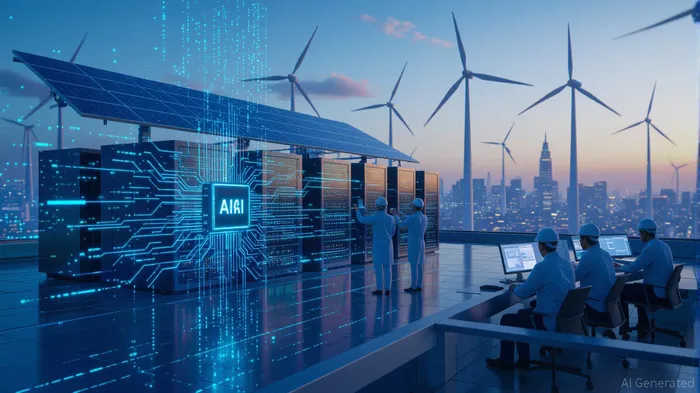
IPPs: The Unsung Heroes of the AI Energy Transition
Independent Power Producers (IPPs) are uniquely positioned to bridge the gap between AI's energy demands and sustainability goals. Companies like Greenbacker Capital are investing in scalable, low-carbon infrastructure—solar, wind, and energy storage—to meet the needs of data centers, EVs, and smart grids. Their strategy hinges on three pillars:
- Cost-Effective Renewables: Solar and wind energy are now the cheapest sources of electricity in most regions. As AI-driven demand grows, IPPs can deploy these technologies faster and cheaper than fossil fuel alternatives.
- Grid Resilience: AI's high-consumption applications (e.g., cloud computing, cryptocurrency) require reliable power. IPPs are building decentralized energy systems and energy storage solutions to ensure uninterrupted supply.
- Long-Term Contracts: Corporate PPAs with tech firms and energy-intensive industries provide stable cash flows for IPPs. These agreements align with corporate sustainability goals and reduce financial risk.
Greenbacker's approach exemplifies this model. By acquiring and operating clean energy assets, the company ensures a steady supply of renewable power while contributing to decarbonization. Its investments in transmission infrastructure and virtual PPAs further position it to capitalize on AI-driven energy demand.
Strategic Opportunities and Risks
The energy transition is not without challenges. Supply chain bottlenecks, integration with legacy infrastructure, and policy uncertainties could slow progress. However, the High Efficiency Case—where energy efficiency gains reduce consumption by 15%—and the Lift-Off Case—projecting 45% higher demand by 2035—highlight the importance of innovation.
For investors, the key lies in identifying IPPs with diversified portfolios and strong partnerships. The Asia Pacific region, which accounts for 40.93% of AI in Energy Market revenue in 2024, offers significant growth potential. China and India's rapid adoption of AI for renewable energy management underscores this trend.
Investment Advice: Where to Allocate Capital
- Renewable IPPs with AI Partnerships: Prioritize companies like Greenbacker that have long-term PPAs with tech giants or energy-intensive firms. These contracts provide predictable revenue streams.
- Energy Storage and Transmission: As AI demand spikes, grid modernization will be critical. Invest in IPPs developing battery storage or smart grid technologies.
- Policy-Driven Markets: Regions with aggressive decarbonization targets (e.g., EU, U.S. states like California) offer regulatory tailwinds for IPPs.
Conclusion: Powering the Future, Sustainably
The AI revolution is energy-intensive, but it doesn't have to come at the cost of the planet. IPPs are leading the charge, transforming renewable energy into a scalable solution for AI's insatiable appetite for power. For investors, the opportunity lies in supporting these innovators—those who can deliver both energy security and sustainability. As the world races toward a low-carbon future, the strategic positioning of IPPs will be the linchpin of progress.
By aligning with IPPs that prioritize innovation and resilience, investors can not only capitalize on the AI-driven energy boom but also contribute to a cleaner, more sustainable world. The future is powered by AI—and it's powered by renewables.

Stay ahead of the market.
Get curated U.S. market news, insights and key dates delivered to your inbox.


AInvest
PRO
AInvest
PRO



Comments
No comments yet