
Energy Sector at a Crossroads: Navigating Heating Oil Surpluses and Consumer Staples as a Hedge
 Aime Summary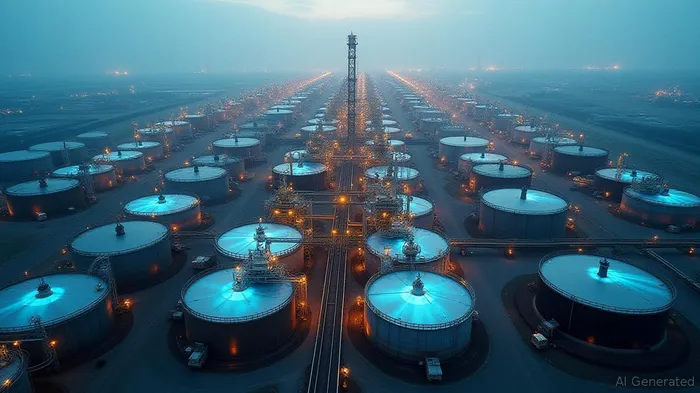
The U.S. energy sector is facing a pivotal moment as the latest EIA heating oil stockpiles data for July 2025 paints a stark picture of supply gluts and weak demand. With distillate inventories surging by 3.6 million barrels—the largest weekly increase in nearly a year—market participants are grappling with a fragile equilibrium. Heating oil prices have plummeted toward $2.4 per gallon, pressured by oversupply and a summer lull in demand. Meanwhile, crude oil stocks rose by 7.7 million barrels, driven by refineries operating at full capacity to convert oil into fuel. This confluence of factors has created a perfect storm for energy investors, while consumer staples emerge as an unexpected refuge.
The Energy Sector's Fragile Balancing Act
The July data underscores a critical imbalance: supply is outpacing demand at a time when seasonal factors and macroeconomic caution are already constraining consumption. The four-week average of distillate product supplied stands at 3.6 million barrels per day—the weakest since spring 2024. This weakness is compounded by geopolitical tailwinds, such as potential sanctions relief for Venezuela and Iran, which could flood global markets with hundreds of thousands of additional barrels.
For energy firms, this environment poses dual risks. Refiners, already burdened by low margins, face further pressure as crude costs remain sticky while refined product prices collapse. E&P companies, meanwhile, must navigate a cost-of-carry problem: storing excess inventory becomes increasingly expensive as prices trend downward. The S&P 500 Energy Index, which has seen a 12% decline year-to-date, reflects these headwinds.
The sector's vulnerability is further amplified by the lingering effects of the global energy crisis. Studies on energy price uncertainty (ENPU) show that volatility in energy markets is driven less by price levels and more by the uncertainty surrounding future supply and demand. This "Overall Impact of Uncertainty" (OIU) measure highlights how net energy exporters and geographically exposed markets are disproportionately affected by shocks. For U.S. energy firms, this means that even a partial normalization of global crude flows could trigger a sharp repricing of assets.
Consumer Staples: A Defensive Anchor
In contrast to the energy sector's turbulence, the consumer staples sector has demonstrated resilience. While the EIA data does not directly address food commodity markets, historical analysis shows that unanticipated food production shocks have a larger macroeconomic impact than equivalent oil price drops. This suggests that consumer staples, which include food and household goods, are less susceptible to short-term energy-driven volatility.
Investors have increasingly turned to consumer staples as a hedge against energy sector underperformance. The S&P 500 Consumer Staples Index has gained 5% year-to-date, outperforming the energy sector's losses. This divergence is not coincidental. Consumer staples benefit from inelastic demand—households will continue to buy essentials regardless of energy price swings. Moreover, the sector's exposure to food and beverage production creates a natural diversification against energy-linked inflation.
The interplay between energy and consumer staples is further complicated by the indirect effects of rising food prices. Studies indicate that a 1% increase in food commodity prices can reduce durable consumption and investment by 0.25% to 0.4%. This dynamic suggests that while energy prices directly impact corporate earnings, consumer staples act as a buffer against broader economic ripple effects.
Strategic Positioning for the New Normal
For investors, the July EIA data serves as a wake-up call to reassess portfolio allocations. Energy stocks, while attractive at discounted valuations, require a disciplined approach. Refiners and E&P companies with strong cash reserves and low leverage are better positioned to weather the current downturn. However, speculative bets on recovery should be tempered by the reality that oversupply risks could persist into 2026.
Consumer staples, on the other hand, offer a compelling counterbalance. Companies with robust pricing power and diversified product portfolios—such as those in packaged foods or household goods—are likely to outperform in an environment of economic uncertainty. The sector's low beta (historically around 0.3) further enhances its appeal for risk-averse investors.
A balanced strategy would involve a 40/60 tilt between energy and consumer staples, with a focus on energy stocks with defensive characteristics (e.g., midstream MLPs) and consumer staples with strong cash flow generation.
The Road Ahead
The EIA's heating oil stockpiles data is more than a weekly report—it is a barometer of systemic risks in the energy sector. As supply shocks continue to ripple through markets, investors must remain vigilant. Energy firms need to prioritize cost discipline and inventory management, while consumer staples offer a stable anchor in a volatile landscape.
The coming months will test the resilience of both sectors. For energy, the key question is whether demand will rebound with the heating season or remain subdued due to broader economic headwinds. For consumer staples, the challenge lies in maintaining margins amid potential inflationary pressures from energy-linked costs.
In this environment, agility and diversification are paramountPARA--. By hedging energy sector exposure with defensive consumer staples, investors can navigate the uncertainties of 2025 while positioning for long-term growth.

Stay ahead of the market.
Get curated U.S. market news, insights and key dates delivered to your inbox.


AInvest
PRO
AInvest
PRO



Comments
No comments yet