
Energy Resilience and Microgrid Opportunities Post-Fairport Power Outage


 Aime Summary
The December 2025 power outage in Fairport, New York, which left the entire community without electricity for an unspecified duration, underscores a growing vulnerability in the U.S. energy grid. While the exact cause of the outage remains unconfirmed,
historical patterns in the Rochester area point to severe winter weather and aging infrastructure as recurring culprits. This event, though localized, reflects a national trend: power outages are becoming more frequent and costly, with
the U.S. annually from storm-related disruptions alone. For investors, the crisis presents a compelling case for rethinking energy infrastructure through decentralized solutions like microgrids.
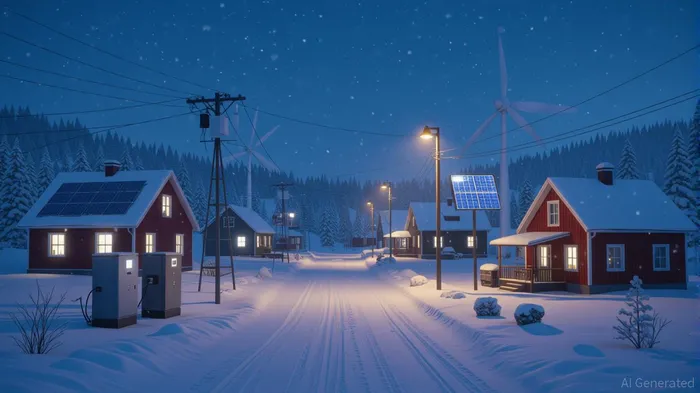
The Cost of Grid Vulnerability
The Fairport outage aligns with broader systemic challenges. According to the U.S. Energy Information Administration (EIA),
per customer-nearly double the previous decade's average. For businesses, the stakes are high:
in 2025, with 25% reporting financial losses. Beyond economic impacts, prolonged outages pose public health risks, particularly in regions with high social vulnerability.
The Fairport Electric Department, , now faces mounting pressure to adapt to a climate of escalating weather extremes and aging equipment.
Microgrids as a Resilience Strategy
Microgrids-localized grids that can disconnect from the main grid and operate independently-are emerging as a critical solution.
A 2025 report by the Department of Energy warns that without intervention, , threatening AI-driven data centers, manufacturing, and economic stability. Microgrids mitigate this risk by providing backup power during disruptions. For instance,
a campus microgrid in Louisiana demonstrated how real-time simulations and historical weather data can optimize resilience planning, while
a solar-powered microgrid in California enabled indefinite operation for critical services during extended outages.
Investment in microgrids is accelerating.
Strategic frameworks like prioritize cost-effective reinforcement of critical grid segments, and
(MESRs). In western North Carolina,
post-Hurricane Helene analyses highlighted how microgrids could sustain emergency services during disasters, a lesson with clear relevance for Fairport's winter weather challenges.
Investment Opportunities and Case Studies
The market for decentralized energy infrastructure is gaining momentum.
A 2025 study in found that integrated microgrid systems using solar, battery storage, and backup generators can achieve full power restoration rapidly, even in extreme conditions. For investors, this points to opportunities in:
. Community Microgrids: Projects targeting marginalized or disaster-prone areas, such as those in rural North Carolina,
offer both social and financial returns.
2. : Real-time monitoring and adaptive systems, as seen in
Louisiana's campus microgrid, enhance operational efficiency.
. : Electric vehicle (EV) infrastructure and modular battery systems are increasingly being deployed to support grid resilience,
as demonstrated by research.
The Fairport outage, while a localized incident, serves as a microcosm of a national crisis. As the EIA notes,
the U.S. is experiencing a "decade-high" in outages, driven by climate change and infrastructure decay. For investors, the shift toward decentralized energy is not merely a trend but a necessity. Countries with high grid reliability-such as Norway and Denmark-achieve this through diversified generation and advanced backup systems,
a model the U.S. must adopt to avoid economic and societal collapse.
Conclusion
The Fairport power outage is a wake-up call. While the community's historical reliability offers hope, the broader context of aging infrastructure and climate volatility demands proactive solutions. Microgrids and decentralized energy systems are no longer niche innovations-they are essential infrastructure for the 21st century. For investors, the opportunity lies in supporting technologies and frameworks that transform vulnerability into resilience. As the Department of Energy warns,
the cost of inaction is far greater than the cost of adaptation. The time to invest in energy resilience is now.

Stay ahead of the market.
Get curated U.S. market news, insights and key dates delivered to your inbox.


AInvest
PRO
AInvest
PRO



Comments
No comments yet