
Energy Market Liberalization in Emerging Markets: Navigating Regulatory Hurdles and Unlocking Value in Kosovo's Utility Sector
 Aime Summary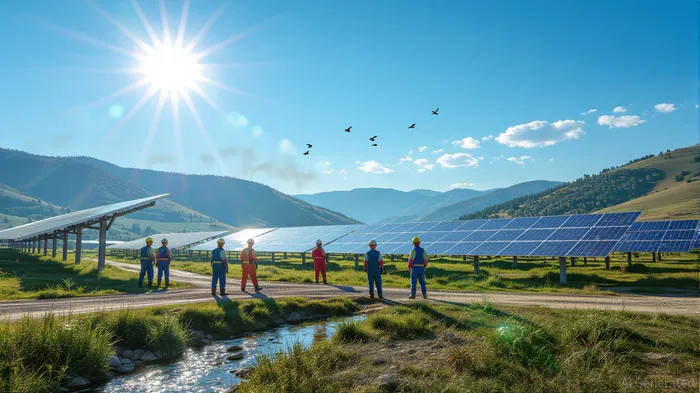
The energy sector in emerging markets is a double-edged sword: it promises high returns through infrastructure development and decarbonization but is often mired in regulatory chaos, political fragmentation, and underperforming utility reforms. Kosovo, a microcosm of these challenges, offers a stark case study. For investors, understanding the interplay of policy missteps, market inertia, and geopolitical dynamics is critical to identifying long-term value in post-stabilization utility sectors.
Regulatory Hurdles: A Case of Stalled Liberalization
Kosovo's energy market liberalization has been a decade-long saga of delays and contradictions. Since the 2016 Law on Energy, the government has repeatedly postponed opening the market to competition, leaving it as the only Western Balkan nation without a functional open energy market as of 2025. The Energy Regulatory Office (ERO)'s 2025 directive to force 1,300 large companies to transition to the open market—threatening disconnection for non-compliance—exposed systemic flaws.
The ERO's abrupt mandate, while well-intentioned, lacked foundational infrastructure. Of the 19 licensed energy suppliers, 16 were foreign-based (registered in Albania or North Macedonia) and unresponsive to price offers. Only one, KESCO, operated in Kosovo, but at prices 30% higher than regulated rates. This created a vacuum where regulatory overreach collided with market reality, leading to a 2025 court ruling halting forced transitions for 1,000 companies. The episode underscores a recurring theme: regulatory ambition without market readiness.
Political fragmentation exacerbates the problem. Kosovo's government, reliant on coal for 70% of power generation and 1.4% of employment, faces a dilemma: decarbonization risks economic backlash, while inaction locks in high-emission infrastructure. The absence of a carbon pricing system and EU Emissions Trading System (ETS) alignment further weakens incentives for clean energy adoption.
Underperformance in Utility Reforms: A Recipe for Investor Frustration
Kosovo's utility sector is a patchwork of outdated infrastructure, cross-subsidies, and fiscal strain. The bulk supply agreement (BSA) between the state-owned Kosovo Energy Corporation (KEK) and the Universal Service Supplier (USS), KESCO, has kept household electricity prices artificially low—artificially low, that is, until 2024, when a 19% price hike was implemented to reduce fiscal deficits. This abrupt shift, while necessary, exposed the fragility of a system built on cross-subsidies.
The underperformance is not just fiscal. Kosovo's renewable energy capacity remains at 12.9%, far below Albania's 96.4%. Despite a 2022–2031 strategy targeting 1.6 GW of renewables by 2031, progress is uneven. A 2023 solar auction attracted interest but yielded only one winner in 2024. Meanwhile, coal plant refurbishments, such as Kosovo B's turbine upgrades, are framed as transitional investments—yet they risk locking in high-emission infrastructure for decades.
Strategic Entry Points: Post-Stabilization Opportunities
Despite these challenges, Kosovo's energy sector is on the cusp of transformation. The IMF's 2025 disbursement of €25.4 million under its Stand-By and Resilience and Sustainability Facility Arrangements has stabilized the fiscal outlook, enabling targeted investments. Here are three strategic entry points for capital seeking long-term value:
Renewable Energy Infrastructure
Kosovo's 2022–2031 energy strategy is a roadmap for renewable growth. The government aims to install 600 MW of solar, 600 MW of wind, and 20 MW of biomass capacity by 2031. The 2025 Millennium Challenge Corporation (MCC) $202 million compact further accelerates grid modernization and energy efficiency. Investors should prioritize solar and wind projects with clear permitting and grid connectivity, such as the KEK premises solar project or the 2024 wind auction winner.Energy Efficiency and Decentralized Solutions
Kosovo's energy productivity is half of EU levels, driven by inefficient heating systems and outdated buildings. The Subsidies for Energy Efficiency in Kosovo (SEEK) program and the Women in Energy (WEE) initiative have already incentivized 10,000 households to retrofit insulation and heating systems. Decentralized solutions, such as prosumer solar installations and battery storage, offer scalable returns. The government's 2025 target of 170 MW of battery storage capacity is a key indicator of this trend.Carbon Pricing and Green Technology
Kosovo's 2025 carbon pricing system, aligned with EU ETS integration by 2030, creates a tailwind for emissions reduction technologies. Carbon capture, green hydrogen, and smart grid solutions are nascent but growing. The government's 32% emissions reduction target in the power sector by 2031 will drive demand for these innovations.
Investor Considerations: Balancing Risk and Reward
Kosovo's energy sector is a high-risk, high-reward proposition. Regulatory uncertainty and political fragility remain significant headwinds. However, the post-stabilization environment—marked by IMF support, IMF-backed fiscal discipline, and a clear decarbonization roadmap—creates a window for strategic entry.
Investors should prioritize:
- Long-term contracts with government-backed guarantees.
- Partnerships with local stakeholders to navigate regulatory complexity.
- Diversified portfolios across renewable generation, energy efficiency, and grid modernization.
In conclusion, Kosovo's energy market liberalization is a cautionary tale of regulatory missteps but also a blueprint for recovery. For investors with a 5–10 year horizon, the key lies in aligning capital with the government's decarbonization agenda and leveraging post-stabilization fiscal and policy tailwinds. The path to a sustainable energy future in Kosovo is fraught, but for those who navigate it wisely, the returns could be transformative.

Delivering real-time insights and analysis on emerging financial trends and market movements.
Latest Articles
Stay ahead of the market.
Get curated U.S. market news, insights and key dates delivered to your inbox.


AInvest
PRO
AInvest
PRO



Comments
No comments yet