
Energy Market Dynamics and Inflationary Relief: How Declining U.S. Gas Prices Signal Shifting Demand and Macroeconomic Pressures


 Aime Summary
Divergent Trends in Energy Prices
According to the U.S. , , . This surge is driven by heightened demand for heating during the winter and a tightening supply-demand balance. In contrast, , supported by lower crude oil prices and improved fleetwide fuel efficiency according to EIA data. However, , as refinery margins widen.
The uneven trajectory of these energy prices underscores a key macroeconomic tension: while lower gasoline prices provide immediate relief to consumers, rising natural gas costs are inflating energy bills for households and industrial operations. For instance, , respectively according to EIA projections. These sectoral disparities highlight the fragmented nature of inflationary pressures in the energy market. 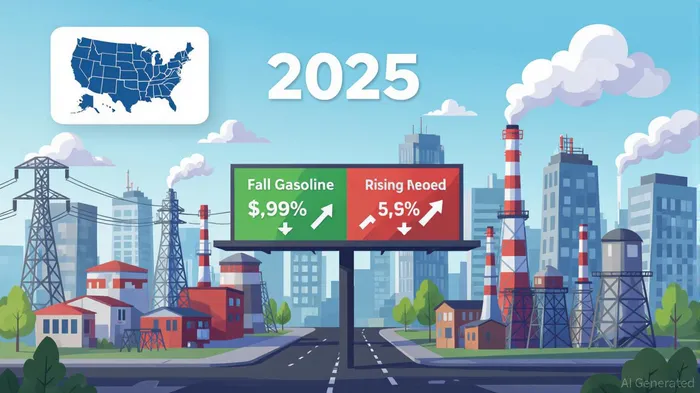
Regional Variations and Policy Impacts
Regional disparities further complicate the picture. , localized volatility persists. The Midwest experienced temporary price spikes due to a refinery outage, whereas the South and Southeast . Conversely, the West Coast, including California, continues to face higher prices, , albeit with recent declines according to EIA data.
The resurgence of coal-fired power generation in six key states-Arkansas, Indiana, Michigan, Ohio, South Carolina, . Faced with steeply rising gas costs, utilities in these states have shifted toward coal, which has . This shift not only exacerbates inflationary pressures in the short term but also raises environmental concerns, as emissions from coal-fired plants increase.
Macroeconomic Implications and Policy Uncertainty
The 's energy policies have further amplified market uncertainty. By halting , imposing on Canadian energy imports, and freezing funding for , the administration has constrained alternative energy development. These measures, combined with the U.S. emergence as a leading (LNG) exporter, have altered global demand dynamics and reinforced reliance on fossil fuels.
Expert analysis from Forbes and the American Progress think tank underscores the inflationary risks embedded in these trends. The EIA's projection of higher natural gas prices in 2025 is expected to ripple through the economy, increasing costs for electricity generation and industrial production. Meanwhile, 's limited visibility in this context suggests that energy price fluctuations may remain a dominant force in shaping .
Investment Considerations
For investors, the evolving energy landscape demands a nuanced approach. While declining gasoline prices offer temporary relief, the long-term outlook is clouded by rising natural gas costs and policy-driven market distortions. Sectors reliant on natural gas, such as manufacturing and utilities, face margin pressures, whereas coal producers may see short-term gains. Conversely, renewable energy firms could benefit from renewed policy focus, though current regulatory headwinds remain a challenge according to EIA analysis.
The broader macroeconomic implications are equally significant. As energy prices diverge, central banks must navigate the delicate balance between inflation control and supporting economic growth. The EIA's forecasts suggest that energy markets will remain a key driver of inflationary dynamics in 2025 and beyond.
Conclusion
The U.S. energy market in 2025 is a microcosm of global economic tensions. Declining gasoline prices signal a temporary reprieve for consumers, but rising natural gas costs and policy-driven shifts in energy demand underscore persistent inflationary pressures. For investors, the path forward requires vigilance in assessing both the immediate and long-term impacts of these dynamics, as well as the broader geopolitical and environmental consequences of a fossil-fuel-dependent energy transition.

Delivering real-time insights and analysis on emerging financial trends and market movements.
Latest Articles
Stay ahead of the market.
Get curated U.S. market news, insights and key dates delivered to your inbox.


AInvest
PRO
AInvest
PRO



Comments
No comments yet