
Energy Infrastructure Vulnerability and Investment Opportunities in U.S. Utility Sectors


 Aime Summary
Grid Vulnerabilities: A Perfect Storm of Underinvestment and Climate Stress
The U.S. utility sector is grappling with a perfect storm of challenges. According to a report by the U.S. Department of Energy, over $7.5 billion in grid-related grants have been cut since 2023, directly impacting 223 resilience projects, including smart grid sensors and subtransmission line upgrades, as the DOE report noted. These cuts have left critical infrastructure exposed to cascading failures, particularly in regions prone to extreme weather. For instance, a canceled $50 million California project aimed to enhance subtransmission capacity without new infrastructure-a cost-effective solution that could have mitigated outages like the one in Los Angeles, the report also found.
Compounding these issues is the grid's susceptibility to cyberattacks and aging equipment. The 2025 outage, while not explicitly attributed to a cyber incident, aligns with broader trends of increasing vulnerability. As the DOE report states, the grid's reliability is now "a function of both physical and digital resilience," a point the report also emphasized. This dual threat necessitates a rethinking of traditional investment models.
Resilience as a Strategic Investment: The Rise of Data-Driven Solutions
The market's response to these challenges has been a surge in demand for targeted resilience strategies. A novel framework leveraging N-1 Impact Analysis and an Improved Grey Wolf Optimizer (IGWO) has emerged as a game-changer. This approach partitions the grid into resilience-driven zones and allocates distributed energy resources (DERs) with precision, reducing unserved energy by up to 30% compared to conventional methods, as the ScienceDirect study found. Such innovations are not theoretical-they have been tested on real utility feeders, demonstrating cost-effectiveness and scalability, the study also noted.
For investors, this signals a shift from broad infrastructure spending to high-impact, data-driven projects. The DOE's $5 billion Preventing Outages and Enhancing Resilience Grants program exemplifies this trend, funding initiatives like undergrounding equipment, microgrid development, and advanced monitoring systems, as the DOE report described. These programs are attracting both public and private capital, with utilities like American Electric Power partnering with firms like Quanta ServicesPWR-- to accelerate high-voltage transmission projects, the Quanta article reported.
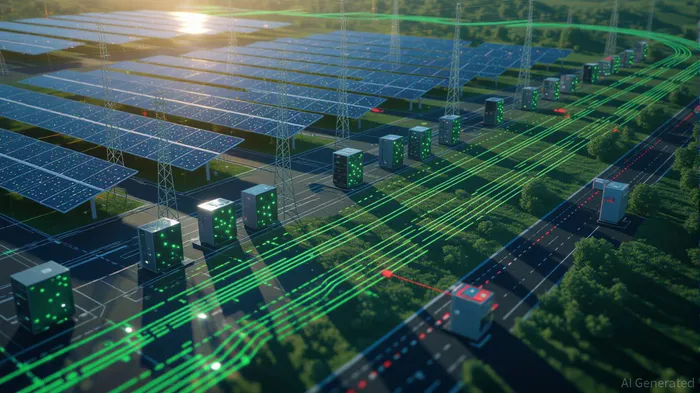
Market Impacts: From Risk to Opportunity
The 2025 LA outage has already begun reshaping market dynamics. Equity investors are increasingly favoring utilities with robust resilience strategies, as evidenced by Quanta Services' stock performance following its AEPAEP-- partnership, the Quanta article noted. Meanwhile, the bond market is pricing in higher risk premiums for regions with underinvested grids, creating arbitrage opportunities for those who can identify undervalued infrastructure plays.
A key metric to monitor is the ROI of resilience investments. For example, the canceled Upper Midwest smart sensor project (a $19.5 million initiative) could have prevented outages costing millions in economic losses, the DOE report also found. By quantifying such payoffs, investors can prioritize projects with the highest risk-adjusted returns.
Long-Term Resilience Plays: Beyond the Grid
The LA outage also highlights the need for cross-sector collaboration. Facilities like Greenidge Generation Holdings Inc., which can rapidly redirect power to the grid by curtailing non-essential operations, represent a new model of grid support, the Business Wire article reported. For investors, this points to opportunities in hybrid energy systems that combine traditional generation with agile, demand-responsive assets.
Moreover, the rise of AI-driven grid analytics and decentralized energy markets is creating a fertile ground for innovation. Startups specializing in predictive maintenance or blockchain-based energy trading are attracting venture capital, signaling a broader shift toward a decentralized, resilient energy ecosystem, the Business Wire article noted.
Conclusion: A Call for Pragmatic Investment
The 2025 Los Angeles power outage is a wake-up call for the U.S. utility sector. While the immediate causes remain unclear, the event has exposed systemic weaknesses that demand urgent attention. For investors, the path forward lies in supporting projects that blend technological innovation with strategic resource allocation. By prioritizing resilience-driven frameworks like the IGWO model and leveraging federal grants, the market can transform grid vulnerabilities into long-term value creation.
As the energy landscape evolves, the question is no longer whether to invest in resilience-but how quickly and effectively capital can be deployed to secure a stable, sustainable future.

Delivering real-time insights and analysis on emerging financial trends and market movements.
Latest Articles
Stay ahead of the market.
Get curated U.S. market news, insights and key dates delivered to your inbox.




Comments
No comments yet