
Energy Infrastructure Resilience in Urban Markets: The Financial Implications of Recurring Power Outages in San Francisco


 Aime Summary
The recurring power outages in San Francisco, driven by Public Safety Power Shutoffs (PSPS) and aging infrastructure, have exposed the city to significant economic risks.
These disruptions, which left 130,000 residents and businesses without electricity in December 2025, underscore a growing challenge for urban markets: balancing climate resilience with affordability. As utilities, regulators, and investors grapple with these pressures, opportunities in grid modernization, energy storage, and infrastructure bonds are emerging as critical levers for mitigating financial losses and fostering long-term stability.
The Economic Toll of Power Outages
The financial impact of power outages in San Francisco is staggering.
A two-week blackout in a major metropolitan area could cost up to $17.1 billion in GDP loss, with over 70% of the burden stemming from indirect costs such as resilience tactics-expenses for portable generators, hotel stays, and business continuity measures.
Lower-income residents, who lack the resources to invest in backup power or evacuate, bear a disproportionate share of this burden.
The December 2025 outage, attributed to a fire at a PG&E substation, exemplified these risks, forcing the closure of transit systems, restaurants, and even Waymo's autonomous taxis.
Utility and Regulatory Responses
Pacific Gas and Electric (PG&E), the primary utility serving the region, has responded with a $73-billion, five-year capital expenditure plan to modernize its grid, including undergrounding power lines and deploying advanced grid management tools.
However, California regulators have tempered these efforts by reducing PG&E's allowed return on equity to 9.98% from 10.28%, aiming to curb rising electricity bills for ratepayers. This regulatory balancing act reflects broader tensions between wildfire risk mitigation and affordability, particularly after the December 2025 outage prompted calls for stricter oversight.
PG&E's 2027–2030 General Rate Case (GRC) further signals a shift toward cost containment, with the utility requesting its smallest rate increase in a decade to stabilize customer bills through 2030.
Investor Trends in Energy Storage and Infrastructure Bonds
Amid these challenges, investor sentiment in San Francisco's energy storage and infrastructure sectors has remained robust.
Energy storage installations in the U.S. grew by over 75% in 2024, with global installations projected to exceed the terawatt-hour mark by 2030.
San Francisco's energy storage tech sector, comprising 78 companies, raised $2.69 billion in venture capital and private equity funding since 2014, with a 101.48% surge in 2025. Key players like Span.IO and Weave Grid have attracted multiple funding rounds,
leveraging incentives from the Inflation Reduction Act (IRA) of 2022, which offers investment tax credits for energy storage and manufacturing. 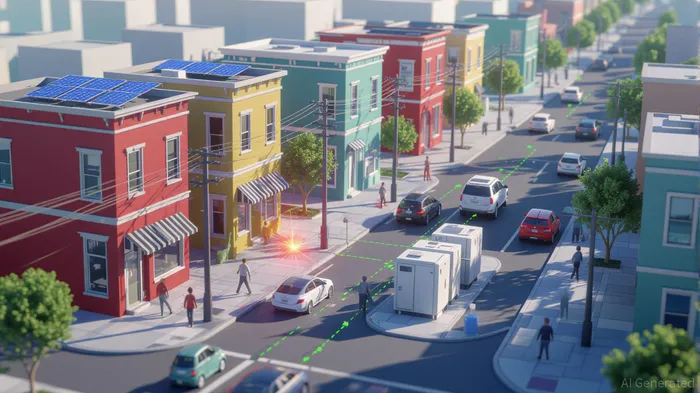
Simultaneously,
San Francisco's Public Utilities Commission (SFPUC) has issued nearly $1 billion in Climate Bonds-certified green bonds in 2024 to fund the Sewer System Improvement Program (SSIP), enhancing wastewater and stormwater resilience.
These bonds, rated 'Aa2' by Moody's and 'AA' by S&P for the tax-exempt series, align with United Nations Sustainable Development Goals and support projects addressing climate adaptation and clean water.
The city's broader climate resilience strategies, including Proposition 4-a $10-billion bond measure approved in November 2024-further underscore the potential for infrastructure investments to mitigate long-term risks.
The Path Forward
The interplay of utility investments, regulatory oversight, and investor trends highlights a pivotal moment for urban energy infrastructure. While PG&E's grid modernization efforts and the SFPUC's green bonds address immediate vulnerabilities, the sector's success will depend on sustained funding and policy alignment.
The American Society of Civil Engineers (ASCE) warns of a $3.7-trillion infrastructure investment gap by 2030, emphasizing the need for public-private partnerships and innovative financing mechanisms. For investors, the growing demand for energy storage and climate-resilient infrastructure presents both risks and opportunities, particularly as cities like San Francisco prioritize net-zero emissions and disaster preparedness.
In conclusion, the financial implications of power outages in San Francisco reveal a complex landscape where resilience and affordability must coexist. By leveraging grid modernization, energy storage, and infrastructure bonds, urban markets can transform vulnerabilities into strategic advantages-provided stakeholders navigate regulatory, technological, and financial hurdles with foresight.

Stay ahead of the market.
Get curated U.S. market news, insights and key dates delivered to your inbox.


AInvest
PRO
AInvest
PRO



Comments
No comments yet