
Energy Infrastructure Resilience in Tech-Dependent Cities: Investing in Grid Modernization and Backup Power Solutions Amid Rising Climate-Driven Outages


 Aime Summary
The convergence of climate change and the digital economy has created a critical inflection point for energy infrastructure in tech-dependent cities. As extreme weather events grow in frequency and intensity, the economic toll of power outages-exacerbated by the hyper-concentration of data centers and AI-driven demand-is reaching unprecedented levels. For investors, this crisis presents both a daunting risk and a compelling opportunity: to fund the grid modernization and backup power solutions that will define the resilience of the 21st-century urban economy.
The Escalating Cost of Climate-Driven Outages
The economic impact of power outages in tech hubs has become a stark wake-up call. A hypothetical two-week outage in Chicago could cost $17.1 billion, with over 70% of losses tied to adaptation measures like portable generators and hotel stays
according to a study. Similarly, Texas' 2021 winter storm, which left 11 million residents without power, caused up to $130 billion in economic damage
according to a report. These figures underscore a broader trend: as climate change strains aging infrastructure, the cost of inaction is rising faster than the cost of resilience.
The vulnerability of power grids is compounded by the surging demand from data centers, which are now a linchpin of the global economy. U.S. data center electricity demand is projected to grow by 206% from 2024 to 2035,
driven by AI and cloud computing. This growth, coupled with climate-induced shifts in temperature and weather patterns, is pushing grids to their breaking points. Higher temperatures, for instance,
increase cooling demand, reducing line capacity and raising the risk of blackouts.
The Investment Imperative: Grid Modernization and Transmission Upgrades
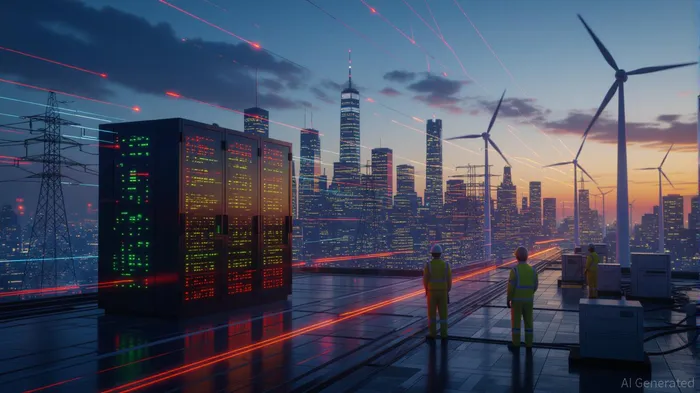 Addressing these challenges requires a massive reimagining of grid infrastructure. Global grid capital spending is projected to exceed $470 billion in 2025,
with the U.S. alone investing $115 billion to tackle bottlenecks and aging assets. Transmission infrastructure, in particular, is becoming a priority. By 2027, transmission investments are expected to grow at nearly twice the rate of distribution spending,
reflecting the need for long-distance connections and high-voltage direct-current systems to accommodate data center demand.
California and Texas, two of the most data-center-dependent regions, are leading this shift. Pacific Gas & Electric (PG&E) has announced a
73 billion investment in transmission upgrades by 2030 to support 10 gigawatts of new data center demand. Meanwhile, Texas' Electric Reliability Council of Texas (ERCOT) projects that demand could exceed 200 gigawatts by the end of the decade,
necessitating rapid expansion of grid capacity.
However, these efforts face headwinds. Supply chain constraints, labor shortages, and permitting delays are slowing project timelines, while inflation and rising equipment costs are inflating budgets
according to industry analysis. To mitigate these risks, regulators are experimenting with new tariffs and requirements for on-site backup generation,
balancing grid reliability with affordability for consumers.
Backup Power Solutions: From Tesla Microgrids to Residential Generators
As centralized grids struggle to keep pace, decentralized backup power solutions are emerging as a critical layer of resilience. Tesla-operated virtual power plants in California, for example, already provide 100 megawatts of clean backup power,
demonstrating the potential of renewable energy and storage to stabilize urban grids. Similarly, residential standby generator sales in the U.S.
rose 18% from 2023 to 2024, driven by frequent outages linked to storms.
The global backup power market,
valued at $12.2 billion in 2024, is projected to grow at a 5.5% compound annual rate to $16.8 billion by 2030. Innovations like lithium-ion batteries, hybrid systems, and fuel cells are making these solutions more affordable and scalable. In New York, National Grid's Climate Resiliency Plan-approved in December 2024-
includes capital investments to address vulnerabilities from extreme heat, flooding, and high winds.
Case Studies: Measurable Outcomes and Lessons Learned
Several cities have already demonstrated the value of proactive investment. In Colorado, the Colorado Electric Transmission Authority (CETA) has prioritized community engagement to align transmission projects with local needs,
accelerating grid development while supporting clean energy goals. Meanwhile, a U.S. utility company's deployment of sensors on high-voltage lines
increased line capacity by 18–19%, reducing congestion costs and improving reliability.
Texas' 2021 Winter Storm Uri, though a cautionary tale, also highlighted the importance of
sectionalizing circuits and expanding backup systems to prevent cascading failures. In contrast, New York's post-Sandy investments in microgrids and energy storage have provided measurable resilience gains, though the city still faces challenges in maintaining power during extreme events
according to industry analysis.
The Road Ahead: Aligning Investment with Resilience Metrics
For investors, the path forward lies in aligning capital with projects that deliver both grid resilience and quantifiable returns. This includes funding transmission upgrades in high-demand regions, supporting the deployment of battery storage and microgrids, and advocating for regulatory frameworks that incentivize innovation.
The stakes are clear: without urgent action, the economic costs of climate-driven outages will continue to escalate, outpacing even the most ambitious investment plans. Yet, for those who act now, the opportunity to build a more resilient-and profitable-energy future is within reach.

Stay ahead of the market.
Get curated U.S. market news, insights and key dates delivered to your inbox.
AInvest
PRO
AInvest
PRO



Comments
No comments yet