
Energy Infrastructure Resilience in Midwestern Utilities: Investment Opportunities Amid Winter Grid Vulnerability


 Aime Summary
A Perfect Storm of Risks
The Midwest's grid faces a compounding set of threats, from climate-driven outages to cyber risks. According to the Midwest Reliability Organization, "Uncertain Energy Availability" and "Generation Outages During Extreme Cold Weather" are now classified as extreme risks. Compounding these are nation-state cyber threats and supply chain disruptions, which could delay the delivery of critical equipment like circuit breakers. Meanwhile, the integration of inverter-based resources (e.g., solar and wind) demands advanced modeling to maintain stability-a challenge that will only intensify as renewable adoption accelerates.
Grid Modernization: A $30 Billion Opportunity
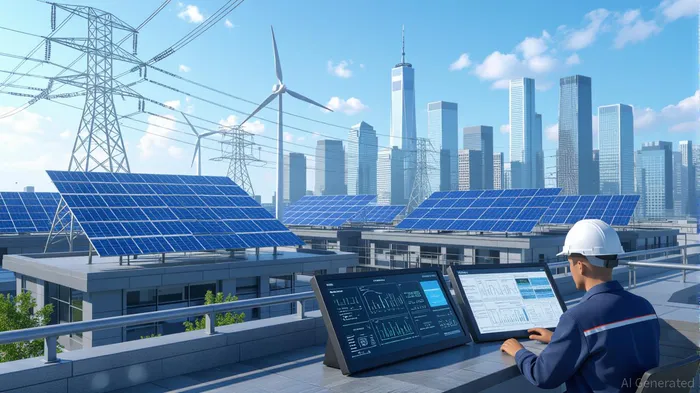
The crisis has accelerated investments in grid resilience, with two major regional grid operators-MISO and SPP-leading a $30 billion transmission expansion across the Great Plains and Midwest. A flagship project is the 765-kV transmission line in Big Stone City, South Dakota, which will bolster energy delivery for natural gas, wind, and solar while stabilizing the grid during weather disruptions. These upgrades are not just about reliability; they're about future-proofing the region for data centers, industrial growth, and decarbonization.
The circuit breaker market, a critical component of modernization, is projected to grow from $21.61 billion in 2025 to $28.36 billion by 2030, driven by demand for vacuum-based breakers with real-time monitoring capabilities. These technologies offer lower maintenance costs and higher reliability, making them ideal for replacing aging infrastructure.
Strategic Recommendations for Investors
Experts emphasize a dual focus: infrastructure hardening and smart technology integration. For instance, South Dakota's MISO Tranche 2.1 expansion prioritizes 765-kV and 345-kV lines to address load growth. Similarly, SPP's 2024 Integrated Transmission Plan underscores resilience against extreme weather. Investors should also consider public-private partnerships, as seen in Indiana's Hamilton Crossing redevelopment, where collaborative planning transformed underutilized assets into connected communities.
Cybersecurity and supply chain diversification are equally critical. With Malicious Insider Threats and "Supply Chain Compromise" on the rise, utilities must prioritize secure procurement and workforce training.
Conclusion: Resilience as a Competitive Advantage
The Wyoming-South Dakota outage was a costly but necessary catalyst. For investors, the Midwest's grid modernization represents a unique confluence of urgency and opportunity. By targeting circuit breaker innovation, high-capacity transmission lines, and cybersecurity solutions, capital can align with both financial returns and societal resilience. As the region's energy landscape evolves, those who act now will not only mitigate risk but also shape the future of power delivery.

Delivering real-time insights and analysis on emerging financial trends and market movements.
Latest Articles
Stay ahead of the market.
Get curated U.S. market news, insights and key dates delivered to your inbox.


AInvest
PRO
AInvest
PRO



Comments
No comments yet