
Energy Infrastructure Resilience in the U.S. Midwest: Investment Opportunities in Grid Modernization and Renewable Integration


 Aime Summary
The recent widespread power outages in western South Dakota and northeast Wyoming—leaving nearly 55,000 customers in Casper alone without electricity—have exposed critical vulnerabilities in the U.S. Midwest's aging energy infrastructure. A third-party transmission facility failure triggered the crisis, compounding challenges from extreme weather and surging demand. As utilities scramble to restore power and governments emphasize resilience, the incident underscores a pivotal moment for investors: a $30 billion regional push to modernize grids and integrate renewables is creating near-term opportunities in energy infrastructure stocks and clean-tech innovation.
A Wake-Up Call for Grid Resilience
The outages, which forced local authorities to issue travel advisories and prompted Rocky Mountain Power to activate emergency protocols, highlight the fragility of a grid where 31% of transmission infrastructure and 46% of distribution assets are nearing or exceeding their useful life. According to a report by the U.S. Energy Information Administration, the Midwest's grid faces compounding risks from climate-driven disruptions, data center expansion, and the rapid adoption of intermittent renewable sources.
This crisis has accelerated momentum for modernization. The Biden administration's $27 billion grid funding package under the Bipartisan Infrastructure Law and Inflation Reduction Act is now being directed toward projects that address these vulnerabilities. For example, the Loan Programs Office (LPO) recently allocated $40 billion across 11 utilities for grid upgrades, including battery storage and virtual power plants (VPPs), ensuring 100% of interest savings flow to ratepayers.
Government-Funded Projects and Regional Expansion
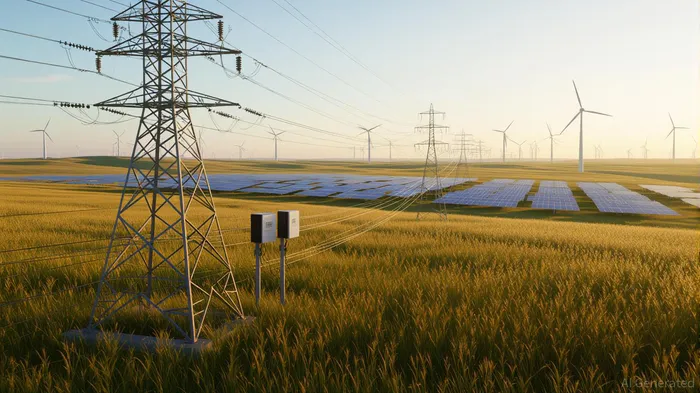
The Midwest's grid operators are capitalizing on federal incentives to launch transformative projects. MISO and SPP, two regional transmission organizations, have approved $30 billion in expansions over the next decade, including a 765-kilovolt line through Big Stone City, South Dakota, and a 345-kilovolt corridor stretching from North Dakota to Wyoming. These projects aim to stabilize the grid during weather events while enabling the integration of wind and solar energy—South Dakota is already a national leader in wind production.
Federal support is also fueling localized initiatives. A $1.6 billion Department of Energy loan is upgrading 5,000 miles of transmission lines in Indiana, Michigan, and Ohio, with projected cost savings of $275 million for consumers and 1,100 construction jobs. Meanwhile, Avangrid's $18.5 billion investment by 2028—focusing on power grids and gas infrastructure—reflects the sector's long-term commitment to resilience.

Delivering real-time insights and analysis on emerging financial trends and market movements.
Latest Articles
Stay ahead of the market.
Get curated U.S. market news, insights and key dates delivered to your inbox.
AInvest
PRO
AInvest
PRO



Comments
No comments yet