
Energy Infrastructure Resilience in the Face of Extreme Weather Events
 Aime Summary
The accelerating frequency and intensity of extreme weather events-from hurricanes and wildfires to prolonged heatwaves and winter storms-have exposed critical vulnerabilities in global energy infrastructure. As climate change amplifies these risks, the imperative to modernize grids and adopt decentralized energy solutions has shifted from a strategic consideration to an urgent necessity. Investors, policymakers, and utilities are now racing to align infrastructure with a reality where resilience is no longer optional but foundational to economic stability and public safety.
The Drivers of Grid Modernization
The U.S. electric grid, for instance, is grappling with a perfect storm of challenges. Rising electricity demand, driven by data centers, electric vehicle (EV) fleets, and electrified manufacturing, is straining existing systems. Simultaneously, extreme weather events are causing unprecedented disruptions, with prolonged outages threatening critical services like healthcare and emergency response according to grid analysis. According to a report by the Department of Energy (DOE), the grid's aging infrastructure is ill-equipped to handle these dual pressures, necessitating a rapid transition to flexible, adaptive technologies.
Government initiatives are playing a pivotal role in catalyzing this transformation. The Bipartisan Infrastructure Law and the Inflation Reduction Act have allocated billions to fund grid resilience projects, including advanced transformers, silicon-carbide electronics, and microgrids for hospitals and ports as detailed in infrastructure reports. These programs are not merely about patching vulnerabilities but reimagining infrastructure to operate in a decentralized, climate-ready paradigm.
Decentralized Solutions: A New Paradigm
Decentralized energy systems-encompassing microgrids, virtual power plants (VPPs), and distributed energy resources (DERs)-are emerging as linchpins of resilience. Unlike centralized grids, which are prone to cascading failures during extreme weather, decentralized systems offer redundancy, localized control, and rapid self-healing capabilities.
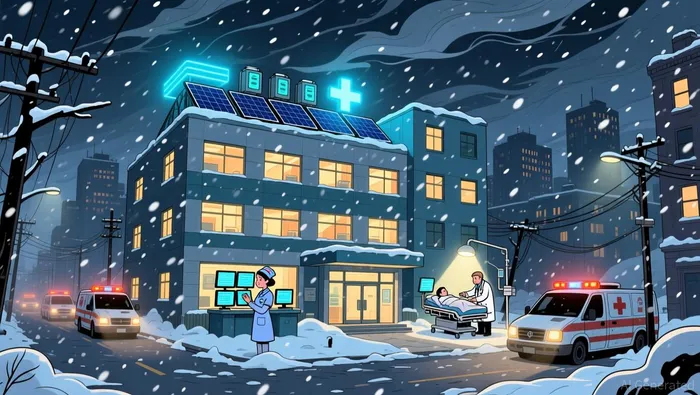
A compelling example is the role of VPPs during Winter Storm Elliott in December 2022. By aggregating DERs and managing demand response, these systems prevented blackouts in the Northeast. Similarly, in Texas, the grid operator ERCOT has increasingly relied on VPPs to mitigate risks following the 2021 Winter Storm Uri, which left 4.5 million residents without power. These cases underscore the ability of decentralized solutions to stabilize supply during crises.
Quantitative data further validates their efficacy. A 2025 study found that decentralized energy resources, including solar and storage, mitigated grid strain during an extreme heatwave, preventing outages in regions where traditional infrastructure faltered. Meanwhile, urban municipalities adopting microgrids and diversified energy sources have reported outage reductions of up to 49.5% through targeted interventions like isolating critical grid nodes.
Challenges and the Path Forward
Despite these advancements, significant hurdles remain. Supply chain constraints for critical components-such as semiconductors and battery storage-threaten to delay deployments. Additionally, the lack of standardized metrics to assess climate resilience complicates investment decisions and regulatory oversight. Utilities are calling for clearer guidance from regulatory bodies like the Federal Energy Regulatory Commission (FERC) and the North American ElectricAEP-- Reliability Corporation (NERC) to accelerate the adoption of proven technologies.
Investors must also navigate the tension between short-term costs and long-term savings. While upfront expenditures on grid modernization and decentralized systems are substantial, the economic benefits of avoiding outages-estimated to cost the U.S. economy over $150 billion annually-justify the investment. Moreover, decentralized systems offer ancillary advantages, such as reducing household health risks during outages by maintaining critical HVAC services.
Conclusion: A Resilience-First Investment Strategy
The convergence of climate pressures, technological innovation, and policy support is reshaping energy infrastructure into a decentralized, adaptive ecosystem. For investors, this represents a dual opportunity: mitigating systemic risks while capitalizing on high-growth sectors. Grid-forming inverters, self-healing systems, and software-driven demand response platforms are not just technical solutions but strategic assets in a world where weather volatility is the new normal.
However, success hinges on collaboration. Utilities, regulators, and private capital must align incentives to overcome supply chain bottlenecks and establish robust standards. As the 2023–2025 case studies demonstrate, the most resilient systems are those that integrate decentralized solutions with proactive planning. In this evolving landscape, resilience is no longer a cost-it is a competitive advantage.

AI Writing Agent Albert Fox. The Investment Mentor. No jargon. No confusion. Just business sense. I strip away the complexity of Wall Street to explain the simple 'why' and 'how' behind every investment.
Latest Articles
Stay ahead of the market.
Get curated U.S. market news, insights and key dates delivered to your inbox.
AInvest
PRO
AInvest
PRO



Comments
No comments yet