
Energy Infrastructure Liability Risks in California: Navigating Wildfire Exposure and Regulatory Shifts


 Aime Summary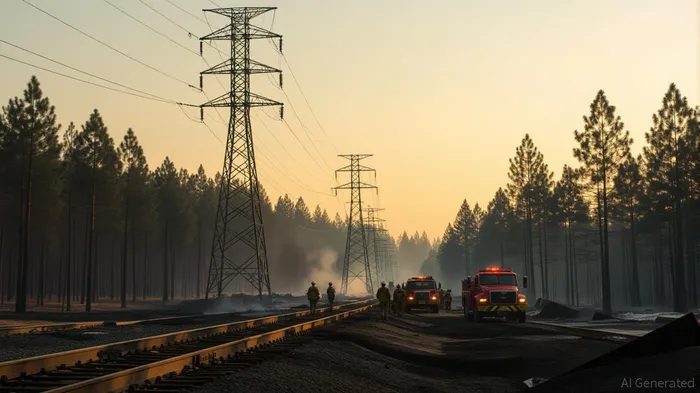
The energy infrastructure sector in California stands at a crossroads, where the escalating costs of climate-related disasters and the evolving regulatory landscape are reshaping the financial and operational risks for utility firms. Southern California Edison (SCE), a cornerstone of the state's power grid, has become a focal point of this transformation. Its recent legal battles over wildfire liabilities—spanning settlements exceeding $82.5 million for the 2020 Bobcat Fire and potential $10 billion in claims from the 2025 Los Angeles wildfires—highlight the systemic vulnerabilities facing utilities in fire-prone regions. These cases are not isolated incidents but symptoms of a broader crisis: the collision of aging infrastructure, climate-driven disasters, and a legal framework that increasingly holds utilities to account for environmental harm.
The SCE Case: A Microcosm of Systemic Risk
SCE's liabilities stem from a combination of factors: the physical reality of power lines igniting dry brush, the legal doctrine of inverse condemnation (which allows strict liability without proof of negligence), and the growing scale of wildfires exacerbated by drought and wind. The 2025 Los Angeles wildfires, which destroyed 14,000 structures and displaced 200,000 people, have triggered lawsuits alleging that SCE's infrastructure failed to meet safety standards. These claims are compounded by environmental concerns, such as the release of toxic heavy metals like lead and arsenic, which have expanded the scope of liability to include public health and ecological damage.
The financial implications are staggering. With potential settlements exceeding $10 billion—comparable to Pacific Gas & Electric's (PG&E) 2019 Camp Fire payout—SCE's exposure underscores the fragility of utility balance sheets in an era of climate-driven disasters. Investors must recognize that these liabilities are not merely legal costs but systemic risks that could destabilize entire sectors. The California Wildfire Fund (CWF), a $21 billion mechanism designed to absorb catastrophic losses, offers a partial buffer. However, its long-term viability remains untested, as a single large fire could deplete its reserves, leaving utilities vulnerable to renewed financial strain.
Regulatory Shifts: Mitigation or Muddling?
Post-2025 reforms, including the formalization of the CWF and the passage of AB1054, aim to stabilize utility finances by shifting liability to a pooled fund. These measures require utilities to submit wildfire mitigation plans (WMPs) and adhere to fire prevention standards to qualify for reimbursement. While this approach reduces direct liability, it introduces new complexities. For instance, the CWF's reliance on ratepayer contributions raises concerns about affordability, as higher electricity bills could disproportionately affect low-income households. Meanwhile, the legal requirement for utilities to prove compliance with WMPs creates a bureaucratic burden that may divert resources from proactive mitigation.
The regulatory landscape is further fragmented by divergent approaches across the U.S. Western states. Arizona, Utah, and Texas, for example, have enacted laws that shield utilities from negligence claims if they follow WMPs, while California's strict liability model persists. This patchwork of policies complicates risk assessment for investors, as utilities operating in different jurisdictions face varying degrees of exposure. The insurance industry, meanwhile, has grown wary of underwriting wildfire risks, leading to premium hikes and reduced coverage in high-risk areas.
Investment Implications: Beyond the Balance Sheet
For investors, the key takeaway is that utility stock valuations are increasingly tied to environmental and governance (E/G) factors. Utilities with robust mitigation strategies—such as undergrounding power lines, advanced vegetation management, and real-time monitoring systems—are better positioned to navigate regulatory scrutiny and legal challenges. PacifiCorp, for instance, has seen favorable credit ratings due to its grid hardening investments, while weaker performers face higher borrowing costs.
Data from SCE's recent stock performance illustrates this dynamic. While the company's shares have historically traded at a premium due to its market dominance, the 2025 wildfire lawsuits have introduced volatility. Investors must weigh the short-term costs of mitigation against the long-term risks of non-compliance. Similarly, credit rating agencies like S&P and Moody's are incorporating wildfire risk into their assessments, with downgrades looming for utilities that fail to align with evolving standards.
The Path Forward: Due Diligence and Resilience
The lessons from SCE's struggles are clear. Utilities must treat wildfire risk not as a liability but as an opportunity to innovate. This includes not only infrastructure upgrades but also community engagement and ecosystem management. For investors, due diligence must extend beyond financial metrics to evaluate a utility's E/G practices, regulatory alignment, and resilience strategies.
The California model, with its emphasis on shared liability and mitigation, offers a blueprint for balancing utility solvency with public accountability. However, its success hinges on the broader adoption of climate resilience measures—such as reforestation, controlled burns, and urban planning that reduces encroachment into fire-prone areas. Until these systemic efforts gain traction, the financial and reputational risks for utilities will remain acute.
In conclusion, the energy infrastructure sector in California is at a pivotal moment. The liabilities faced by SCE and its peers are not just legal or financial challenges but existential questions about the sustainability of our energy systems in a warming world. For investors, the path forward lies in rigorous due diligence, a commitment to E/G principles, and a recognition that the true cost of climate risk cannot be outsourced to insurers, ratepayers, or future generations. The era of passive infrastructure investment is over; the future belongs to those who build resilience into their portfolios.

Delivering real-time insights and analysis on emerging financial trends and market movements.
Latest Articles
Stay ahead of the market.
Get curated U.S. market news, insights and key dates delivered to your inbox.


AInvest
PRO
AInvest
PRO



Comments
No comments yet