
Energy Grid Resilience and Risk Exposure in Utility Stocks


 Aime Summary
Systemic Vulnerabilities: From Squirrels to Systemic Risks
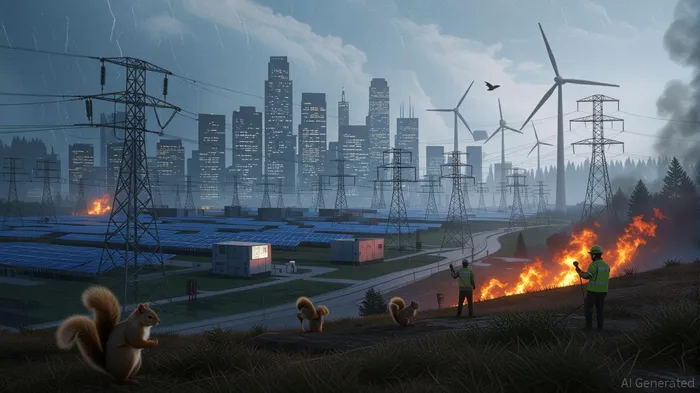
Animal-related outages, while often dismissed as trivial, expose deeper operational weaknesses. , of outages linked to these creatures. In 2024, a single squirrel in Ashland, Oregon . Such events highlight the grid's susceptibility to cascading failures, where localized disruptions-whether from wildlife, aging equipment, or seasonal fluctuations-can amplify into broader reliability crises.
The scale of infrastructure exacerbates these risks. Utilities like Jefferson PUD, , struggle to implement comprehensive protective measures such as transformer covers. Even with these efforts, animals like rats and squirrels continue to threaten fiber optic cables and other critical components year-round. These challenges are compounded by the grid's growing complexity, driven by the integration of large data centers and AI-driven demand, which introduce new technical and operational stress points.
Regulatory and Investment Trends: Navigating a Shifting Landscape
Regulators and utilities are responding to these vulnerabilities with a mix of technical and policy-driven solutions. The North American Electric Reliability Corporation has established a Large Loads Task Force to address risks posed by data centers, which can destabilize the grid during voltage disturbances. For instance, sudden disconnections from such facilities in Texas (ERCOT) and Virginia have already demonstrated the potential for frequency disruptions. 's proposed voltage ride-through standards for large loads mirror those applied to inverter-based resources, signaling a shift toward harmonizing grid resilience with evolving demand patterns.
However, regulatory clarity is increasingly complicated by policy shifts. The accelerated phaseout of tax credits, . While battery storage retains tax incentives through 2035, supply chain constraints and expanded restrictions on foreign entities of concern (FEOC) threaten project timelines. Similarly, the phaseout of 45x credits for advanced manufacturing complicates investments in critical minerals, . These policy dynamics create a volatile environment for utility stocks, where regulatory changes can rapidly alter cost structures and investment returns.
Climate Change: Amplifying Physical and Financial Risks
Climate change further intensifies grid fragility, with physical risks such as extreme heat, drought, and wildfires straining infrastructure. The U.S. Department of Energy warns . In California, while progress in battery storage and clean energy deployment has improved grid resilience, prolonged heatwaves and wildfires still pose acute threats.
Financially, utilities face escalating costs from climate-related hazards. The average electric utility . Water stress and drought, for instance, threaten operations for utilities reliant on water for cooling and power generation. These pressures are forcing utilities to delay fossil plant retirements and expand gas-fired capacity, despite long-term decarbonization goals. For investors, this underscores the tension between short-term reliability and long-term sustainability-a tension that will shape sector performance.
Investment Strategies: Mitigating Exposure in a Fragmented Landscape
Given these risks, investors must adopt a nuanced approach to utility stocks. Diversification across technologies and geographies can help mitigate localized vulnerabilities. For example, utilities with robust grid hardening programs-such as Jefferson PUD's infrastructure upgrades-may offer relative resilience. Conversely, companies heavily exposed to regions with high climate risk (e.g., California's wildfire-prone areas) warrant closer scrutiny.
Regulatory hedging is equally critical. Investors should prioritize utilities with strong lobbying influence or partnerships with federal agencies, as these entities are better positioned to navigate policy shifts. For instance, geothermal and nuclear energy-both retaining federal tax credits and policy support-present opportunities in a decarbonizing grid. Conversely, sectors like green hydrogen, now facing existential risks due to policy delays, require cautious exposure.
Finally, climate risk assessments must integrate both physical and transitional risks. Utilities investing in AI-driven grid monitoring and distributed energy resources (DERs) may better withstand disruptions from minor and major events alike. As NERC notes, the grid's growing interdependence with gas infrastructure and volatile energy policies demands adaptive planning-a trait that will distinguish resilient players from vulnerable ones.
Conclusion
The energy grid's vulnerabilities, exposed by squirrel-induced outages and exacerbated by climate change, reveal a sector at a crossroads. For investors, the path forward lies in balancing short-term reliability needs with long-term resilience strategies. By scrutinizing operational preparedness, regulatory alignment, and climate risk exposure, investors can navigate the grid's fragility while capitalizing on its transformation. In an era of uncertainty, the ability to anticipate and adapt to systemic risks will define the success of utility investments.

Delivering real-time insights and analysis on emerging financial trends and market movements.
Latest Articles
Stay ahead of the market.
Get curated U.S. market news, insights and key dates delivered to your inbox.




Comments
No comments yet