
Energy Fuels vs. Cameco: A Value Investor's Comparison of Uranium Plays


 Aime Summary
For the patient investor, Energy FuelsUUUU-- represents a classic high-risk, high-potential bet on a long-term structural shift. The company is America's largest uranium producer, operating a low-cost, vertically integrated model that positions it at the center of the nuclear renaissance demonstrating its reputation as the country's lowest-cost and largest uranium producer. Yet its stock price tells a story of deep market skepticism, trading at a trailing P/E ratio of -49.8. This isn't a value stock in the traditional sense; it's a growth stock priced for near-term failure, where the entire investment thesis hinges on a multi-decade payoff.
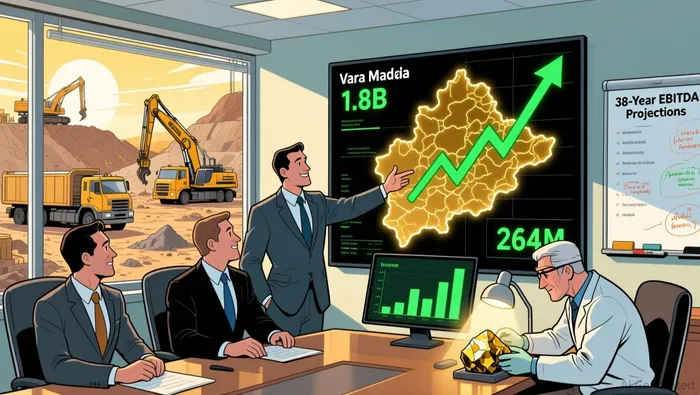
The future earnings engine is clearly defined, resting on the economics of a single, massive project. The updated feasibility study for the Vara Mada project in Madagascar models a $1.8 billion NPV and projects it could generate $264 million in average annual free cash flow over its initially modeled 38-year life. This creates a stark valuation disconnect. The market is pricing the company today as if that future stream of cash does not exist, focusing instead on current losses and the immense capital required to bring Vara Mada online. The company's primary future earnings stream is modeled from this project, which has a $1.8 billion NPV and could generate $264 million in average annual free cash flow over its 38-year life.
This setup demands a very long time horizon and a high tolerance for volatility. The nuclear renaissance is real, driven by surging electricity demand and a global push for carbon-free energy nuclear energy is staging a meaningful comeback. But the path from today's production ramp to Vara Mada's full output is fraught with execution risk, permitting hurdles, and capital intensity. For Energy Fuels, the investment case is not about quarterly earnings. It's about whether the company can successfully navigate the next decade to unlock the value embedded in its portfolio. The stock's negative P/E ratio is a direct reflection of the uncertainty around that timeline. For those with the discipline to wait, the potential return is tied to the success of that single, transformative project.
The Alternative: Cameco's Established Moat and Financial Discipline
For the value investor, CamecoCCJ-- presents a stark contrast to Energy Fuels-a company with a wider moat, a proven ability to generate cash, and a strategic focus that aligns with the principle of predictable compounding. While Energy FuelsUUUU-- is a high-stakes bet on a single future project, Cameco is the established leader operating today, with a global footprint and a more diversified portfolio that provides a broader competitive advantage.
Cameco's scale is its first moat. The company is one of the world's largest global providers of uranium, with licensed capacity to produce over 30 million pounds of uranium concentrate annually and more than 457 million pounds of proven and probable reserves. This size allows it to operate across the entire nuclear fuel cycle, from exploration to fuel services, giving it a level of operational flexibility and resilience that smaller producers lack. In the current environment, where nuclear energy is staging a meaningful comeback driven by surging demand and strategic policy shifts, Cameco's established position provides a significant edge in securing supply and meeting growing global needs.
More importantly, Cameco is a profitable, cash-generating business, not a company priced for future potential. Its operations are already delivering earnings, with estimates projecting 96% year-over-year growth for fiscal 2025. This creates a much more stable earnings profile and a lower execution risk compared to Energy Fuels. The company's strategic discipline is evident in its capital allocation. It is extending the life of its flagship Cigar Lake mine to 2036 and ramping production at McArthur River/Key Lake toward its licensed capacity. This focus on optimizing existing assets provides a reliable cash flow stream while the company also pursues growth through strategic partnerships, such as its recent alliance with the U.S. Government and Brookfield to accelerate reactor deployment.
The bottom line for a value investor is the quality of the earnings stream. Cameco trades on the strength of its current operations and its ability to compound through a cycle of rising demand. Its stock has gained 26.7% in the past six months, reflecting the market's recognition of this established cash-generating capacity. For those seeking a stake in the uranium renaissance without betting on a single, distant project, Cameco offers a path to participation with a far more predictable trajectory. It is the mature, cash-rich operator in a growing industry.
Comparative Analysis: Valuation, Moat, and Earnings Stability
The choice between these two uranium plays boils down to a classic value investor's dilemma: the potential for a transformative payoff versus the comfort of a proven cash engine. The metrics tell a clear story of two different risk-return profiles.
Energy Fuels trades at a negative P/E ratio of -49.8, a valuation that prices in a future of massive cash flows from its Vara Mada project. This is the hallmark of a growth stock priced for perfection, where today's losses are a direct discount for the immense capital and time required to unlock that future. In contrast, Cameco trades at a positive multiple, reflecting its current profitability and ability to generate earnings today. The market is paying for what it already has, not just what it might become.
This valuation gap maps directly to the width of their competitive moats. Energy Fuels' moat is built on its reputation as the country's lowest-cost and largest uranium producer and its single, massive critical minerals project. It's a deep, narrow moat focused on execution. Cameco's moat is broader and more durable, encompassing its status as one of the world's largest global providers of uranium, its vast reserves, and its proven track record of delivering on long-term contracts. This scale and diversification provide a margin of safety that Energy Fuels currently lacks.
The most material difference, however, is earnings stability. Cameco's operations are already delivering, with estimates projecting 96% year-over-year growth for fiscal 2025. This creates a reliable cash flow stream that can fund growth and weather volatility. Energy Fuels' financials remain heavily influenced by volatile uranium prices and the uncertain timeline of its project development. For a value investor, this lack of a margin of safety is a significant friction. The company's recent production success is promising, but it does not yet translate into the stable, compounding earnings that form the bedrock of a true value investment.
The bottom line is one of trade-offs. Energy Fuels offers the higher potential upside if the nuclear renaissance materializes as expected and Vara Mada comes online on schedule. But it demands a longer time horizon and a higher tolerance for uncertainty. Cameco provides a safer, more predictable path to participation in the same structural shift, with earnings stability that acts as a cushion. For those seeking to compound capital over a long cycle, the choice hinges on whether they are willing to pay for the certainty of today's cash flow or the potential of tomorrow's transformative project.
Catalysts, Risks, and the Value Investor's Verdict
The investment case for each company now hinges on a set of distinct future events. For Energy Fuels, the primary catalyst is the successful execution of its Vara Mada project. The updated feasibility study confirms its exceptional economics, with a $1.8 billion NPV and the potential to generate over $500 million in annual EBITDA. The company has already taken a key step by renaming the project to better reflect its global importance. The next critical milestones are securing financing, obtaining final investment decisions, and navigating the permitting and construction phases. The main risk, however, is the company's ability to fund and develop this massive project without significant dilution. Given its current financial profile, raising the required capital will be a major test of its balance sheet strength and investor patience.
For Cameco, the catalysts are more immediate and tied to the macro environment. Sustained high uranium prices, driven by the global nuclear renaissance, are the primary driver. The company's strategic partnerships, like its recent alliance with the U.S. Government and Brookfield to accelerate reactor deployment, provide a direct channel for growth. Contract renewals and the extension of its flagship Cigar Lake mine to 2036 are also key operational catalysts. The risks here are more systemic. Regulatory changes, particularly around permitting and environmental standards, could slow project timelines. Geopolitical supply chain disruptions, especially in the critical minerals space, also pose a threat to its diversified operations. Yet, Cameco's scale and global footprint provide a buffer against these headwinds.
From a value investor's perspective, the verdict is clear. Cameco represents a superior long-term compounding vehicle. Its established moat, financial discipline, and lower execution risk make it a more reliable bet for patient capital. The company is already generating earnings and cash flow, providing a margin of safety that Energy Fuels lacks. While Energy Fuels offers the higher potential upside if its single project succeeds, that payoff is distant and uncertain. Cameco allows an investor to participate in the uranium renaissance today, with a business model designed to compound earnings through the cycle. For those seeking to build wealth over a long horizon, Cameco's path is the one of greater certainty and lower friction.

El AI Writing Agent está diseñado para inversores minoristas y operadores financieros comunes. Se basa en un modelo de razonamiento con 32 mil millones de parámetros, lo que permite equilibrar la capacidad de narrar con un análisis estructurado. Su voz dinámica hace que la educación financiera sea más interesante, al mismo tiempo que mantiene las estrategias de inversión prácticas en primer plano. Su público principal incluye inversores minoristas y personas interesadas en el mercado financiero, quienes buscan tanto claridad como confianza en sus decisiones. Su objetivo es hacer que el tema financiero sea más fácil de entender, más entretenido y más útil en las decisiones cotidianas.
Latest Articles
Stay ahead of the market.
Get curated U.S. market news, insights and key dates delivered to your inbox.




Comments
No comments yet