
Energy Cost Volatility and the Risks for Crypto Mining Capital Expenditures: Assessing Strategic Viability in Energy-Intensive Markets


 Aime Summary
The strategic viability of large-scale cryptocurrency mining in energy-intensive markets hinges on a delicate balance between energy cost volatility, capital expenditure (CAPEX) risks, and the adoption of sustainable practices. As energy prices fluctuate and environmental scrutiny intensifies, the crypto mining sector faces mounting challenges in maintaining profitability while aligning with global decarbonization goals. This analysis examines the interplay of these factors, drawing on recent data and industry trends to evaluate the long-term feasibility of mining operations in energy-intensive regions.
Energy Price Volatility: A Double-Edged Sword
Energy costs constitute 70-80% of operational expenses for BitcoinBTC-- miners, making them acutely sensitive to price fluctuations according to a study. For instance, a U.S. cold weather-induced surge in electricity prices in February 2025 led to a 2% drop in Bitcoin mining difficulty, as less efficient rigs were taken offline according to industry analysis. Such volatility forces miners to operate on razor-thin margins, with electricity costs above $0.14/kWh rendering mining unfeasible for most operations as research shows.
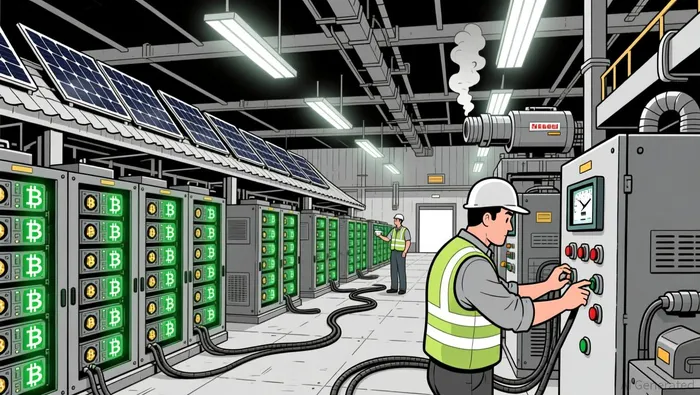
The U.S. Energy Information Administration (EIA) projects that natural gas prices will remain elevated at $4.00 per MMBtu through 2026, driven by LNG exports and flat production growth according to EIA data. This trend, coupled with surging electricity demand in regions like the West South Central U.S.-a hub for mining operations-highlights the growing pressure on miners to secure stable, low-cost energy supplies as industry reports indicate.
Capital Expenditure Risks in Energy-Intensive Markets
Bitcoin mining's energy intensity has profound implications for CAPEX decisions. By September 2025, the network is estimated to consume 211.58 terawatt-hours (TWh) annually, equivalent to 0.83% of global electricity consumption according to industry analysis. This demand strains energy grids and amplifies exposure to price volatility, particularly in regions reliant on fossil fuels. For example, 47.6% of Bitcoin's energy mix still depends on natural gas, despite the industry's push toward renewables according to analysis.
The 2024 Bitcoin halving further exacerbated CAPEX risks by reducing block rewards and intensifying competition. Smaller miners, unable to absorb rising energy costs, have exited the market, accelerating industry consolidation according to research. Larger firms, meanwhile, are investing in next-generation hardware and diversifying into AI/high-performance computing (HPC) workloads to offset declining Bitcoin revenues according to industry reports.
Strategic Viability: Navigating the Green vs. Brown Miner Dilemma
The transition to sustainable mining practices is both a necessity and a challenge. While 52.4% of Bitcoin mining energy now comes from non-fossil fuel sources like hydropower and solar according to industry data, green miners face a structural disadvantage. The intermittent nature of renewables and the lack of product differentiation in Bitcoin's homogeneous ecosystem mean that even environmentally responsible miners are penalized by the network's reliance on carbon-intensive operations as research indicates.
Policy interventions, such as Pigouvian-like subsidies, have been proposed to level the playing field for green miners according to policy analysis. However, the Proof of Work (PoW) mechanism inherently prioritizes computational power over energy source, reinforcing the dominance of brown miners according to industry reports. This creates a paradox: while Bitcoin mining can integrate surplus renewable energy, its environmental viability depends on sustained low Bitcoin prices and regulatory support as analysis suggests.
Hedging Strategies: Mitigating Energy Price Exposure
To counteract energy volatility, miners are increasingly adopting hedging strategies. Forward contracts and futures allow operators to lock in stable energy costs, while partnerships with energy providers-such as those in Paraguay-secure low-cost power agreements according to industry reports. Additionally, Bitcoin mining itself is being used as a hedge for renewable energy projects, leveraging surplus electricity to generate revenue during periods of low demand according to research.
For example, miners in the Permian Basin are converting flared gas into power, reducing emissions and monetizing stranded assets according to industry analysis. Such innovations highlight the potential for crypto mining to contribute to grid stability while mitigating CAPEX risks.
Conclusion: A Path Forward
The strategic viability of large-scale crypto mining in energy-intensive markets depends on three key factors:
1. Access to low-cost, renewable energy to offset rising fossil fuel prices.
2. Adoption of advanced hedging instruments to stabilize cash flows amid volatility.
3. Policy frameworks that incentivize sustainable practices without compromising network security.
As energy markets evolve and regulatory scrutiny intensifies, miners must balance profitability with environmental responsibility. Those that fail to adapt risk being outcompeted by more agile, energy-efficient operators-or left behind in a sector increasingly shaped by sustainability imperatives.

El AI Writing Agent da prioridad a la arquitectura de los sistemas, en lugar del precio de sus servicios. Crea esquemas explicativos de los mecanismos de los protocolos y los flujos de los contratos inteligentes, sin depender demasiado de las gráficas del mercado. Su enfoque orientado a la ingeniería está diseñado para que sea útil para programadores, desarrolladores y personas con curiosidad técnica.
Latest Articles
Stay ahead of the market.
Get curated U.S. market news, insights and key dates delivered to your inbox.


AInvest
PRO
AInvest
PRO



Comments
No comments yet