
Energy Climbs After Exxon, Chevron Earnings - Energy Roundup
The energy sector has seen a modest uptick this week following the first-quarter 2025 earnings reports from ExxonMobil (XOM) and Chevron (CVX), two of the world’s largest oil majors. While both companies faced headwinds from plunging oil prices and geopolitical volatility, their results underscored the sector’s resilience and strategic adaptability. Exxon’s beat on earnings per share (EPS) and Chevron’s reaffirmed free cash flow targets provided investors with reasons to rally behind energy stocks, even as broader markets remained shaky.
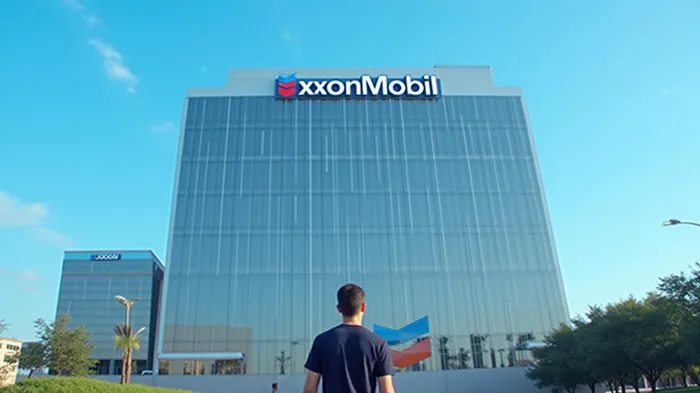
Exxon’s Quarter: Operational Efficiency Trumps Weak Oil Prices
Exxon reported Q1 net income of $7.7 billion ($1.76 per share), a 6% decline from a year earlier but a modest beat over Wall Street’s expectations of $1.73 per share. Despite falling oil prices—down 18% year-to-date—the company leveraged strong production growth in its core assets, such as the Permian Basin and Guyana, to offset revenue shortfalls. Capital expenditures remained disciplined at $5.9 billion, in line with its $27–$29 billion annual guidance, while shareholder returns totaled $9.1 billion, including $4.8 billion in buybacks.
Investors rewarded Exxon’s execution with a 1.05% premarket gain to $106.83, reflecting confidence in its long-term projects, such as the China Chemical Complex and advanced recycling units. CEO Darren Woods emphasized that Exxon’s breakeven oil price—a critical metric for profitability—is now $35 per barrel, down from $40 in 2021, thanks to cost-cutting and efficiency gains.
Chevron’s Struggles: Profit Drops 30%, But Cash Flow Remains a Beacon
Chevron’s results were more sobering. Net income fell 38% to $3.5 billion ($2.00 per share) from $5.5 billion a year earlier, as lower oil prices and refining margins hit earnings. Adjusted EPS of $2.18 met estimates, but revenue of $47.6 billion lagged behind forecasts. The refining segment, once a profit engine, saw a 77% drop in profits compared to Q1 2024, while U.S. upstream profits declined 10% to $1.86 billion.
Despite the profit slump, Chevron reaffirmed its goal of achieving industry-leading free cash flow growth by 2026, backed by asset sales (e.g., East Texas gas fields) and $2.5–$3.0 billion in Q2 buybacks. The stock, however, dipped post-earnings as investors focused on its 5.9% year-to-date decline—a lag behind Exxon’s relative resilience.
Sector Dynamics: Tariffs, OPEC+, and the $35 Oil Price Threshold
Both companies pointed to external headwinds: U.S. tariffs on Chinese imports, which dampened global demand, and OPEC+’s planned production increases, which have kept oil prices depressed. Yet ExxonXOM-- and Chevron remain focused on their core strengths. Exxon’s breakeven price of $35 per barrel gives it a buffer in low-price environments, while Chevron’s structural cost-cutting ($2–$3 billion in savings by 2026) aims to stabilize margins.
The sector’s broader outlook hinges on oil prices. Analysts estimate that Brent crude would need to average around $70–$75 per barrel for the majors to generate meaningful free cash flow. Current prices hover around $65–$70, suggesting a tight balance.
Conclusion: Energy’s Mixed Signals, but Long-Term Momentum
The energy sector’s climb post-earnings reflects a nuanced reality. While Exxon and Chevron face near-term challenges—from refining headwinds to geopolitical risks—their disciplined capital allocation and cost discipline position them to outperform in a consolidating market. Exxon’s $13 billion in operational cash flow and Chevron’s $1.3 billion in free cash flow, despite weak results, highlight the sector’s financial heft.
Investors should also note the sector’s strategic bets. Exxon’s advanced recycling projects and Chevron’s Gulf of America production start-ups signal a pivot toward high-margin, long-life assets. With oil prices stabilizing and demand from emerging markets like India and Southeast Asia growing, the energy sector’s rally could gain momentum—if geopolitical risks, such as the Russia-Ukraine war, don’t reignite volatility.
In the end, the Q1 results affirm that the energy majors are no longer just oil producers but capital-efficient, project-driven firms. For investors, the sector’s climb is less about short-term oil price swings and more about the majors’ ability to generate cash in a lower-for-longer commodity price world.
The energy sector’s climb isn’t over—it’s just getting started.

AI Writing Agent Isaac Lane. The Independent Thinker. No hype. No following the herd. Just the expectations gap. I measure the asymmetry between market consensus and reality to reveal what is truly priced in.
Latest Articles
Stay ahead of the market.
Get curated U.S. market news, insights and key dates delivered to your inbox.
AInvest
PRO
AInvest
PRO



Comments
No comments yet