
Energy and Automotive Sector Rotation: Navigating Supply Shocks and Strategic Allocation
 Aime Summary
The U.S. energy landscape has undergone a seismic shift over the past five years, driven by surging domestic crude oil production and a recalibration of import dynamics. By Q3 2025, U.S. crude oil imports stabilized at 6.403 million barrels per day (bpd), a 0.6% annual increase but still far below the peak levels of the early 2010s. This decline reflects a structural transformation: U.S. production hit 13.58 million bpd in June 2025, with the Permian Basin and other shale plays accounting for over 70% of output. Meanwhile, Canada now supplies 60% of U.S. crude imports, a stark departure from the era when Middle Eastern sources dominated. This shift has created a new set of risks and opportunities, particularly for investors navigating sector rotation between energy and automotive industries.
Energy Supply Shocks and Sector Divergence
The divergence between energy and automotive sectors has become a defining feature of 2025. Energy majors, particularly integrated producers like ChevronCVX-- (CVX) and Marathon PetroleumMPC-- (MPC), have thrived amid refining constraints and surging distillate exports. U.S. gasoline production averaged 4.87 million bpd in 2025, lagging behind crude output due to refining bottlenecks. This gap has been partially offset by robust exports—1.2 million bpd of distillates in 2025—to Europe, where Russia's reduced supply created a vacuum. Refiners operating at 90% capacity in late 2025 capitalized on high global demand, turning energy stocks into defensive plays during market volatility.
Conversely, the automotive sector faces mounting headwinds. Diesel demand fell 4.9% in August 2025, compounding seasonal strains and squeezing margins for automakers like Ford (F) and General Motors (GM). Diesel price spikes reached $3.20 per gallon, exacerbating costs for logistics and manufacturing. While electric vehicle (EV) adoption is rising, the transition remains incomplete. EV production still relies on energy grids and battery supply chains indirectly tied to fossil fuels. The U.S. Energy Information Administration (EIA) projects tight distillate inventories through 2026, suggesting even EV-focused automakers may face margin erosion as gasoline volatility persists.
Strategic Asset Allocation: Energy Infrastructure vs. Automotive Exposure
Investors must now weigh the relative resilience of energy infrastructure against the vulnerabilities of traditional automakers. Energy firms with strong export profiles—such as ExxonMobil (XOM) and Valero (VLO)—have outperformed the broader market, while automotive ETFs like XCAR have lagged. Historical patterns from the 2023 refinery boom show that energy and industrial equities outperformed the S&P 500 by 6–8% in subsequent quarters, a trend likely to continue into 2026.
Key considerations for strategic allocation include:
1. Overweight Energy Infrastructure: Firms involved in refining, grid modernization, and carbon capture (e.g., Schlumberger (SLB), Baker Hughes (BHI)) are positioned to benefit from increased refining activity and energy transition initiatives.
2. Underweight Traditional Automakers: Companies with high exposure to diesel and internal combustion engines (e.g., Ford (F), GM) face margin compression risks. Even EV-focused automakers like Tesla (TSLA) remain indirectly exposed to energy price swings.
3. Hedge Against Transition Risks: Exposure to renewable energy ETFs like ICLN can balance portfolios against long-term energy transition risks, though immediate gains favor energy infrastructure.
Geopolitical and Regulatory Risks
The concentration of U.S. crude imports in Canada introduces new vulnerabilities. Disruptions from regulatory changes, labor strikes, or environmental policies could strain supply chains. Additionally, OPEC+ production discipline—evidenced by the alliance's decision to suspend Q1 2026 output increases—has driven oil prices up 8% in late 2025, reinforcing energy stocks' appeal. However, regulatory shifts under the Biden administration, including carbon reduction mandates, may accelerate fossil fuel demand declines, complicating long-term energy sector valuations.
For the automotive sector, the transition to EVs is both a risk and an opportunity. While EVs reduce direct fuel dependence, their reliance on energy grids and battery materials (e.g., lithium, cobalt) ties them to energy price volatility. Investors should monitor policy tailwinds for EV infrastructure and battery innovation, which could mitigate these risks.
Conclusion: Balancing Short-Term Resilience and Long-Term Adaptability
The U.S. gasoline supply shocks of 2023–2025 have created a clear inflection point for sector rotation. Energy stocks and industrial equities offer defensive resilience amid rising geopolitical and economic uncertainty, while the automotive sector remains exposed to fuel price volatility and margin pressures. Investors should align portfolios with these dynamics by overweighing energy infrastructure, underweighting traditional automakers, and maintaining exposure to energy transition technologies.
As the EIA and OPEC+ continue to monitor global energy markets, the coming months will likely present both opportunities and challenges. By balancing short-term resilience with long-term adaptability, investors can navigate the evolving energy landscape with strategic precision.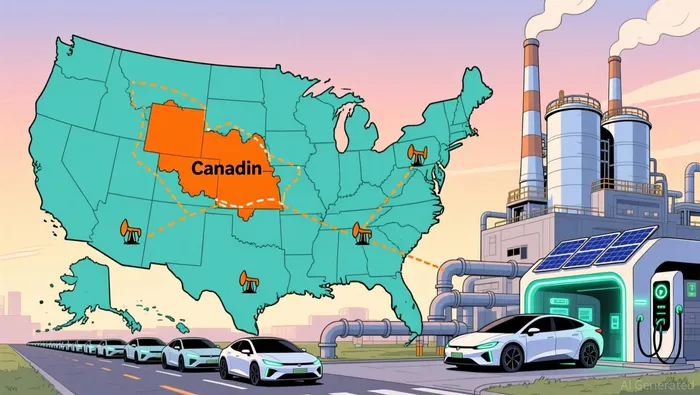

Stay ahead of the market.
Get curated U.S. market news, insights and key dates delivered to your inbox.
AInvest
PRO
AInvest
PRO



Comments
No comments yet