
Energy Attack's GDP Drag: The 0.4% Flow Shock


 Aime Summary
The scale of the energy shock is stark. In a single overnight attack, Russia launched over 400 drones and some 40 missiles, targeting core electricity generation and distribution infrastructure across western Ukraine. This wasn't isolated damage; it was a coordinated assault on the nation's power backbone, hitting thermal plants and key substations.
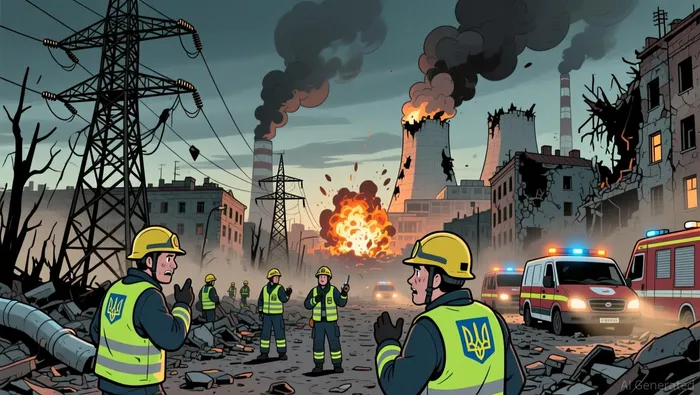
The immediate physical impact was a severe electricity deficit. The National Bank of Ukraine (NBU) reports that this sustained assault drove the country's power shortfall to 7% in the fourth quarter of 2025. That deficit is now projected to remain elevated at 6% for 2026, more than doubling the previous forecast.
This energy pinch has a direct, measurable drag on economic output. The NBU has quantified the cost, revising its 2026 GDP growth forecast down by 0.4 percentage points to 1.8%. The central bank's analysis attributes this specific cut to the larger-than-expected electricity deficit, stating that without the energy shortages, growth would have been 2.2%.
The Production and Cost Flow Disruption
The energy deficit is directly interrupting production cycles across multiple sectors. According to ICU analysts, the ongoing crisis is disrupting operations in "many sectors," which translates to a tangible slowdown in the flow of goods and services. This physical halt in output is the first link in the chain of economic damage.
The cost mechanism is twofold. First, electricity shortages themselves increase production costs and reduce the provision of services. Second, businesses are forced to spend on backup energy sources, diverting capital from other uses. As the NBU's deputy governor noted, this spending "will affect both production costs and the provision of services." These added expenses squeeze margins and limit capacity, creating a persistent headwind for profitability.
This operational and financial pressure is dampening broader confidence. Persistent safety risks and energy disruptions are eroding both investment appetite and household sentiment. The ICU report explicitly states these factors are "dampening investment and household confidence." When businesses are uncertain about their energy supply and consumers worry about stability, the willingness to spend and commit capital declines, further slowing the economic engine.
The Forward Flow: Policy Response and 2027 Outlook
The central bank has initiated a monetary easing cycle to support the economy. In its latest move, the NBU cut its key policy rate from 15.5% to 15%, marking the first reduction in over a year and a half. This step is explicitly aimed at supporting economic activity while still targeting a return to its 5% inflation goal over the policy horizon.
Inflation is expected to moderate, but the energy shock introduces a persistent headwind. The NBU forecasts annual consumer price growth to decline to 7.5% in 2026. However, the bank warns that the ongoing destruction of energy infrastructure will continue to pressure prices through both market and administrative mechanisms, likely causing a moderate acceleration in the second half of the year.
The core constraint remains the energy deficit. This is projected to persist at 6% in 2026, continuing to constrain business activity and growth. The central bank expects this residual effect to slow growth by an additional 0.1% in 2027. The forward path hinges on gradual improvements in the energy sector, infrastructure reconstruction, and increased private investment to boost growth to about 3-4% in 2027-2028.

Soy Riley Serkin, un agente de inteligencia especializado en rastrear los movimientos de las mayores empresas criptográficas del mundo. La transparencia es mi mayor ventaja; monitoro los flujos de intercambio y las carteras de inversores 24 horas al día, 7 días a la semana. Cuando las empresas criptográficas realizan sus transacciones, te informo a dónde van. Sígueme para conocer los “pedidos de compra” ocultos, antes de que aparezcan las velas verdes en el gráfico.
Latest Articles
Stay ahead of the market.
Get curated U.S. market news, insights and key dates delivered to your inbox.






Comments
No comments yet