
Energy Abundance and Sector Rotation: How Natural Gas Storage Reshapes Investment Opportunities
 Aime Summary
The U.S. Energy Information Administration's latest Natural Gas Weekly Storage Report, released on December 18, 2025, reveals a nuanced energy landscape. Total working gas in storage stood at 3,579 billion cubic feet (Bcf), a 167 Bcf decline from the prior week and 61 Bcf below the same period last year. While this aligns with seasonal winter withdrawals, the inventory remains 32 Bcf above the five-year average. This stability, however, masks regional disparities and broader implications for sector rotation in a low-cost energy environment.
The Paradox of Abundance and Volatility
Natural gas prices have climbed to $4.02/MMBtu, driven by colder-than-expected forecasts and robust LNG export demand. Yet, the market remains anchored by record production (109-109.5 Bcf/d) and a domestic demand surge of 3.8% year-to-date. The EIA's updated winter price forecast of $4.30/MMBtu reflects this tension between supply resilience and near-term demand spikes.
This dynamic creates a paradox: energy costs remain historically low in real terms, yet volatility persists. For investors, this duality opens opportunities in sectors that thrive on energy affordability while hedging against price swings.
Sector Rotation: Energy to Capital-Intensive Industries
A low-cost energy environment traditionally favors capital-intensive industries such as manufacturing, transportation, and automotive. Natural gas prices at $4.00/MMBtu—well below the $6.00+ peaks of 2022—reduce input costs for producers, enhancing profit margins. The automotive sector, in particular, stands to benefit as energy-intensive processes like steel production and battery manufacturing become cheaper.
However, the story is not one-sided. While energy producers face margin pressures from flat 2026 price forecasts, the broader economy gains from stable energy costs. This sets the stage for a sector rotation from energy to industries that leverage energy affordability. Investors should monitor the S&P 500 Materials and Industrials sectors, which have historically outperformed during periods of energy stability.
The LNG Export Conundrum
U.S. LNG feedgas volumes hit record highs of 19.4 Bcf/d in December 2025, driven by strong Asian demand. This export surge has kept storage inventories under pressure, with withdrawals exceeding the five-year average by 25%. While this strengthens the U.S. trade balance and supports energy infrastructure stocks, it also raises questions about long-term domestic supply resilience.
For the automotive sector, this means a dual tailwind: lower energy costs for production and a growing global market for electric vehicles (EVs) powered by cleaner energy. Automakers like Tesla and Rivian, which rely on energy-efficient supply chains, could see accelerated adoption as natural gas offsets some of the cost barriers to EV infrastructure.
Strategic Investment Opportunities
- Energy Infrastructure: While pure-play producers face headwinds, midstream and LNG terminal operators (e.g., Kinder MorganKMI--, Energy Transfer) benefit from record export volumes. These firms offer defensive characteristics in a volatile energy market.
- Automotive and EVs: Companies leveraging low-cost energy to scale production and R&D should outperform. Look for firms with exposure to battery manufacturing or hydrogen-powered vehicle technologies.
- Materials and Industrials: The S&P 500 Industrials sector, which includes aerospace and machinery, could see a rebound as energy costs stabilize.
Risks and Watchpoints
- Weather Volatility: A sudden shift to milder winter conditions could depress prices and trigger a sector rotation back to energy.
- Production Constraints: If 2026 production growth slows, the U.S. may face tighter domestic supply, pushing prices higher.
- Geopolitical Shifts: LNG demand could wane if Europe accelerates renewable adoption or if Asian markets face economic headwinds.
Conclusion: Balancing the Energy Equation
The U.S. natural gas market is at a crossroads. While storage levels remain within historical norms, the interplay of record production, export demand, and seasonal volatility creates a fertile ground for sector rotation. Investors should overweight energy infrastructure and capital-intensive industries while maintaining a hedge against price swings through diversified energy ETFs.
In this low-cost energy environment, the winners will be those who can transform abundance into innovation—whether through cleaner vehicles, smarter manufacturing, or resilient infrastructure. The key is to align portfolios with the dual forces of energy affordability and technological progress.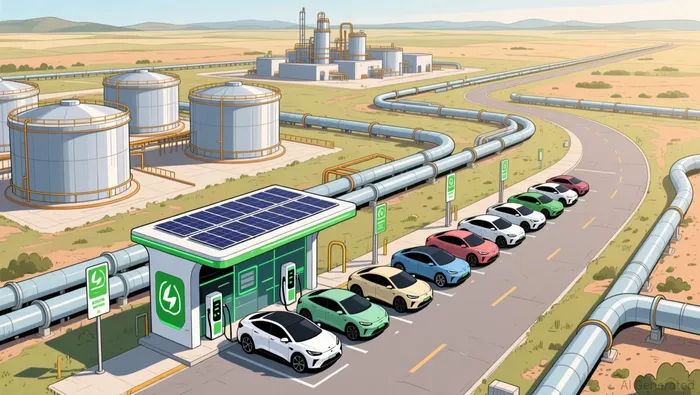

Stay ahead of the market.
Get curated U.S. market news, insights and key dates delivered to your inbox.
AInvest
PRO
AInvest
PRO



Comments
No comments yet