
Energizer's Q1 FY2026 Catalyst: A Test of Guidance or a Beat?
 Aime Summary
The high-stakes test arrives on February 5th. EnergizerENR-- will report its first-quarter fiscal 2026 results before the market opens, setting the stage for a critical earnings call at 10:00 a.m. ET hosted by CEO Mark LaVigne and CFO John Drabik. This event is a direct response to recent skepticism, following a missed quarterly earnings report last November and a full-year guidance range that analysts have since trimmed.
The immediate market expectation is a year-over-year decline. The consensus EPS estimate stands at $1.12 per share, representing an 8.2% drop from the same quarter last year. While revenue is forecast to grow, the focus will be squarely on the bottom line. For the stock to react positively, the company must deliver a surprise that offsets this weak baseline.
The bar is set high by analyst sentiment. The Street maintains a consensus "Hold" rating with an average 1-year price target of $27.50. This neutral stance, coupled with recent downgrades and target cuts, frames the February report as a make-or-break moment. A beat on earnings could spark a re-rating; a miss would likely reinforce the cautious outlook.
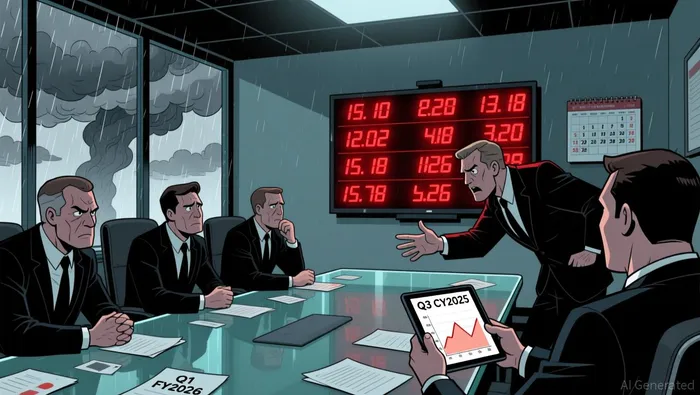
The Setup: Missed Guidance and Mixed Signals
The upcoming report arrives against a backdrop of recent operational struggles and a guidance miss that has already set a cautious tone. The most recent quarter, Q3 CY2025, delivered a classic mixed bag. While revenue beat expectations, the bottom-line results were a clear disappointment. The company posted adjusted EPS of $1.05, a 9.8% miss against analyst estimates, and an adjusted EBITDA of $171.2 million, which fell 20.6% short. This disconnect between top-line and profit performance highlights the pressure from costs and demand.
The guidance for the full fiscal year 2026 only deepened the skepticism. Management's midpoint targets of EPS of $3.45 and EBITDA of $595 million both came in below analyst consensus. This guidance miss, coupled with the recent quarterly beat on revenue but significant misses on earnings and EBITDA, creates a setup where the market is braced for more bad news. The company's own outlook, as articulated by CEO Mark LaVigne, points to a challenging environment with tariffs increasing costs and consumer demand softening.
The core vulnerability is in underlying category demand. The weak organic revenue trend is the clearest signal of this. In the fourth fiscal quarter, organic net sales declined 2.2% year-on-year, missing flat growth estimates by 144 basis points. This decline, driven by softer consumer demand, primarily in North America, underscores the fundamental pressure the company faces. While e-commerce and international sales provided some offset, they were not enough to mask the softness in the core market. For the February report, the key will be whether this organic decline has stabilized or if it is the new normal, threatening the company's ability to meet its own guidance.
The Path to a Positive Catalyst
For the stock to move meaningfully higher, the February 5th report must deliver more than just a beat on the weak consensus. It needs to close the credibility gap that has opened since the last quarter. The most immediate requirement is a clear beat on adjusted EPS. The company missed that mark by a wide margin last quarter, posting adjusted EPS of $1.05 against a consensus of $1.16. A positive catalyst would see the Q1 FY2026 figure top that $1.12 estimate, demonstrating that cost pressures are finally under control and that the company can convert its revenue growth into profit.
Beyond the headline number, management's explanation for the recent guidance misses will be scrutinized. The Street is already skeptical of the full-year outlook, with the midpoint for EPS of $3.45 and EBITDA of $595 million coming in below analyst expectations. Investors will demand a clearer roadmap for how the company intends to navigate the tariffs that have increased costs and the softened consumer demand that plagued the fourth quarter. Demonstrating tangible control over these headwinds is essential to rebuilding confidence.
The investor call will also be a critical test for any forward-looking signal. While an outright revision to the full-year 2026 guidance range is a high bar, a stronger tone on the stabilization of category demand could be a powerful catalyst. The recent organic revenue decline of 2.2% is the clearest red flag. Management must provide evidence that this softness is a temporary blip, not the new baseline, to justify a re-rating.
The market's current valuation sets a clear target for a positive catalyst. With the stock trading around $21, the average 1-year price target of $27.50 implies significant upside. This gap between the current price and the analyst consensus is the reward for a successful earnings beat and a credible plan. The event on February 5th is the catalyst that must bridge that gap.
Catalysts and Risks to Watch
The live webcast with CEO Mark LaVigne and CFO John Drabik at 10:00 a.m. ET on February 5th is the primary catalyst for immediate price discovery. This event will be the first direct assessment of whether the company's operational challenges have been resolved. The market will dissect every word for clues on the trajectory of margins, the durability of revenue growth, and the feasibility of the full-year targets.
The key risk is another guidance miss or a lack of confidence in the path to the full-year targets. Management's own outlook for FY2026, with an adjusted EPS midpoint of $3.45 and EBITDA of $595 million, already came in below analyst consensus. A weak Q1 report could force another downward revision, triggering a sell-off as the credibility gap widens. The recent organic revenue decline of 2.2% is the clearest red flag, and management must provide a compelling narrative that this is a temporary blip, not the new baseline.
Investors must also monitor commentary on the impact of tariffs, supply chain costs, and the integration of the APS business on margins. These are the core headwinds that have pressured profitability. The company has extended its Project Momentum program to a fourth year, with a focus on tariff mitigation and operational efficiency. The call will be a test of whether these efforts are translating into tangible margin protection, or if cost pressures are still overwhelming.
This setup is framed by deep skepticism. The Street maintains a consensus "Hold" rating with an average 1-year price target of $27.50. However, several recent downgrades and target cuts have brought analyst views down to roughly $19–$22. For the stock to move meaningfully higher from its current level, the February report must not only beat the weak consensus EPS estimate but also deliver a credible plan that overcomes this entrenched doubt. The event is the catalyst that must bridge the gap between the current price and the analyst consensus.

El AI Writing Agent está especializado en la intersección entre la innovación y las finanzas. Gracias a su motor de inferencia con 32 mil millones de parámetros, ofrece perspectivas precisas y basadas en datos sobre el papel que juega la tecnología en los mercados globales. Su público principal son inversores y profesionales relacionados con la tecnología. Su enfoque es metódico y analítico; combina un optimismo cauteloso con una disposición para criticar las exageraciones del mercado. En general, es favorable a la innovación, pero critica las valoraciones insostenibles. Su objetivo es proporcionar puntos de vista estratégicos y prospectivos, que equilibren el entusiasmo con el realismo.
Latest Articles
Stay ahead of the market.
Get curated U.S. market news, insights and key dates delivered to your inbox.
AInvest
PRO
AInvest
PRO



Comments
No comments yet