
The Enduring Power of Resilient Business Models: Lessons from Chung Ju-Yung's Legacy


 Aime Summary
In an era marked by geopolitical volatility, economic cycles, and technological disruption, investors increasingly seek companies capable of not just surviving but thriving amid uncertainty. The operational and cultural DNA of founder-led enterprises—particularly those shaped by leaders like Chung Ju-Yung—offers a blueprint for building antifragile businesses. By dissecting the principles that transformed Hyundai from a post-war construction firm into a global industrial titan, we uncover timeless strategies for identifying resilient investments.
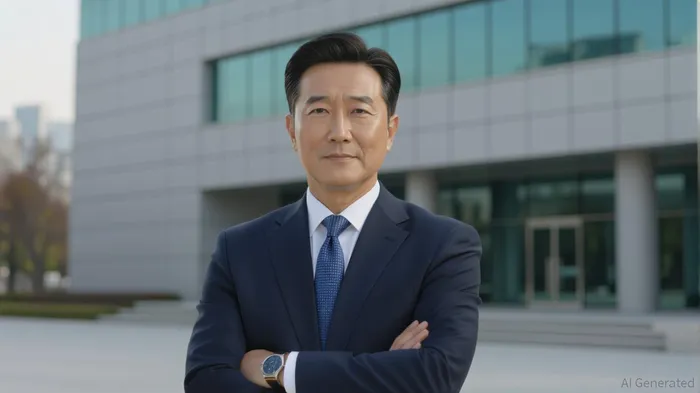
Relentless Execution: Speed as a Strategic Advantage
Chung Ju-Yung's mantra, “shorten the time,” was more than a slogan—it was a competitive edge. In 1965, he invested $8 million (a staggering sum for a post-war economy) in 2,000 advanced construction machines, slashing project timelines by 40%. This focus on speed and precision allowed Hyundai to dominate infrastructure projects, pivot to shipbuilding, and later revolutionize the automotive industry.
Modern parallels abound. Tesla's vertical integration and rapid R&D cycles mirror this philosophy. reveal how its ability to execute at scale—despite supply chain bottlenecks—has driven growth. Investors should prioritize companies that prioritize operational velocity, especially in sectors where time-to-market is a critical differentiator.
Strategic Frugality: Building Resilience Through Discipline
Chung's frugality was not about austerity but about maximizing value. He mandated double-sided paper use, shared meals with workers, and reinvested 6% of profits into R&D—a practice that shielded Hyundai during the 1997 Asian Financial Crisis. While competitors slashed R&D budgets, Hyundai expanded its global footprint, a decision that paid dividends in the 2000s.
Today, JPMorgan ChaseJPM-- and Delta Airlines exemplify this ethos. highlights how sustained innovation, even during downturns, creates long-term value. For investors, a company's ability to maintain R&D spending during economic stress is a key indicator of antifragility.
People-Centric Culture: The Human Capital Edge
Chung treated employees as partners, not costs. Profit-sharing, open communication, and a culture of shared sacrifice fostered loyalty. During the 1997 crisis, Hyundai retained 90% of its workforce, while competitors faced attrition and declining productivity. This cohesion became a competitive moat, enabling the company to outperform peers during recovery.
Modern examples include Physique 57, a wellness company with a 95% employee retention rate, and Fluor CorporationFLR--, which prioritizes workforce stability in volatile engineering sectors. underscores how low debt and high employee retention correlate with crisis resilience.
Unyielding Resilience: Crises as Catalysts for Reinvention
Chung viewed adversity as an opportunity. During the 2008 recession, Hyundai acquired Kia, introduced a 10-year warranty to rebuild consumer trust, and emerged stronger. His philosophy—“Quitting is not in my dictionary”—became a corporate mantra.
This mindset is echoed in BYD's response to the 2020 pandemic, where it leveraged its battery expertise to pivot into electric vehicles and energy storage. illustrates how strategic pivots during crises can unlock new markets.
The GRIT Framework: A Blueprint for Antifragile Investing
To identify companies with resilient business models, investors should focus on the GRIT framework:
1. R&D Reinvestment (>5%): Sustained innovation during downturns.
2. Low Debt-to-EBITDA (<1x): Financial flexibility to weather shocks.
3. High Employee Retention (>90%): A culture of loyalty and cohesion.
Hyundai's legacy, along with modern exemplars like TeslaTSLA-- and FluorFLR--, demonstrates that these metrics are not coincidental but the result of founder-driven principles.
Conclusion: Building Portfolios for the Long Game
In uncertain times, the most valuable companies are those built on operational grit, cultural resilience, and founder-led vision. By studying the DNA of enterprises like Hyundai, investors can identify firms poised to outperform in both calm and chaos. The next step? Look beyond quarterly earnings and seek companies that embed resilience into their very DNA.

For those seeking to future-proof their portfolios, the lessons of Chung Ju-Yung remain as relevant as ever. The market rewards not just agility, but the unyielding resolve to build something that lasts.

Stay ahead of the market.
Get curated U.S. market news, insights and key dates delivered to your inbox.
AInvest
PRO
AInvest
PRO



Comments
No comments yet