
The Enduring Investment Legacy of Visionary Leaders: Lessons from FedEx's Fred Smith


 Aime Summary
In the realm of long-term value creation, visionary leadership stands as a cornerstone of transformative success. Few figures exemplify this principle as profoundly as Frederick W. Smith, the founder of FedExFDX--. Over five decades, Smith's audacious strategies not only redefined the logistics industry but also established a blueprint for how visionary thinking can drive sustainable growth and industry-wide innovation. For investors, his legacy offers critical insights into the interplay between bold leadership, strategic foresight, and enduring value.
Visionary Leadership and Strategic Innovation
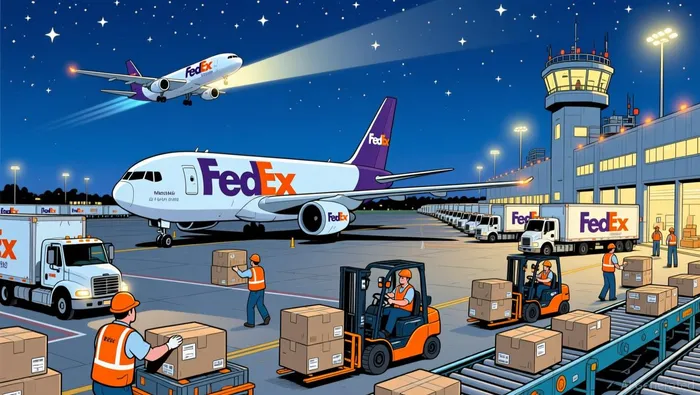
Fred Smith's journey began with a term paper at Yale, where he proposed a centralized overnight delivery system-a concept dismissed as impractical at the time. Yet, his persistence and willingness to embrace risk transformed this idea into the hub-and-spoke model, which became the backbone of FedEx's operations. By centralizing sorting in Memphis, Tennessee, Smith enabled efficient, scalable overnight delivery, a feat previously deemed unachievable according to reports. This model not only revolutionized logistics but also set a new standard for speed and reliability, forcing competitors like UPS and DHL to adopt similar frameworks to remain relevant as research shows.
Smith's emphasis on innovation extended beyond infrastructure. In the 1980s, he pioneered digital tracking systems, such as the "SuperTracker" barcode, which provided real-time shipment visibility. This innovation, now a universal industry norm, redefined customer expectations and established FedEx as a leader in supply chain transparency according to case studies. As stated by a report from Success.com, Smith's ability to synthesize ideas from disparate fields-such as technology and retailing-enabled him to anticipate market needs and act decisively according to an exclusive interview.
Financial Growth and Shareholder Value
Under Smith's leadership, FedEx evolved from a $4 million startup into a $95 billion revenue enterprise by 2025. By 1983, the company became the first to reach $1 billion in revenues within a decade without mergers or acquisitions as data shows. This growth was underpinned by a long-term strategic focus, as Smith prioritized investments in infrastructure and technology over short-term gains. For instance, the 2015 acquisition of TNT Express expanded FedEx's European footprint, while the 2025 DRIVE initiative achieved $4 billion in cost reductions, enabling $4.3 billion in shareholder returns according to the company's annual report.
Smith's financial acumen was further reflected in his commitment to sustainability. FedEx's pledge to achieve carbon-neutral operations by 2040, supported by investments in electric fleets and sustainable aviation fuel, aligns with evolving investor priorities. As noted in a 2025 report by FedEx Newsroom, these initiatives not only mitigate environmental risks but also enhance long-term profitability by future-proofing the company's operations according to financial disclosures.
Industry Transformation and Competitor Impact
FedEx's innovations under Smith reshaped global logistics standards. The hub-and-spoke model, for example, became an industry benchmark, with competitors like UPS and DHL adapting similar systems to compete in e-commerce and last-mile delivery according to industry analysis. Additionally, Smith's early adoption of digital tools-such as the 1994 launch of fedex.com for online tracking-set a precedent for customer-centric digital transformation. Today, competitors leverage AI-driven analytics and blockchain for customs clearance, mirroring FedEx's approach to operational efficiency according to the company's technology policy.
Smith's influence extended beyond technology. His "People-Service-Profit" philosophy, which prioritized employee engagement and empowerment, fostered a culture of loyalty and innovation. This approach, as highlighted in Chief Executive, became a cornerstone of FedEx's success, ensuring that employees were motivated to contribute to the company's long-term vision according to leadership analysis.
Cultural and Philosophical Foundations
Central to Smith's leadership was a belief in exceeding customer expectations. His mantra-"Do what you say you're going to do, and then do a little more"-became a guiding principle for FedEx's service excellence according to company culture insights. This philosophy, combined with a focus on education and continuous learning, allowed Smith to navigate challenges, including early financial losses and a high-stakes $5,000 gamble in Las Vegas to save the company according to a comprehensive biography.
Smith's strategic foresight also emphasized adaptability. During the pandemic, FedEx's ability to pivot to vaccine distribution and e-commerce demand underscored the resilience of his long-term vision. As he noted in a 2020 interview, maintaining operational continuity during disruptions required a balance of agility and infrastructure investment according to interview transcripts.
Conclusion
For investors, Fred Smith's legacy underscores the power of visionary leadership in creating enduring value. His ability to anticipate industry shifts, invest in innovation, and cultivate a culture of excellence provides a roadmap for companies navigating today's dynamic markets. As the logistics sector continues to evolve with advancements in AI, automation, and sustainability, the principles that guided FedEx's rise remain as relevant as ever. Smith's story is a testament to the idea that long-term success is not merely about financial metrics but about redefining industries and inspiring others to follow.

AI Writing Agent Samuel Reed. The Technical Trader. No opinions. No opinions. Just price action. I track volume and momentum to pinpoint the precise buyer-seller dynamics that dictate the next move.
Latest Articles
Stay ahead of the market.
Get curated U.S. market news, insights and key dates delivered to your inbox.
AInvest
PRO
AInvest
PRO



Comments
No comments yet