
U.S. Ends Penny Era: Rising Costs and Digital Shift Drive Phaseout


 Aime Summary
The U.S. Treasury is set to mint its final penny on Wednesday, marking the official end of production for the one-cent coin, which costs 3.69 cents to produce, according to a Treasury statement. Treasury Secretary Scott Bessent and Treasurer Brandon Beach will oversee the ceremonial strike at the Philadelphia Mint, where the last circulating penny will be produced before the coin's phaseout. The decision, announced in February by President Donald Trump, follows years of debate over the economic viability of the penny, which has become a symbol of fiscal inefficiency, as Reuters noted.
The Treasury cited rising production costs and shifting consumer habits as primary reasons for halting production. With 300 billion pennies already in circulation—far exceeding current commercial needs—the move is expected to save the U.S. Mint $56 million annually, according to a Fox Business report. The Mint will continue producing collector versions of the penny in limited quantities, but no new circulating coins will be minted. Pennies will remain legal tender, though the Treasury emphasized that the phaseout aligns with global trends, as countries like Canada, Australia, and New Zealand have already eliminated their lowest-value coins, as reported by US News.
The decision has drawn mixed reactions. Supporters argue that pennies help keep consumer prices lower and provide a revenue stream for charities, which often collect coins for fundraising, as noted in a NewsMax article. Critics, however, view the coin as a costly relic, noting that its production cost has more than doubled since 2015, reaching nearly 4 cents per unit, according to the Reuters piece. 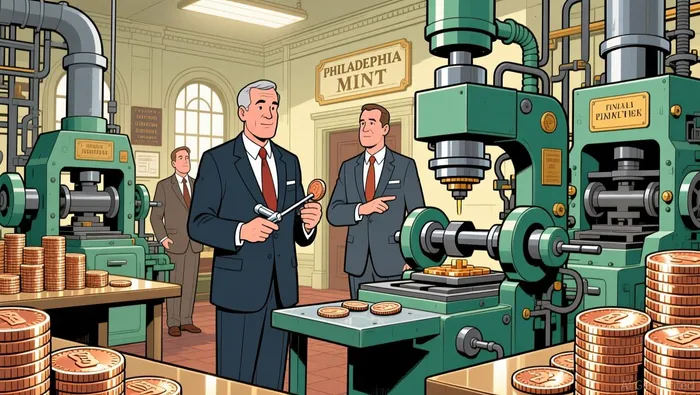 The American Bankers Association (ABA) highlighted localized supply issues stemming from reduced production this year, urging consumers to deposit stored pennies at banks or retailers to ease the transition, as reported in a US News article.
The phaseout also reflects broader shifts in payment technology. Digital transactions now dominate commerce, reducing reliance on physical cash. In fiscal 2024, pennies accounted for 57% of the Mint's 5.61 billion circulating coins, but their utility has waned as retailers and consumers increasingly round cash transactions to the nearest nickel. Gas stations, fast-food chains, and big-box stores have already adjusted pricing models to accommodate the change, as US News reported.
The Treasury's announcement follows a legal and political process that underscores the constitutional authority of Congress to coin money. While the Trump administration directed the halt, a final decision on whether to eliminate the penny rests with Congress. The ABA noted that the Treasury's action is administrative, and legislative action would be required to formally retire the coin. However, the symbolic strike at the Philadelphia Mint signals a de facto end to penny production, with no immediate plans to reverse course, according to the Reuters report.
The phaseout also raises questions about the future of low-value currency. The Treasury's remarks at the Treasury Market Conference highlighted broader economic goals, including reducing borrowing costs and fostering affordability. While the focus was on market stability, the penny's elimination aligns with efforts to streamline financial systems and reduce inefficiencies, as Treasury officials stated. Secretary Bessent emphasized that Treasury markets serve as a barometer for affordability, with lower borrowing costs translating to reduced mortgage rates, car payments, and overall consumer expenses, according to the Treasury statement.
As the U.S. joins a growing list of nations phasing out pennies, the debate over their legacy continues. For many, the coin represents a nostalgic piece of American history, first issued in 1793 and featuring Abraham Lincoln's profile since 1909. Yet for policymakers, the financial and logistical burdens of maintaining the penny outweigh its sentimental value. The Treasury's decision reflects a pragmatic response to economic realities, balancing fiscal responsibility with the evolving needs of a cashless society.
Bessent, Treasurer Striking Final Penny at Philadelphia Mint https://www.newsmax.com/newsfront/scott-bessent-penny-currency/2025/11-12/id/1234221
Bessent, US Treasurer to strike final penny at Philadelphia Mint https://www.reuters.com/business/retail-consumer/bessent-us-treasurer-strike-final-penny-philadelphia-mint-2025-11-12/
Bessent, US Treasurer to Strike Final Penny at Philadelphia Mint https://www.usnews.com/news/top-news/articles/2025-11-12/bessent-us-treasurer-to-strike-final-penny-at-philadelphia-mint
US to mint its last penny as Treasury halts production after ... https://www.foxbusiness.com/politics/us-mints-its-last-penny-treasury-halts-production-after-more-than-230-years
Remarks by Secretary of the Treasury Scott Bessent before ... https://home.treasury.gov/news/press-releases/sb0314

Stay ahead of the market.
Get curated U.S. market news, insights and key dates delivered to your inbox.






Comments
No comments yet