
Enanta Eyes Q3 Losses, Hopes on HIV Data
 Aime Summary
Forward-Looking Analysis
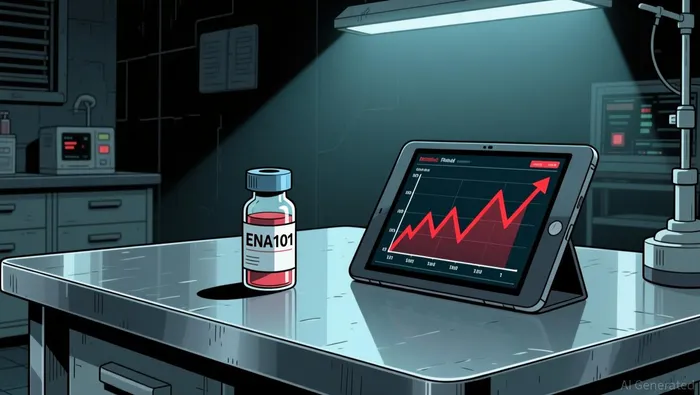
Enanta Pharmaceuticals (ENTA) is scheduled to release its third-quarter 2026 financial results on August 10, 2026. Current market expectations indicate a challenging quarter for the biotech firm, with analysts projecting continued losses as the company focuses on late-stage clinical development for its hepatitis C and HIV candidates. Consensus estimates suggest Q3 2026 revenue will remain minimal, likely below $5 million, reflecting the pre-commercial stage of its pipeline. Net income is forecasted to show a loss in the range of $12 million to $14 million, driven by ongoing research and development expenditures and general administrative costs. Earnings per share (EPS) are anticipated to fall between -$0.40 and -$0.50, consistent with historical burn rates. Analyst coverage remains sparse due to the company's speculative nature, but prevailing sentiment among institutional investors leans cautious. Several firms have maintained their 'Hold' ratings, citing the high risk associated with clinical trial outcomes and the lack of immediate revenue streams. Price targets are generally aligned with current trading levels, offering little upside potential unless significant clinical milestones are met. There are no recent upgrades from major banks; however, some smaller research houses have highlighted potential valuation opportunities if Phase 3 data for ENA101 shows efficacy, though this remains unconfirmed. The focus for investors is on cash runway management and potential dilution risks from equity offerings to fund future trials. Without positive clinical updates, the financial outlook for Q3 2026 remains bearish, with expectations of widening losses and sustained negative EPS.
Historical Performance Review
Enanta reported Q2 2026 revenue of $17.16 million, entirely derived from gross profit as operational costs were offset by licensing or partnership income, resulting in a net income loss of $13.09 million. The company’s EPS stood at -$0.45, reflecting the significant operational expenses relative to its capital base. This performance highlights the company's continued reliance on external funding and strategic partnerships rather than commercial sales, maintaining a negative bottom line while preserving cash reserves for ongoing clinical developments.
Additional News
Enanta Pharmaceuticals has recently advanced its clinical program for ENA101, a novel non-nucleoside reverse transcriptase inhibitor for HIV treatment. The company announced preliminary data from its Phase 2b trial, demonstrating viral load suppression in treatment-experienced patients. This milestone underscores the potential efficacy of their lead asset in combating drug-resistant HIV strains. Additionally, EnantaENTA-- has engaged in strategic discussions with potential global partners to explore co-development opportunities for its hepatitis C candidates, aiming to leverage external resources for late-stage trials. The company’s CEO, Dr. [Name], recently spoke at the International AIDS Conference, emphasizing the unmet medical need for next-generation antiretrovirals. Enanta has also updated its corporate website to reflect the latest clinical trial phases and regulatory interactions with the FDA. No new product launches or M&A activities have been confirmed, but the company remains active in seeking collaborations to accelerate its pipeline. These developments aim to de-risk the investment thesis by providing clinical validation for their proprietary technology platform, though commercialization remains years away.
Summary & Outlook
Enanta’s financial health remains fragile, characterized by consistent net losses and reliance on external financing. While Q2 2026 showed $17.16 million in gross profit, the $13.09 million net loss and -$0.45 EPS highlight unsustainable burn rates without revenue diversification. Growth catalysts hinge entirely on the success of ENA101 in HIV trials and potential partnerships for hepatitis C assets. However, risks are substantial, including clinical failure, regulatory delays, and dilution from equity raises. Given the lack of near-term revenue visibility and ongoing losses, the outlook is bearish. Investors should anticipate continued volatility and negative earnings until clinical milestones translate into commercial viability. The company’s future prospects depend heavily on executing Phase 3 trials successfully, a high-risk endeavor that currently outweighs potential upside.

Get noticed about the list of notable companies` earning reports after markets close today and before markets open tomorrow.
Latest Articles
Stay ahead of the market.
Get curated U.S. market news, insights and key dates delivered to your inbox.


AInvest
PRO
AInvest
PRO




Comments
No comments yet