
U.S. Enacts Landmark Stablecoin Law Mandating 1:1 Reserve Backing to Bolster Dollar Supremacy
 Aime Summary
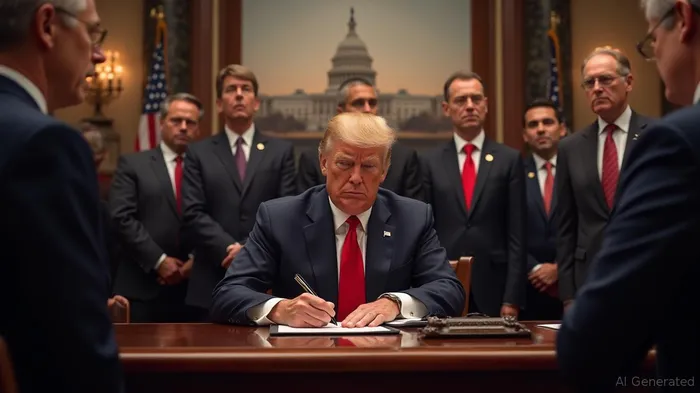
The United States has entered a transformative phase in digital finance following the enactment of the Guiding and Establishing National Innovation for U.S. Stablecoins Act (GENIUS Act) on July 18, 2025. This first-of-its-kind federal law establishes a comprehensive regulatory framework for payment stablecoins, marking a pivotal step in institutionalizing digital dollars and programmable money. The legislation, passed with bipartisan support (68-30 in the Senate and 308-122 in the House), mandates strict reserve requirements, including full one-to-one backing with cash or short-term U.S. Treasuries, monthly public audits, and segregation of reserves. Stablecoin issuers must register as Permitted Payment Stablecoin Issuers (PPSIs) and operate under either federal or state-certified pathways. Notably, the law explicitly prohibits stablecoins from being classified as securities, bank deposits, or interest-bearing assets, while granting regulators authority to impose daily fines or criminal penalties for noncompliance [1].
The GENIUS Act has spurred immediate action across financial institutionsFISI-- and crypto-native firms. JPMorganJPM--, CircleCRCL--, and fintechs are accelerating integration of stablecoins into risk-managed frameworks, with Visa’s crypto lead highlighting opportunities for global remittances and interoperability with existing payment systems. Crypto firms like Sygnum emphasize a shift from yield-driven models to utility-based use cases, aligning with broader institutional adoption. Experts such as Utkarsh Ahuja (Moon Pursuit Capital) and Guillaume Poncin (Alchemy) argue that regulatory clarity eliminates inertia, unlocking innovation in programmable money infrastructure [2].
A key implication of the act is its reinforcement of U.S. dollar supremacy. By requiring stablecoin reserves to be held in dollar assets and Treasuries, the legislation could inject trillions into U.S. debt markets. McMillan LLP estimates stablecoin issuers may rival foreign central banks in treasury holdings, while Chris Perkins of CoinFund views this as foundational for digital dollar adoption in emerging markets, where locally pegged stablecoins could serve as safer alternatives to volatile local currencies [3]. Tokenization of assets like real estate and private equity is also gaining traction, with DeFi and TradFi firms leveraging programmable stablecoins for cross-border liquidity and settlement efficiency.
However, the act’s prohibition on interest-bearing stablecoins has shifted focus toward utility-driven applications. Analysts warn of a potential “DeFi summer on steroids” as demand for yield migrates to decentralized platforms, though regulatory frameworks for such activity remain pending. JPMorgan is testing loan platforms collateralized by crypto holdings, underscoring growing institutional confidence in regulated digital assets [4].
Political risks, however, linger. While experts like Genna Garver (Troutman Pepper Locke) argue stablecoin adoption is irreversible, critics such as Paul Blustein caution against parallels to 19th-century “free banking” crises or potential strain on U.S. Treasury markets. Long-term success hinges on broader legislative efforts, including the CLARITY Act, to structure market infrastructure [5].
The GENIUS Act represents a foundational milestone in transitioning stablecoins from niche experiments to core financial infrastructure. By anchoring digital tokens to U.S. debt and excluding them from traditional regulatory silos, the law fosters innovation in digital payments, tokenized assets, and programmable finance. Challenges remain, particularly around liquidity management and macroeconomic implications, but the act’s clarity positions U.S. stablecoins as durable drivers of dollar hegemony and global interoperability.
Source: [1] [title1] [url1]
[2] [title2] [url2]
[3] [title3] [url3]
[4] [title4] [url4]
[5] [title5] [url5]

Stay ahead of the market.
Get curated U.S. market news, insights and key dates delivered to your inbox.
AInvest
PRO
AInvest
PRO



Comments
No comments yet