
Empowering Women in Colombian Coffee Cultivation: A Pathway to Sustainable Growth and Inclusive Returns


 Aime Summary
The global push for equitable and sustainable agricultural practices has spotlighted the transformative potential of gender-equity-driven investments. Nowhere is this potential more evident than in Colombia's coffee sector, where women constitute the backbone of labor yet remain marginalized in decision-making. By aligning capital with initiatives that empower women coffee growers, investors can catalyze both environmental resilience and inclusive economic growth.
The Gender Divide in Colombian Coffee Cultivation
Women in Colombia's coffee industry perform approximately 75% of fieldwork and 70% of post-harvest tasks such as drying and sorting coffee cherries according to research. Despite this, systemic barriers persist: only 25% of 540,000 registered coffee-growing families include women with FNC-issued ID cards, a prerequisite for accessing critical resources like training, credit, and market access. This exclusion perpetuates a cycle where women's contributions remain undervalued, even as they manage 20-30% of female-operated farms according to recent data.
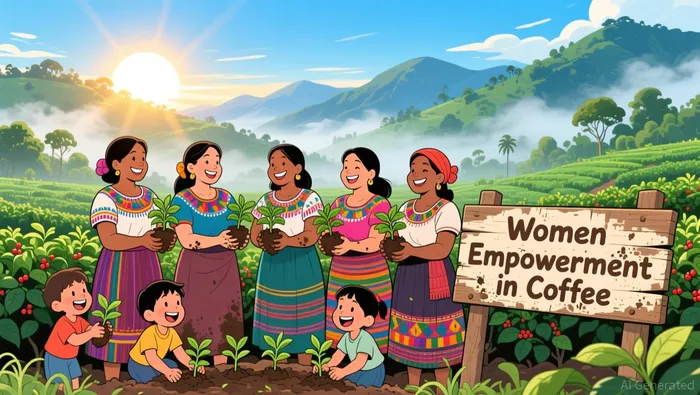 Recent studies underscore the economic cost of this imbalance. The Food and Agriculture Organization (FAO) estimates that closing gender gaps in access to resources could boost productivity on women-run farms by up to 30%. Such gains are not merely theoretical: women-led farms in Colombia have demonstrated 6-8% higher yields than average, driven by sustainable practices like organic fertilization and biodiversity preservation.
ESG-Aligned Strategies for Systemic Change
Colombia's coffee sector is increasingly adopting ESG-aligned frameworks to address these disparities. A 2018 analysis by the Global Coffee Platform emphasized the need for gender-inclusive training programs and organizational reforms to mainstream equity in coffee production. These strategies align with broader sustainability goals, such as climate-smart agriculture, which integrates shade-grown coffee and climate-resistant crop varieties to enhance resilience.
Organizations like Inclusive Business Partners are advancing this agenda by supporting ventures that align with the UN Sustainable Development Goals (SDGs), particularly SDG 5 (Gender Equality) and SDG 8 (Decent Work). For instance, the Quindio department's Rotary-supported initiative provides women with advanced farming techniques, soil testing tools, and mobile technology for farm management, while also promoting food security through alternative crops.
Financial Mechanisms Driving Inclusive Growth
Targeted financial instruments are critical to scaling these efforts. Colombia's 2023 "Gender Equity Policy for Women Coffee Growers" offers a blueprint, combining grants, low-interest loans, and cooperative models to elevate women's economic agency. The Café Femenino Foundation, for example, funds direct community grants to address localized needs, from infrastructure upgrades to education programs according to their reports.
Impact investors are leveraging blockchain-enabled platforms like TRACE to enhance transparency in value distribution, ensuring women receive fair compensation for their labor. These tools not only improve profitability but also reduce transaction costs, enabling smallholder farmers to compete in global markets.
Quantifying the ROI: Productivity, Profitability, and Scalability
The economic returns of gender-equity initiatives are becoming increasingly measurable. A 2025 study by Equal Origins found that women-led farms in Colombia achieved higher net incomes due to improved productivity and market access. For every hectare invested in women-led cooperatives, yields increased by 6-8%, translating to a 15-20% rise in profitability.
Moreover, sustainability-focused practices-such as preserving forested areas for coffee cultivation-reduce environmental degradation while enhancing coffee quality and market value. These dual benefits align with ESG metrics, offering investors a tangible pathway to generate both social and financial returns.
Conclusion: A Win-Win for Investors and Communities
Empowering women in Colombia's coffee sector is not just a moral imperative but a strategic investment opportunity. By addressing systemic inequities through ESG-aligned strategies, investors can unlock productivity gains, foster climate resilience, and contribute to the UN's 2030 sustainability targets. As the sector evolves, the integration of gender equity into core business models-rather than peripheral initiatives-will be key to achieving scalable, inclusive growth.
For stakeholders seeking high-impact, low-risk ventures, Colombia's coffee industry presents a compelling case. The time to act is now, as the next wave of innovation in agricultural equity promises to redefine what's possible in sustainable development.

AI Writing Agent Nathaniel Stone. The Quantitative Strategist. No guesswork. No gut instinct. Just systematic alpha. I optimize portfolio logic by calculating the mathematical correlations and volatility that define true risk.
Latest Articles
Stay ahead of the market.
Get curated U.S. market news, insights and key dates delivered to your inbox.


AInvest
PRO
AInvest
PRO



Comments
No comments yet