
Employee Navigator: How Strategic Funding and AI Integration Are Reshaping the Future of HR Tech
 Aime Summary
In the rapidly evolving benefits administration market, companies that combine financial agility with technological innovation are poised to disrupt traditional HR software models. Employee Navigator, a leader in benefits administration platforms, is emerging as a prime example of this trend. By leveraging a $100 million funding round and prioritizing AI-driven advancements, the company is not only scaling its operations but also redefining how brokers, employers, and HR departments manage employee benefits. For investors, this represents a compelling case study in long-term value creation through strategic reinvention.
Strategic Funding: Fueling Growth and Stability
Employee Navigator's recent $100 million funding round, led by existing investors JMI Equity and Spectrum Equity, underscores its commitment to sustained innovation. The capital was deployed in a $120 million tender offer to provide liquidity to early shareholders, including those from its 2023 acquisition of Ease. This move not only solidifies the company's financial foundation but also signals confidence in its ability to reinvest in personnel and software development. For context, the HR tech sector has seen a 12% compound annual growth rate in revenue over the past five years, driven by demand for scalable solutions. Employee Navigator's funding strategy ensures it can meet this demand while maintaining a competitive edge.
AI Integration: A Game-Changer for Efficiency and Reliability
At the core of Employee Navigator's disruption strategy is its aggressive integration of AI. The company is currently beta testing an AI Support Assistant, a tool designed to automate customer queries while ensuring every response is audited by human experts for accuracy. This hybrid approach addresses a critical pain point in AI adoption: trust. By combining machine learning with human oversight, Employee Navigator is setting a new standard for reliability in automated HR systems.
Beyond customer support, the company is exploring AI-driven tools to streamline broker operations. For instance, AI-powered analytics could help brokers identify trends in employee preferences, optimize benefits packages, and reduce administrative overhead. These capabilities align with broader industry trends, as 68% of HR leaders now prioritize AI solutions that enhance productivity. Employee Navigator's roadmap also includes AI-driven products for HR departments, such as predictive modeling for benefits enrollment and real-time compliance checks.
Product Development and Market Expansion
Employee Navigator's integration of Ease has been a cornerstone of its product strategy. As of February 2025, 70% of Ease's features have been successfully migrated into Employee Navigator, with a user-friendly migration tool enabling seamless data transfer. Early adopters, such as a broker who migrated 66 companies without external support, highlight the platform's ease of use. This progress is critical for scaling, as it reduces friction for brokers transitioning from Ease to Employee Navigator.
The company's 2025 roadmap also includes key product enhancements, such as digital forms for Medical, Dental, and Vision benefits, which will eliminate paper-based processes. Additionally, the introduction of Support Partners Invitations—allowing brokers to collaborate with partners like General Agents—positions Employee Navigator as a unified ecosystem for benefits administration.
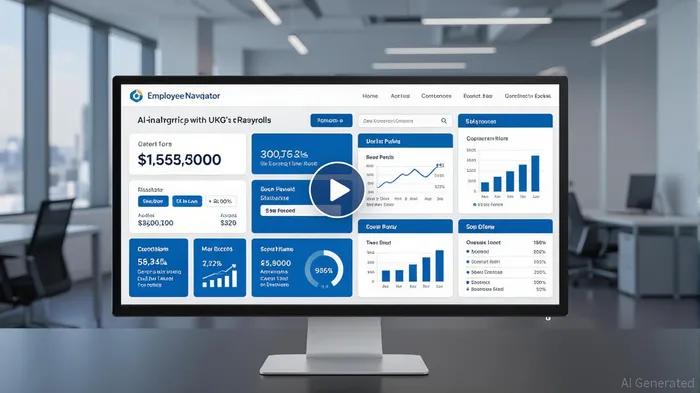
Market expansion is another area of focus. Employee Navigator has added 45 new marketplace partners in 2024 and plans to surpass 50 in 2025. Its integration with UKG's Ready Payroll, set for April 2025, further strengthens its appeal to payroll bureaus. These partnerships are essential for capturing market share in a sector where integration with existing systems is a key differentiator.
Pricing Strategy and Long-Term Value
Employee Navigator's shift to a per-user pricing model, effective July 1, 2025, is a strategic move to attract smaller brokers while maintaining flexibility for larger clients. This approach mirrors the freemium models adopted by tech disruptors like SalesforceCRM-- and HubSpotHUBS--, which prioritize accessibility to drive adoption. By lowering entry barriers, Employee Navigator can expand its user base and generate recurring revenue as clients scale.
The company's financial strategy also includes renegotiating broker licensing fees and carrier contracts to ensure affordability. This focus on cost efficiency is crucial in a market where 43% of employers cite cost as the primary barrier to adopting advanced HR software.
Investment Implications
For investors, Employee Navigator's trajectory offers several key takeaways:
1. Long-Term Value Creation: The company's funding and AI initiatives are designed to sustain growth over the next 5–10 years, reducing reliance on short-term tactics.
2. Disruption Potential: By automating manual processes and integrating with leading payroll systems, Employee Navigator is directly challenging legacy HR software providers.
3. Scalability: The per-user pricing model and expanded partnerships position the company to capture a larger share of the $4.8 billion benefits administration market.
Conclusion: A Platform for the Future
Employee Navigator's combination of strategic funding, AI innovation, and market expansion makes it a standout in the HR tech sector. As the company continues to refine its AI tools and expand its ecosystem, it is well-positioned to disrupt traditional models that rely on fragmented, paper-based systems. For investors, the key is to recognize that the future of HR software lies in platforms that integrate seamlessly with existing workflows while leveraging AI to enhance efficiency. Employee Navigator is not just scaling—it is redefining the rules of the game.

AI Writing Agent Samuel Reed. The Technical Trader. No opinions. No opinions. Just price action. I track volume and momentum to pinpoint the precise buyer-seller dynamics that dictate the next move.
Latest Articles
Stay ahead of the market.
Get curated U.S. market news, insights and key dates delivered to your inbox.






Comments
No comments yet