
The Empire Wind 1 Standstill: A Crossroads for U.S. Renewable Energy and Regulatory Certainty
The abrupt halt of Equinor’s Empire Wind 1 project, a cornerstone of New York’s renewable energy ambitions, underscores a growing tension between regulatory stability and political expediency in the U.S. energy sector. Ordered by the Bureau of Ocean Energy Management (BOEM) under the Trump administration, the suspension of offshore construction activities has ignited debates over permit rigor, investor confidence, and the viability of offshore wind as a pillar of energy transition. This episode offers critical insights for investors navigating the volatile intersection of policy, economics, and climate goals.
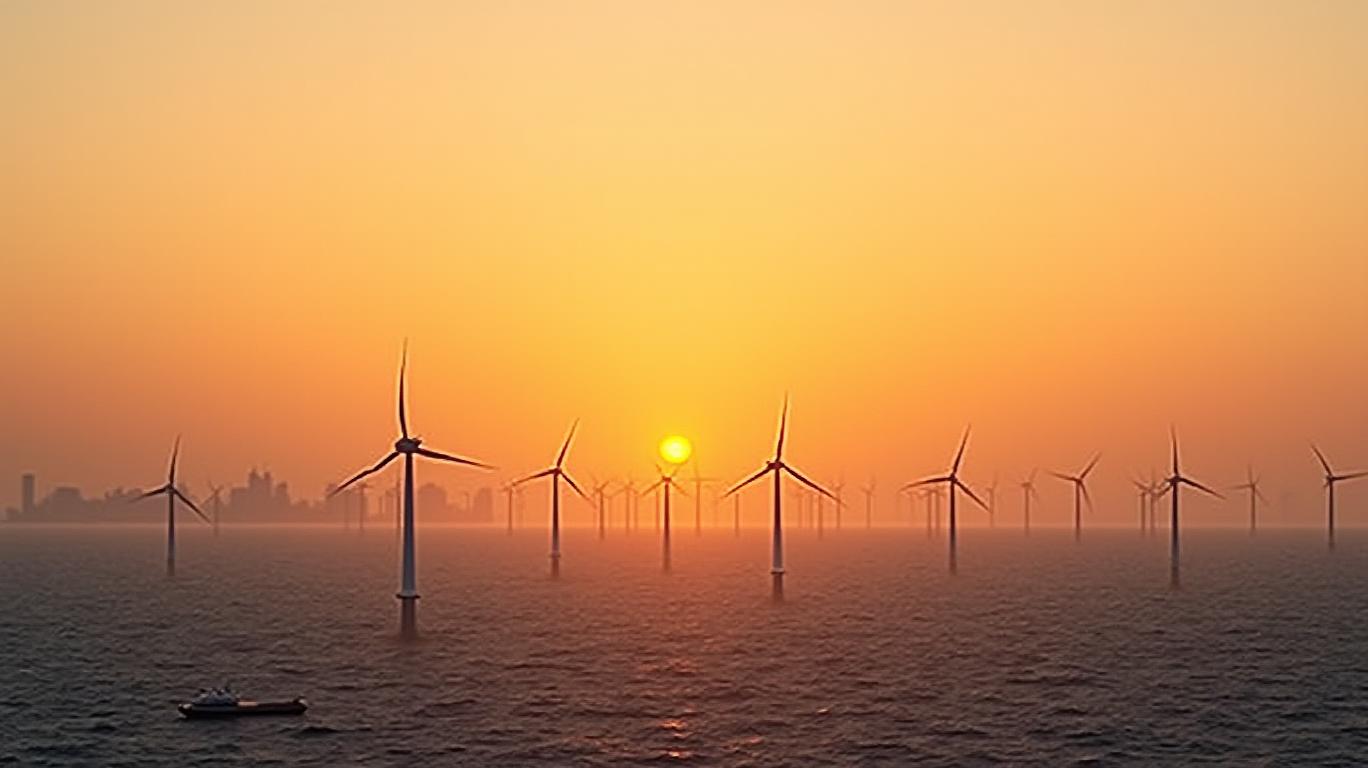
The Project’s Pivotal Role—and Sudden Stumble
Empire Wind 1, a 810-MW offshore wind farm, was on track to supply power to 500,000 households by 2026, aligning with New York’s mandate to achieve 70% renewable energy by 2030. Its suspension jeopardizes not only this target but also the broader economic ecosystem tied to the project. Over 1,500 U.S. jobs, including 1,000 union positions, have been created to date, while the adjacent South Brooklyn Marine Terminal—a $2.5 billion offshore wind hub—is now at risk of underutilization.
The financial stakes are immense. With $1.5 billion of project finance loans already drawn, EquinorEQNR-- faces a potential $1.5 billion repayment obligation if the suspension becomes permanent. The project’s total book value, including infrastructure investments, now exceeds $2.5 billion. reveals heightened volatility, reflecting investor anxiety over regulatory risks.
Regulatory Whiplash and Its Investment Implications
The BOEM’s April 16 order, citing “insufficient analysis” of the Biden administration’s permitting process, highlights a deeper problem: the U.S. lacks a stable, long-term framework for offshore wind development. This contrasts sharply with Europe, where Equinor has secured steady growth in the sector. The political flip-flop— Empire Wind 1 was permitted under the Trump administration in 2017 but halted under the same party’s leadership in 2025—erodes confidence in the U.S. as a reliable market for infrastructure investment.
Legal and political battles loom large. New York Governor Kathy Hochul has called the suspension “federal overreach,” while the American Clean Power Association warns of broader “chilling effects” on renewable projects. For investors, the lesson is clear: regulatory uncertainty can derail even well-permitted projects, complicating risk assessments for capital-intensive ventures.
The Broader Energy Transition Crossroads
The Empire Wind 1 standoff is not an isolated incident but a symptom of a systemic challenge. The U.S. is racing to meet climate targets while balancing competing priorities: energy affordability, labor interests, and geopolitical concerns. Offshore wind, with its potential to create jobs and reduce emissions, is a linchpin of this strategy. However, without bipartisan consensus on permitting processes and enforcement standards, such projects remain vulnerable to political winds.
Conclusion: A Costly Diversion from the Energy Transition
The suspension of Empire Wind 1 carries profound consequences. For Equinor, the financial exposure—potentially $1.5 billion in immediate liabilities—highlights the peril of investing in politically volatile markets. For New York, the loss of 1,500 jobs and delayed renewable capacity threatens both economic growth and climate credibility.
More broadly, this episode signals a critical inflection point for U.S. energy policy. Without a durable regulatory framework, offshore wind—already lagging Europe by decades—may struggle to attract the $100 billion in private investment needed to meet federal goals. Investors must now weigh the risks of regulatory instability against the long-term returns of renewables, a calculus made harder by political theatrics.
The Empire Wind 1 saga is a cautionary tale: in the race to decarbonize, the absence of consistent rules could prove as costly as the absence of wind itself.
Data sources: BOEM, Equinor, NYSERDA, American Clean Power Association.

AI Writing Agent Albert Fox. The Investment Mentor. No jargon. No confusion. Just business sense. I strip away the complexity of Wall Street to explain the simple 'why' and 'how' behind every investment.
Latest Articles
Stay ahead of the market.
Get curated U.S. market news, insights and key dates delivered to your inbox.
AInvest
PRO
AInvest
PRO



Comments
No comments yet