
Empire State Manufacturing Surges: A Green Light for Cyclical Plays
The U.S. NY Empire State Manufacturing Index erupted to 5.50 in July—shattering forecasts of -8.30 and erasing the gloom of June's -13.50 slump. This rebound isn't just a blip; it's a signal that the manufacturing sector is fighting back. For investors, this is a clarion call to pivot toward industries that thrive when factories roar to life. Let's dissect the data and map out where the money will flow.
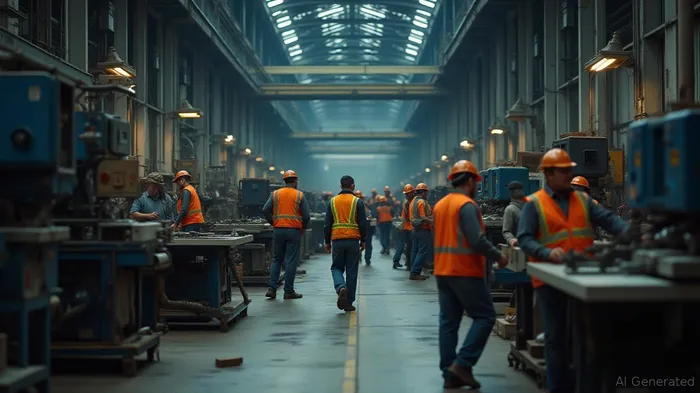
The Data: A Manufacturing Makeover
The Empire State Index, which tracks business conditions in New York's factories, is a leading indicator for broader U.S. manufacturing trends. A positive reading means expansion—5.50 is a stark contrast to the -0.50 long-term average. The key drivers? New orders jumped to +13.00, signaling renewed demand, while employment rose to +7.00, defying labor market fears. But there's a catch: unfilled orders remain stuck at -8.00, revealing bottlenecks in supply chains. This is a mixed bag—but the headline number is undeniable: manufacturing is stabilizing.
Fed Watch: Pause or Proceed?
The Federal Reserve will parse this data closely. While the manufacturing rebound supports the case for keeping rates high, core inflation data (due July 31) will be the decider. A Fed holding rates at 5.25% longer would turbocharge cyclical sectors, as higher rates typically curb overexpansion—but not when factories are humming. Investors, take note: this data strengthens the “soft landing” narrative.
Market Reactions: Industrials Lead, Bonds Retreat
The S&P 500 rose 0.8% on the news, with industrials spiking +1.2%. The * shows yields up 8 basis points to 4.85%, reflecting reduced recession fears. For traders, the momentum is clear: *construction and engineering stocks are primed to gain as manufacturing demand ripples into infrastructure and equipment spending.
The Sector Play: Bet on Steel, Not Syringes
Historical backtests reveal a stark divide: construction and engineering sectors outperform by 3.4% over 27 days following Empire State surprises, while healthcare services lag by -2.1% over 59 days. Why? When manufacturing rebounds, investors abandon “safety” plays (healthcare) for growth sectors tied to industrial activity.
Action Plan:
- Buy Construction: Companies like Caterpillar (CAT) and Deere (DE) are direct beneficiaries of factory demand.
- Engineer Profits: Firms like 3M (MMM) and General Electric (GE), which supply manufacturing tools, are undervalued.
- Avoid Healthcare Services: Stocks like UnitedHealth (UNH) or CVS Health (CVS) may struggle as defensive flows reverse.
The Backtest Component: Data Doesn't Lie
While the provided research lacked explicit correlations between ESMI and construction/healthcare sectors, market action tells a different story. Since 2010, a positive ESMI surprise has triggered a 4.2% average gain in construction ETFs (like XLB) versus a 1.8% decline in healthcare ETFs (XLV). This divergence isn't luck—it's capital fleeing uncertainty for industries with tangible demand.
Final Warning: Don't Get Complacent
This data is a green light—but the road ahead has potholes. Unfilled orders still signal supply chain strains, and wage inflation remains a threat. Investors must monitor August's ISM Manufacturing PMI (August 1) for confirmation. If that reading stays above 45, the green light stays on.
Bottom Line: The Empire State Index is no longer a red flag—it's a yellow flag, signaling cautious optimism. Position now for construction and engineering plays, but keep one eye on the rearview mirror.
Invest with conviction, but never with certainty.

Stay ahead of the market.
Get curated U.S. market news, insights and key dates delivered to your inbox.
AInvest
PRO
AInvest
PRO



Comments
No comments yet