
Emotional AI in Entertainment: NE-YO and Neura's Web3-Driven Fan Engagement Revolution


 Aime Summary
In an era where technology increasingly blurs the lines between human connection and digital interaction, the collaboration between Grammy-winning artist NE-YO and Neura—a decentralized emotional AI network—has emerged as a bold experiment in redefining fan engagement. This partnership, which leverages Web3 principles and emotionally intelligent artificial intelligence, is not merely a gimmick for celebrity branding. It represents a seismic shift in how entertainment, technology, and investment converge to create a new class of digital assets. For investors, the implications are clear: the future of personalized, decentralized fan interaction is no longer speculative—it's here, and it's being built on the bedrock of emotional AI.
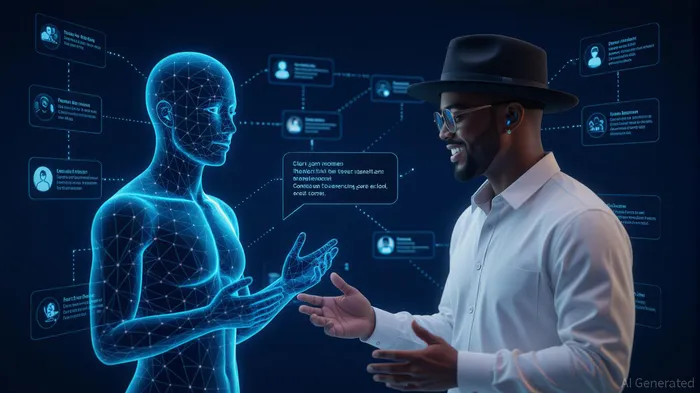
The NE-YO-Neura Model: A Blueprint for Emotional AI
Neura's platform, developed by former MicrosoftMSFT-- AI experts, is designed to interpret tone, subtext, and emotional context with over 91% accuracy. By creating a digital twin of NE-YO, the system allows fans to engage in real-time conversations that retain emotional continuity. This is not a static chatbot but an evolving AI agent capable of remembering past interactions, adapting to cultural nuances, and fostering a sense of authenticity. For NE-YO, this means fans can discuss music, life, or even mental health with an AI that mirrors his voice and personality. For investors, it signals a new frontier: digital assets that derive value not just from scarcity (as in NFTs) but from emotional resonance.
The Web3 integration further complicates—and enriches—the equation. Fans can own digital assets tied to their interactions, such as tokens representing exclusive content or participation in AI-driven creative projects. This model transforms passive consumption into active co-creation, aligning with broader trends in decentralized ownership. Neura's 78% user retention rate over 90 days suggests that fans return not for novelty but for the feeling of being understood—a metric that could soon rival traditional engagement KPIs.
Emotional AI as a New Asset Class
The investment case for emotional AI hinges on its potential to become a foundational layer of digital interaction. Unlike traditional AI, which prioritizes efficiency, emotional AI aims to replicate the nuances of human empathy. This is particularly potent in entertainment, where connection is the currency. Neura's vision extends beyond NE-YO's collaboration: it envisions a 2030 where emotional AI companions are standard in healthcare, education, and even elder care. For investors, this means the market for emotionally intelligent systems is not confined to entertainment but spans sectors with trillion-dollar valuations.
Consider the infrastructure required to power such systems. Companies like NVIDIANVDA--, whose GPUs underpin AI training, or AMDAMD--, which is advancing AI-specific chipsets, stand to benefit as emotional AI scales. Similarly, blockchain platforms like EthereumETH-- or SolanaSOL--, which enable decentralized ownership of digital assets, could see renewed interest as Web3 becomes a standard in fan engagement. For risk-tolerant investors, early-stage bets on AI startups like Neura—or its competitors—could yield outsized returns, provided they navigate the technical and ethical challenges of encoding human emotions into algorithms.
Risks and Realities
No investment thesis is complete without acknowledging the risks. Emotional AI faces hurdles in evaluating its own “intelligence.” How does one quantify the value of an AI that makes a fan feel heard? Moreover, the cultural adaptability of these systems remains untested at scale. A digital twin that resonates in the U.S. may falter in markets with different emotional norms. Decentralization, too, is a double-edged sword. While it empowers fans, it complicates governance and monetization for creators.
Yet these challenges are not insurmountable. Neura's focus on emotional memory and cultural adaptation—two features that drive user retention—suggests the company is addressing these gaps. For investors, the key is to differentiate between hype and substance. A digital twin that can sustain a 90-day engagement rate of 78% is not just a novelty; it's a proof of concept for a scalable business model.
The Investment Playbook
For those seeking to position themselves in this emerging space, the playbook is twofold:
1. Infrastructure Plays: Invest in companies that power the hardware and software enabling emotional AI. This includes AI chipmakers, cloud providers (e.g., AWS, Microsoft Azure), and blockchain platforms.
2. Direct Exposure to Innovators: While Neura is not publicly traded, similar ventures may emerge in the coming years. Alternatively, consider entertainment companies that integrate emotional AI into their offerings, such as those leveraging AI for personalized content creation.
The NE-YO-Neura collaboration is a harbinger of a broader trend: the commodification of emotional intelligence. As AI becomes more human-like, the ability to simulate empathy will be a critical differentiator. For investors, this means rethinking traditional metrics. A digital asset's value will no longer be measured solely by its rarity but by its capacity to forge emotional bonds.
Conclusion: The Future Is Emotional
The partnership between NE-YO and Neura is more than a marketing stunt—it's a glimpse into a future where technology doesn't just serve us but understands us. For investors, the lesson is clear: the next wave of disruption will be driven by systems that can replicate the most human of traits. Emotional AI is not a passing fad; it's a new asset class in the making. Those who recognize its potential early will find themselves at the forefront of a revolution that redefines not just entertainment, but how we connect with the digital world.
In the end, the question isn't whether emotional AI will succeed—it's how quickly it will become indispensable. And for investors, the time to act is now.

Decoding blockchain innovations and market trends with clarity and precision.
Latest Articles
Stay ahead of the market.
Get curated U.S. market news, insights and key dates delivered to your inbox.


AInvest
PRO
AInvest
PRO



Comments
No comments yet