
Emirates Upgrades Fleet with Premium Economy — What It Means for Travelers and the UAE's Aviation Sector


 Aime Summary
Emirates is making a bold move to elevate its passenger experience and solidify its position as a global aviation leader with a series of fleet upgrades. Starting early next year, the carrier will deploy retrofitted BoeingBA-- 777 aircraft on key international routes, including flights between Dubai and Beirut, as well as Dubai and Beijing. These upgrades, featuring a newly introduced Premium Economy cabin and redesigned Business Class sections, are more than just aesthetic changes—they’re a strategic response to rising demand for comfort and premium services in the post-pandemic world. As reports indicate, Emirates' moves could hint at broader opportunities and investments in the sector.
A New Era for Business and Premium Travel
Emirates has announced that the retrofitted Boeing 777s will include a newly configured layout: 260 Economy seats, 24 Premium Economy seats, 40 Business Class seats in a 1-2-1 configuration, and 8 First Class Suites. The Premium Economy offering is particularly noteworthy. Passengers in this cabin will enjoy spacious leather seats with adjustable headrests, footrests, in-seat power, . 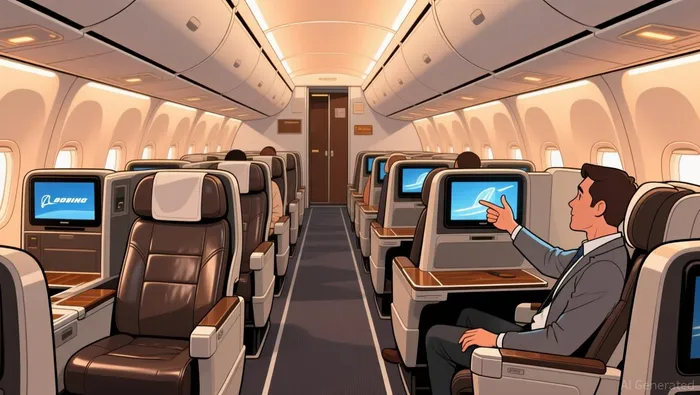 According to industry sources, these upgrades aim to meet the growing demand for mid-tier travel experiences—especially for travelers who seek more comfort than Economy but may not need the full exclusivity of Business or First Class.
The Business Class cabin, now featuring a 1-2-1 layout with direct aisle access for all passengers, also reflects a shift in the airline industry toward maximizing privacy and comfort for . According to aviation analysts, the redesigned layout is designed to cater to business travelers and high-net-worth individuals who prioritize convenience and premium services on international routes.
A Sign of Stronger UAE Economic Momentum
Emirates' upgrades aren't just about luxury—they also reflect the broader economic momentum in the UAE. The country's non-oil economy is on track to grow significantly in 2025, with tourism and passenger traffic in Dubai hitting record levels. With strategic initiatives like 'We the UAE 2031' and 'D33', the UAE is actively working to attract foreign investment and expand non-oil sectors, and aviation plays a central role in this vision.
What This Means for Investors and the Aviation Sector
For investors, these fleet upgrades suggest a few important trends. First, they signal confidence from Emirates in its long-term demand projections, especially on major international routes. Second, the introduction of a new highlights a broader industry shift toward segmentation and value-added services. According to industry experts, this can be an opportunity for companies involved in , seating design, and in-flight entertainment systems.
Additionally, the UAE's continued investment in its aviation sector, supported by strong economic growth, may attract more foreign investors interested in tourism, real estate, and related industries. For instance, increased international passenger traffic could boost ancillary businesses like duty-free retail, hospitality, and airport services. While the aviation sector has faced challenges in recent years, these developments suggest a positive outlook for the region and companies that support it According to travel industry reports.
Looking Ahead: What's Next for Emirates and the UAE
Emirates plans to roll out these retrofitted aircraft in early 2026, . These initial deployments will likely be followed by similar upgrades on other key international routes. Investors and travelers alike should watch for how these changes impact Emirates' market share and customer satisfaction, as well as how the broader UAE tourism strategy unfolds According to industry projections.
The UAE is also preparing for major events and infrastructure projects in the coming years, including expanded airport facilities and increased investment in sustainable aviation. With its growing economy and strategic location, the UAE is well-positioned to remain a key player in global travel and investment. Emirates' latest moves suggest that it's not just keeping up with the times—it's setting the pace for the future of air travel According to aviation analysts.

Delivering real-time insights and analysis on emerging financial trends and market movements.
Latest Articles
Stay ahead of the market.
Get curated U.S. market news, insights and key dates delivered to your inbox.
AInvest
PRO
AInvest
PRO



Comments
No comments yet