
Emirates' Premium Economy Expansion: A Strategic Play with Long-Term Airline Industry Implications


 Aime Summary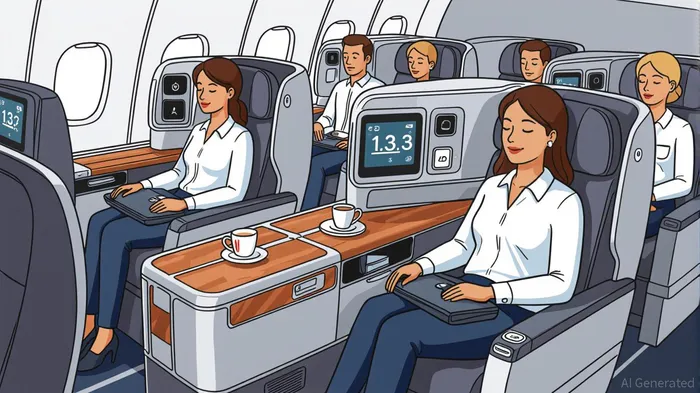
The global airline industry is navigating a post-pandemic landscape defined by shifting consumer preferences, economic uncertainty, and the relentless pursuit of profitability. Amid this backdrop, Emirates has emerged as a trailblazer with its aggressive expansion of Premium Economy offerings—a strategic move that transcends mere product differentiation and signals a recalibration of the entire aviation value chain. By investing $5 billion to retrofit 219 aircraft (110 A380s and 109 B777s) with upgraded cabins, Emirates is not only capitalizing on the "premiumization" trend but also redefining how airlines balance operational efficiency, customer segmentation, and revenue optimization. For investors, this initiative offers a masterclass in aligning innovation with financial resilience.
The Premiumization Imperative
The pandemic accelerated a long-term shift in air travel: passengers are no longer content with the austerity of pre-2020 economy class. Instead, they seek a middle ground between affordability and comfort. Premium Economy, with its wider seats, enhanced legroom, and curated amenities, has become a $12 billion global market, growing at a compound annual rate of 12% since 2020. Emirates' retrofit program—targeting 4 million Premium Economy seats annually by 2026—positions the airline to dominate this segment. By 2025, its Premium Economy cabins will be available on 635 weekly flights to 68 destinations, including high-demand routes like Dubai to New York and London.
This strategy is not just about seating. It's about capturing higher-margin customers. Premium Economy seats generate 1.5–3x the revenue of standard economy seats, with profit margins often exceeding 40%. For context, Emirates' 2024–25 financial results underscore this: $34.9 billion in revenue, $5.8 billion in profit, and a 14.9% profit margin—the highest in the industry. The retrofit program's ROI is evident in these numbers, as the airline's operating cash flow surged to $11.1 billion, driven by premium product sales and ancillary revenue from dining, retail, and loyalty programs.
Operational Differentiation and Customer Segmentation
Emirates' approach to Premium Economy is a textbook example of operational differentiation. While competitors like Singapore Airlines and Korean Air have also expanded premium cabins, Emirates has scaled its offering with unmatched consistency. Its retrofit program ensures uniformity across 219 aircraft, creating a seamless experience for passengers regardless of route or aircraft type. This consistency is critical in an industry where brand loyalty is fragile.
Moreover, the airline is leveraging data-driven customer segmentation. Premium Economy targets travelers who seek comfort but balk at the price of Business Class—often high-income professionals, families, and leisure travelers. By offering 35kg checked baggage allowances, Royal Doulton china, and personalized service, Emirates is monetizing these segments without cannibalizing its Business Class revenue. The result? A 80%+ load factor on long-haul routes, even as fuel costs and labor expenses rise.
Broader Industry Trends and Investor Implications
Emirates' success reflects a broader industry shift toward premiumization. Airlines are increasingly prioritizing high-margin products over volume, a strategy that aligns with the post-pandemic reality of cost-conscious consumers and volatile fuel prices. For example, Singapore Airlines' KrisWorld entertainment system and Qatar Airways' celebrity chef partnerships are part of the same playbook. However, Emirates' scale and financial discipline give it a unique edge.
Investors should scrutinize three key metrics when evaluating the airline sector's resilience:
1. Premium Yield Growth: Airlines with robust premium offerings, like Emirates, are outperforming peers in yield per seat.
2. Ancillary Revenue Contribution: Emirates' ancillary income (e.g., in-flight retail, loyalty programs) now accounts for 15% of total revenue, a figure that rivals the best in the industry.
3. Cost Management: Despite a 4% rise in operating costs in 2024–25, Emirates reduced fuel expenses by 10% through hedging and fleet efficiency, demonstrating operational agility.
The Road Ahead
For investors, Emirates' Premium Economy expansion is more than a short-term play—it's a long-term bet on the future of air travel. The airline's $5 billion retrofit program is a capital-intensive investment, but its payoffs are already materializing. With a 14.9% profit margin and $13.5 billion in cash reserves, Emirates has the financial flexibility to sustain its innovation while navigating macroeconomic headwinds.
However, risks remain. Geopolitical tensions, rising interest rates, and the potential for oversupply in the premium segment could temper growth. Yet, Emirates' focus on sustainability (e.g., "Farm to Fork" initiatives) and digital innovation (AI-driven personalization) positions it to weather these challenges.
Conclusion
Emirates' Premium Economy strategy is a blueprint for the post-pandemic airline industry. By combining operational differentiation, revenue optimization, and customer-centric innovation, the airline is not only capturing market share but also redefining what passengers expect from air travel. For investors, this is a compelling case study in how strategic foresight can transform a cyclical industry into a resilient, high-margin business. As the aviation sector continues its recovery, airlines that fail to adapt to the premiumization trend may find themselves left behind—while those like Emirates will soar.

Delivering real-time insights and analysis on emerging financial trends and market movements.
Latest Articles
Stay ahead of the market.
Get curated U.S. market news, insights and key dates delivered to your inbox.


AInvest
PRO
AInvest
PRO



Comments
No comments yet