
Emerging Trends in STEM Education and Their Impact on Future Tech Workforce Development


 Aime Summary
Trends Reshaping STEM Education
The 2025 landscape of STEM education is marked by a convergence of technological innovation and pedagogical evolution. Artificial intelligence and machine learning are now foundational to personalized learning systems, enabling adaptive curricula that cater to individual student needs. Computational thinking and coding are being introduced at earlier educational stages, ensuring students develop digital literacy as a core skill according to educational research. Meanwhile, the STEAM (STEM + Art) movement is gaining traction, blending creativity with technical rigor to foster innovation in problem-solving.
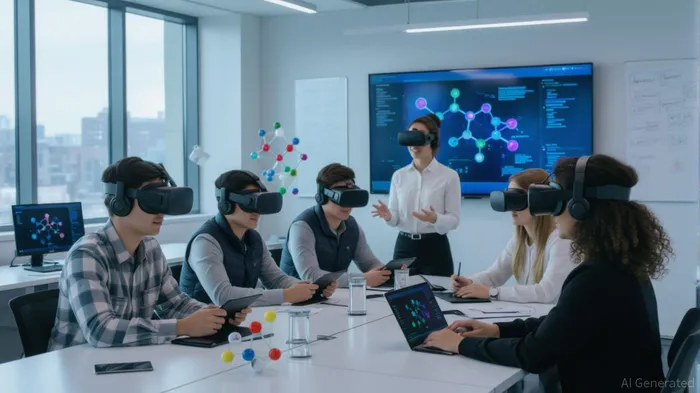
Immersive technologies like virtual and augmented reality (VR/AR) are also expanding, creating interactive environments where complex concepts-such as molecular structures or engineering simulations-become tangible. Project-based and experiential learning models are further prioritized, emphasizing real-world applications to enhance critical thinking and collaboration. These trends are not merely academic; they directly address the evolving demands of industries reliant on advanced technical skills.
Institutional Investment Strategies
To align STEM education with workforce needs, institutions are adopting multifaceted investment strategies. The U.S. Department of Education's Education Innovation and Research (EIR) Program exemplifies this approach, allocating grants to scale evidence-based innovations that improve student outcomes, particularly for underserved populations. Similarly, the National Academies of Sciences, Engineering, and Medicine advocate for "pathways" over rigid "pipelines," promoting inclusive learning environments that reflect diverse career trajectories.
Federal and private funding is also pivotal. The CHIPS and Science Act and Inflation Reduction Act have spurred investments in semiconductor and clean-tech manufacturing, creating regional hubs for STEM job growth in states like Texas and Georgia. Private entities, such as the Gilead Foundation, are contributing $6.5 million to enhance K-12 STEM curricula and university facilities, including San Francisco State University's Science and Engineering Innovation Center. These initiatives underscore a shared commitment to bridging the skills gap and ensuring equitable access to high-quality STEM education.
Case Studies: Measuring Impact
Quantifiable outcomes from institutional investments highlight their efficacy. Northeastern University's co-op program, which integrates 18 months of paid work experience into academic study, reports that 95% of graduates secure employment or graduate school placements within nine months. Similarly, North Carolina State University's Golden LEAF Biomanufacturing Training and Education Center (BTEC) equips students with hands-on training aligned with industry standards, directly addressing workforce shortages in advanced manufacturing.
At the K-12 level, the SCALE K-12 initiative has integrated microelectronics into middle school curricula, demystifying concepts like chip design and digital logic. Students engage in projects such as creating ME-themed "escape room boxes" for industry partners, fostering real-world collaboration. Such programs are critical in regions facing acute labor shortages, such as those exacerbated by the global microchip crisis.
Employment metrics further validate these efforts. STEM occupations are projected to grow by 10.8% by 2032, outpacing non-STEM fields by over fourfold. The median annual wage for STEM roles ($101,650) is double that of non-STEM jobs ($46,680), reflecting both economic incentives and labor demand. However, disparities persist: women and minorities remain underrepresented in STEM, comprising only 26% and 9% of the workforce, respectively. Addressing these gaps requires targeted investments in mentorship and inclusive curricula.
Challenges and the Path Forward
Despite progress, challenges such as funding instability and policy shifts threaten momentum. Rural and under-resourced schools continue to lag in access to advanced STEM courses, exacerbating inequities. Moreover, the rapid pace of technological change demands continuous curriculum updates to remain relevant. For instance, while AI integration is a priority, many institutions struggle to incorporate it effectively into existing frameworks.
To sustain progress, stakeholders must prioritize data-driven strategies. The OECD's 2025 Science, Technology and Innovation Outlook emphasizes broadening STEM participation to ensure equitable benefits from innovation. This includes fostering cross-sector partnerships between governments, universities, and industries to align training with evolving job market needs.
Conclusion
The alignment of STEM education with workforce development is no longer a theoretical aspiration but a strategic imperative. By investing in AI-driven curricula, immersive technologies, and inclusive pathways, institutions are equipping students with the skills to thrive in a tech-centric economy. Case studies from universities and K-12 programs demonstrate that measurable outcomes-such as improved employment rates and industry collaboration-are achievable when investments are strategically aligned with labor market demands. As global competition intensifies, the U.S. and other nations must continue prioritizing STEM education to cultivate a diverse, innovative, and resilient workforce.

Blending traditional trading wisdom with cutting-edge cryptocurrency insights.
Latest Articles
Stay ahead of the market.
Get curated U.S. market news, insights and key dates delivered to your inbox.






Comments
No comments yet