
The Emerging Risks and Opportunities in Municipal Infrastructure Development: Webster, NY's Blueprint for Growth


 Aime Summary
The Opportunity: Grants as Catalysts for Industrial Renaissance
Webster's recent FAST NY grant is a masterclass in infrastructure-driven economic development. This funding is earmarked for road construction, sewer upgrades, and electrical system modernization at the XeroxXRX-- campus, NEAT (New Era of Advanced Technology), and the fairlife production facility. These projects aren't just about pothole repairs-they're about creating "shovel-ready" sites for advanced manufacturing and renewable energy firms according to the report. By 2025, these upgrades will support nearly one million square feet of industrial space, a magnet for companies seeking modern facilities with reliable utilities.
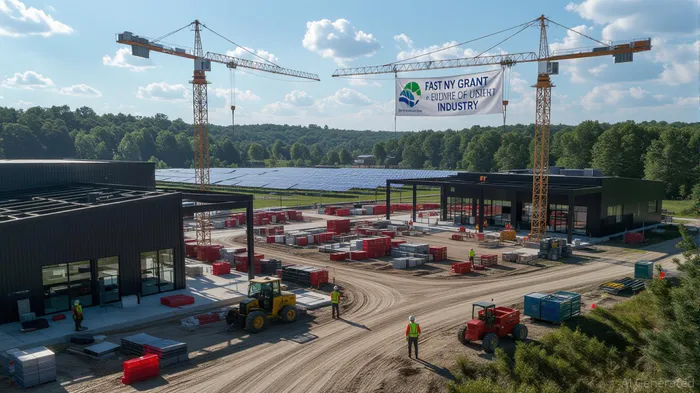
The stakes are high. Residential property values in Webster have already surged 10.1% since 2023, and commercial real estate is primed for a similar leap as industrial demand outpaces supply. For investors, this means two things: first, early-stage capital deployed in infrastructure-linked projects (like the fairlife dairy facility which will create 250 jobs) can yield outsized returns; second, the ripple effects-retail, housing, and services-create a diversified portfolio of opportunities.
The Power of P3s: Shared Risk, Shared Reward
Public-private partnerships are the unsung heroes of Webster's success. The NY Forward Program grant isn't just a check-it's a blueprint for collaboration. By aligning state consultants with local leaders, the town is crafting a Strategic Investment Plan that prioritizes walkability, cultural amenities, and mixed-use zoning. This approach reduces the risk of "white elephant" projects by ensuring infrastructure aligns with market demand.
Consider the Community Access Project, which blends $2 million in state funds with $500,000 in federal support to enhance pedestrian connectivity according to the town's plan. Such projects lower the barrier for small businesses and startups, which in turn attract larger tenants. For investors, P3s like these offer a buffer against project delays or cost overruns-risks are distributed, and accountability is shared.
Mitigating the Risks: Grants as Insurance Policies
No investment is without risk, but Webster's playbook includes smart risk mitigation. The $20 million NYS Environmental Facilities Corporation grant for wastewater treatment isn't just about compliance-it's a shield against environmental liabilities that could derail development. Similarly, the Reimagine Webster Master Plan, funded by a $203,000 grant, ensures that future investments are guided by data-driven priorities, not speculative hype.
The key takeaway? Infrastructure grants aren't just funding-they're insurance policies. By securing state and federal dollars upfront, Webster has insulated itself from the volatility of private capital. For investors, this means fewer "unknown unknowns" and more predictability in returns.
The Case Study: Xerox Campus and fairlife-A $750M Bet on the Future
The Xerox campus transformation is the crown jewel of Webster's strategy. A $9.8 million public grant is repositioning this 300-acre site as a high-tech industrial hub, with the fairlife dairy facility as its anchor tenant. This $650 million private investment-which will create 250 jobs-proves that infrastructure upgrades can attract blue-chip companies.
But the real magic lies in the timing. With production line testing set for late 2025 and full operations by mid-2026, investors have a narrow window to capitalize on pre-construction valuations. The same logic applies to ancillary sectors: logistics firms, renewable energy providers, and even residential developers catering to fairlife's workforce.
Conclusion: The Webster Model-A Template for Investors
Webster's story isn't unique, but it's instructive. By combining aggressive grant-seeking, P3s, and early-stage capital, the town is creating a self-reinforcing cycle of growth. For investors, the lesson is clear: focus on municipalities that treat infrastructure as a lever, not a line item.
The risks? Always present. But in Webster, they're being managed through environmental accountability, community alignment, and fiscal discipline. The opportunities? Massive. From industrial land availability to energy infrastructure upgrades, this is a market where early-stage capital can compound rapidly.
As the fairlife plant nears completion and the Xerox campus hits critical mass, one thing is certain: Webster, NY, isn't just building roads. It's building a blueprint for the next decade of American economic growth.

Blending traditional trading wisdom with cutting-edge cryptocurrency insights.
Latest Articles
Stay ahead of the market.
Get curated U.S. market news, insights and key dates delivered to your inbox.




Comments
No comments yet