
Emerging Opportunities in EdTech and STEM Education Amid Workforce Transformation


 Aime Summary
This gap represents not just a problem but a profound opportunity for investors. Strategic investments in university-level STEM and technical programs are emerging as a cornerstone for addressing this crisis while unlocking long-term economic value. Universities are not merely educational institutions-they are engines of innovation, workforce development, and regional economic growth. By channeling capital into these programs, investors can catalyze a virtuous cycle of talent development, technological advancement, and job creation.
The STEM Employment Gap: A Catalyst for Investment
The urgency of the STEM skills gap is underscored by stark data. By 2025, the U.S. will need to fill approximately 3.5 million STEM jobs, yet the current pipeline of graduates and retrained workers is insufficient to meet this demand. Oregon, for example, anticipates over 445,000 STEM job openings between 2023 and 2033, driven by both growth and the need to replace retiring workers according to projections. Similar trends are evident nationwide, with healthcare, computer science, and advanced manufacturing leading the charge.
This shortage is not merely a numbers game-it's a structural issue rooted in underrepresentation. Women and minorities remain disproportionately excluded from STEM fields, with women comprising just 28% of the U.S. STEM workforce in 2023. Addressing this disparity is not only a moral imperative but an economic one. Diversifying STEM education pipelines can unlock untapped potential, fostering innovation and broadening the talent pool to meet demand.
University STEM Programs: A High-ROI Investment
Investing in university-level STEM programs is a proven strategy for bridging this gap. These programs are uniquely positioned to address workforce readiness, drive innovation, and stimulate regional economies. For instance, the University of Arkansas-Fayetteville College of Engineering demonstrated the transformative power of such investments: doubling its graduate output and research capacity over 15 years could add $3.9 billion to Arkansas' economy, generate 19,000 jobs, and boost GDP by 1.6% by 2038. The return on investment here is staggering, with a GDP per job added of $203,000 and a cost-to-benefit ratio of 2.9 to 1.
Similarly, Ohio's Innovation Districts initiative, which includes partnerships between the University of Cincinnati, the Cleveland Clinic, and Ohio State University, has invested over $3 billion in STEM education and research. This collaboration has produced 60,000 new STEM graduates and spurred significant economic growth. These case studies illustrate a clear pattern: when universities scale their STEM programs, they generate measurable economic returns through job creation, startup activity, and regional development.
The federal government has also recognized the value of these investments. Federally funded university research has generated over 554,000 invention disclosures since 1996 and supported 6.5 million U.S. jobs. Startups born from university research often remain in their local communities, further amplifying their economic impact. For example, Research Triangle Park in North Carolina, a hub of university-driven innovation, contributes $82 billion annually to the economy and supports over 200,000 jobs. 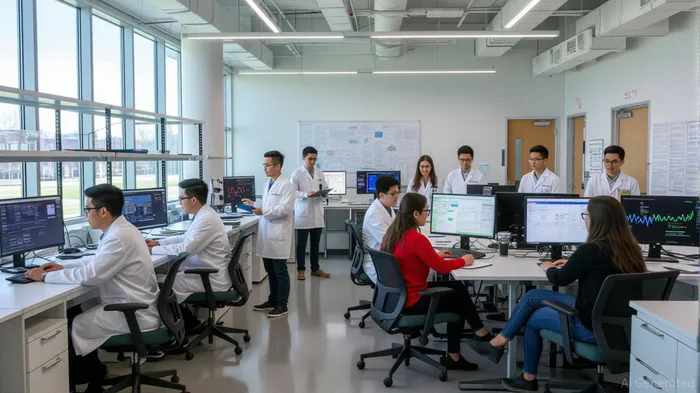
Strategic Investment Opportunities
For investors, the path forward is clear: target university STEM programs that align with high-demand sectors and demonstrate a track record of innovation and workforce development. Key areas to consider include:
1. Artificial Intelligence and Data Science: These fields are central to the digital economy, with software development jobs growing at 17% annually. Universities with strong AI and data science programs, such as MIT or Stanford, are prime candidates for investment.
2. Healthcare and Biotechnology: With 9 million workers in healthcare STEM roles, programs focused on biotechnology, medical devices, and health informatics are poised for growth.
3. Advanced Manufacturing and Robotics: As industries adopt automation, universities with cutting-edge engineering and robotics programs will play a critical role in training the next generation of technicians and engineers.
Moreover, investors should prioritize institutions that integrate workforce development into their curricula. For example, programs that partner with local industries to offer internships, apprenticeships, and certification pathways can accelerate job placement and reduce the skills gap.
The Bigger Picture: Policy and Long-Term Growth
While private investment is crucial, public policy will also shape the future of STEM education. Immigration policies that attract and retain top global talent, as well as funding for STEM scholarships and workforce retraining, will be essential to sustaining growth. As noted in a Brookings Institution report, the U.S. relies heavily on foreign-born talent for its STEM workforce, with 45% of current employees at the doctoral level being immigrants.
Investors must also consider the long-term implications of underinvestment. Without a robust pipeline of STEM graduates, the U.S. risks falling behind in global competition, particularly in emerging technologies like quantum computing and clean energy. By contrast, strategic investments in university STEM programs can position the U.S. as a leader in these fields, driving innovation and economic resilience.
Conclusion
The STEM skills gap is a defining challenge of the 21st century, but it is also a golden opportunity for investors. By channeling capital into university-level STEM programs, investors can address workforce shortages, spur innovation, and generate substantial economic returns. The data is unequivocal: these programs are not just educational initiatives-they are engines of growth, capable of transforming regions and industries alike. For those with the foresight to act now, the rewards will be measured not just in financial returns, but in the strength of the American economy for decades to come.

La combinación de la sabiduría tradicional en el comercio con las perspectivas más actuales relacionadas con las criptomonedas.
Latest Articles
Stay ahead of the market.
Get curated U.S. market news, insights and key dates delivered to your inbox.






Comments
No comments yet