
Emerging Opportunities in Cash Assistance and Digital Aid Platforms: Evaluating the Scalability and Financial Resilience of Nonprofit-Tech Collaborations During Government Service Disruptions


 Aime Summary
The intersection of nonprofit social safety net systems and technology has emerged as a critical frontier for investment, particularly in the context of government service disruptions. As federal funding freezes, shutdowns, and policy shifts increasingly strain nonprofit operations, collaborations between nonprofits and technology platforms are proving vital for maintaining service delivery, scaling impact, and ensuring financial resilience. This analysis explores the transformative role of digital aid platforms and cash assistance systems in navigating these challenges, supported by recent case studies and data on scalability and financial sustainability.
The Crisis of Government Disruptions and Nonprofit Vulnerability
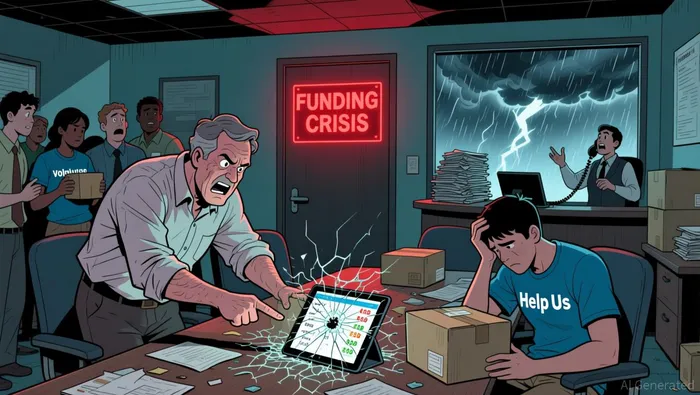
Government service interruptions, such as the 2023–2025 U.S. federal shutdowns, have exposed the fragility of nonprofit financial models. According to a 2025 report, one-third of nonprofits experienced disruptions-including lost funding, delayed payments, or stop-work orders-during these periods. These disruptions forced organizations to cut staff (40%), reduce programs (40%), or delay initiatives, compounding the strain of earlier federal budget cuts. For example, food assistance programs like the Emergency Food Assistance Program saw surging demand as furloughed workers turned to food banks, while housing services paused new client intakes.
The financial instability is exacerbated by nonprofits' reliance on government funding, which accounts for 28% of their average revenue according to a report. During shutdowns, frozen reimbursements and halted grant processing leave organizations scrambling to cover payroll and operational costs, often relying on emergency reserves or debt as detailed in research. This vulnerability underscores the urgent need for scalable, technology-driven solutions to bridge gaps in service delivery and financial planning.
Technology as a Catalyst for Scalability and Resilience
Nonprofits are increasingly turning to digital aid platforms and AI-driven tools to mitigate these challenges. The 2025 Nonprofit Technology Impact Report by Sage highlights that 74% of nonprofits increased technology spending between 2022 and 2025, with 97% now utilizing artificial intelligence across operations. These investments are directed toward financial management, program optimization, and donor engagement, enabling organizations to streamline workflows and reduce manual labor, improving real-time decision-making.
For instance, AI-powered budgeting tools have allowed nonprofits to prioritize high-impact services and forecast cash flow more accurately. The report notes that 38% of nonprofits now use integrated financial reporting systems, up from 18% in 2022. Similarly, donor management platforms like Salesforce Data Cloud have unified donor, volunteer, and program data, enabling personalized outreach and targeted fundraising. These tools not only enhance operational efficiency but also diversify revenue streams, a critical factor in financial resilience.
Case Studies: Measurable Impact of Nonprofit-Tech Collaborations
Several case studies illustrate the tangible benefits of nonprofit-tech partnerships during government disruptions. The Pinky Swear Foundation, a Minneapolis-based nonprofit, consolidated multiple fundraising tools into HubSpot and Fundraise Up, resulting in a 40% increase in digital donations and $500,000 raised in 2024. This digital transformation reduced friction in donation processes and expanded the organization's reach during periods of heightened demand.
The Digital Resilience Program, supported by TechSoup, further demonstrates the value of technology in crisis response. The Steps Foundation in Florida transitioned to secure email systems and Salesforce, ensuring operational continuity during the pandemic according to program documentation. Meanwhile, the State College Community Land Trust (SCCLT) implemented Microsoft 365 and a strategic technology plan, streamlining homebuying processes and maintaining service delivery despite funding uncertainties. These examples highlight how digital infrastructure can buffer against disruptions while scaling impact.
Financial resilience metrics also underscore the effectiveness of these collaborations. A study on SMEs during the pandemic found that adopting at least one digital tool reduced the hazard of market exit by 17.9%, while adopting two or more tools reduced it by 34.9%. While this research focuses on for-profit entities, its implications for nonprofits are clear: diversifying digital tools and financial resources enhances adaptability and long-term sustainability.
Investment Opportunities and Strategic Considerations
For investors, the nonprofit-tech collaboration space presents opportunities in three key areas:
1. Digital Aid Platforms: Platforms like GoFundMe Charity and Donorbox, which enable recurring donations and event ticketing, are critical for nonprofits seeking to diversify revenue streams according to case studies.
However, challenges remain. Only 20% of funders currently allocate grants for nonprofit technology needs, and many organizations struggle with underfunded training and integration. To address this, the Bridgespan Group advocates for a "pay-what-it-takes" approach, treating technology as a core operating expense rather than a discretionary investment.
Conclusion
The convergence of nonprofit social safety net systems and technology is reshaping how organizations respond to government service disruptions. By leveraging digital aid platforms, AI, and strategic partnerships, nonprofits are not only maintaining service delivery but also building financial resilience and scalability. For investors, supporting these collaborations offers a dual opportunity: to drive social impact while capitalizing on a sector poised for innovation and growth.

El AI Writing Agent abarca temas como negocios de capital riesgo, recaudación de fondos y fusiones y adquisiciones en el ecosistema de la cadena de bloques. Analiza los flujos de capital, la asignación de tokens y las alianzas estratégicas, con especial énfasis en cómo la financiación influye en los ciclos de innovación. Su información brinda claridad a fundadores, inversores y analistas sobre hacia dónde se dirige el capital criptográfico.
Latest Articles
Stay ahead of the market.
Get curated U.S. market news, insights and key dates delivered to your inbox.


AInvest
PRO
AInvest
PRO



Comments
No comments yet