
Emerging Markets Rebound and Real Estate in Boomtowns: Strategic Entry into High-Growth Urban Hubs for Long-Term Capital Appreciation


 Aime Summary
The global economic landscape is undergoing a profound shift as emerging markets reclaim their position as engines of growth. With trade diversification strategies reshaping export dynamics and infrastructure investments fueling urban transformation, real estate in high-growth cities is emerging as a compelling asset class for long-term capital appreciation. This analysis explores strategic entry points into three key urban hubs-Bangalore, Ho Chi Minh City, and Dubai-highlighting how infrastructure, demographic trends, and are driving value creation.
Bangalore: The Tech-Driven Real Estate Surge
Bangalore, India's Silicon Valley, remains a magnet for global investors due to its entrenched tech ecosystem and infrastructure upgrades. According to a report by the Brigade Group, the city
accounted for 21% of India's total new residential supply in Q1 2025, with house prices
-the highest growth rate in the country. Despite a temporary inventory overhang of 11 months, demand remains robust, driven by and entrepreneurs seeking premium housing. Micro-markets like Whitefield and Electronic City are particularly attractive,
for 2BHK apartments.
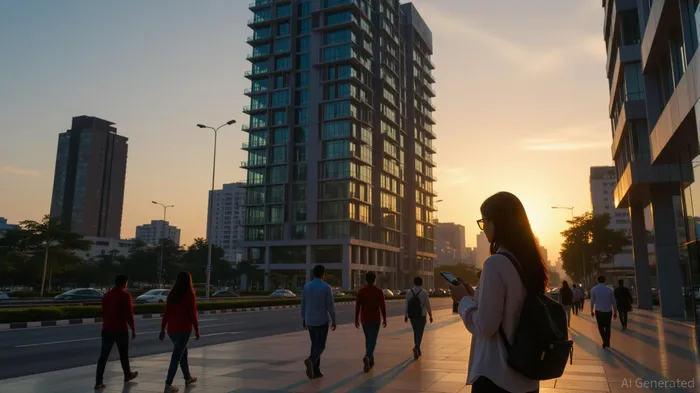 Infrastructure projects, including metro extensions and the Peripheral Ring Road, are amplifying connectivity and unlocking value in peripheral areas. For instance,
Brigade Eternia and Brigade Insignia in Yelahanka exemplify how luxury developments cater to an affluent demographic, ensuring sustained capital appreciation.
Strategic investors are advised to target mid-tier projects in emerging neighborhoods, where pricing flexibility and rental yields remain competitive.
Ho Chi Minh City: Metro-Driven Urban Transformation
Vietnam's economic powerhouse, Ho Chi Minh City,
, . This infrastructure push, backed by , is reshaping the city's real estate landscape. Developers like Vingroup and Gamuda Land are
securing prime land in exchange for transport infrastructure, creating a virtuous cycle of value creation. The project is expected to enhance connectivity, reduce congestion, and drive property values in newly accessible areas.
Domestic demand is also surging, as
evidenced by the recent in Vietnam's financial sector. Between Q4 2025 and Q1 2026, major brokerage firms like Techcom Securities (TCBS) saw oversubscribed IPOs, reflecting investor optimism about market upgrades. While foreign capital has faced temporary sell-offs,
domestic liquidity and infrastructure-driven growth suggest a resilient long-term outlook for real estate in the city.
Dubai: Strategic Location and Diversified Appeal
Though specific real estate data for Dubai is sparse in the provided sources, the city's strategic role as a global trade and tourism hub remains undeniable. The UAE's broader economic diversification-
in Canada's energy sector-highlights its ability to attract cross-border capital. Dubai's real estate market, historically resilient to global volatility, benefits from its status as a tax-free haven and a magnet for expatriate professionals.
Investors should focus on Dubai's ongoing mega-projects, such as the Dubai Creek Harbour and the expansion of the Dubai International Financial Centre (DIFC), which are likely to drive demand for commercial and residential assets. The city's
, which allows in certain free zones, further enhances its appeal for strategic entry.
Strategic Entry Points and Risk Mitigation
The key to capitalizing on these boomtowns lies in aligning investments with infrastructure timelines and demographic shifts. For example, in Bangalore,
early entry into micro-markets like Sarjapur Road offers exposure to pre-development pricing before metro connectivity boosts valuations. In Ho Chi Minh City,
partnerships with local developers who navigate regulatory complexities can mitigate risks associated with land acquisition.
Data-driven tools, such as HashStaking's AI-Powered Regional Staking Opportunity Index, underscore the importance of leveraging technology to identify high-potential regions. While this tool focuses on staking trends, its methodology-analyzing participation patterns and infrastructure growth-can be adapted to real estate investment strategies in emerging markets.
Conclusion
Emerging markets are no longer peripheral to global capital flows; they are central to the next phase of urban and economic growth. Cities like Bangalore, Ho Chi Minh City, and Dubai offer a unique confluence of infrastructure, policy support, and demographic momentum. For investors, the challenge lies in timing entry points to align with development cycles and diversifying across sectors to hedge against regional volatility. As India's trade diversification and Vietnam's metro boom demonstrate, the future of real estate appreciation is inextricably linked to the cities that are redefining the global economy.

Stay ahead of the market.
Get curated U.S. market news, insights and key dates delivered to your inbox.


AInvest
PRO
AInvest
PRO



Comments
No comments yet