
Emerging Markets Overtake Developed Peers Amid Trump Tariff Surge


 Aime Summary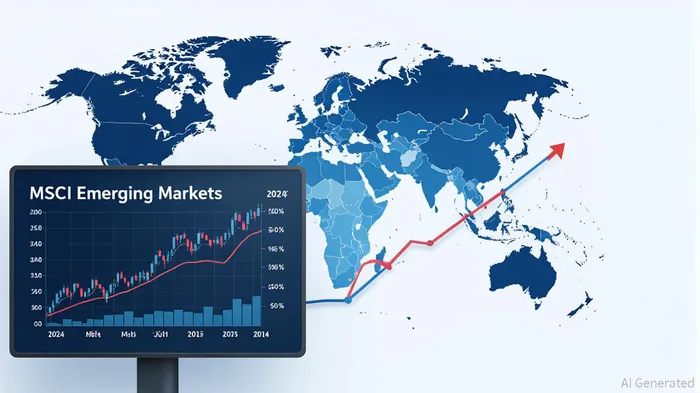
The global investment landscape is undergoing a seismic shift. For the first time since 2018, emerging markets (EMs) have outperformed developed markets in 2023 and 2024, driven by a confluence of factors: a weaker U.S. dollar, surging commodity prices, and the cascading effects of Trump-era trade policies. While the U.S. and other developed economies grapple with inflation and policy uncertainty, EMs are capitalizing on redirected trade flows, currency tailwinds, and structural rebalancing. For investors, this represents a rare opportunity to reallocate portfolios toward high-conviction frontier markets, where the interplay of tariffs, dollar dynamics, and local resilience is creating asymmetric upside.
The Tariff-Driven Reordering of Global Trade
The Trump administration's aggressive tariff regime—averaging over 23% on global imports by April 2025—has upended traditional trade patterns. Initially, these tariffs spurred a partial shift in U.S. manufacturing sourcing from China to countries like Vietnam, Mexico, and Indonesia. However, the benefits were often overstated. Transshipment—where Chinese intermediate goods are routed through EMs to avoid tariffs—has left many “Vietnamese” or “Mexican” exports with a significant Chinese footprint. For example, China's value-added share in Vietnam's exports rose from 2.4% in 2017 to 4.5% in 2024, undermining the perceived decoupling from China.
Meanwhile, China's trade surplus hit a record $1 trillion in 2024, driven by its dominance in manufacturing and exports. This has created a paradox: while U.S. tariffs aim to reduce reliance on China, they have instead accelerated China's export growth to EMs, displacing local industries and creating trade deficits in countries like Mexico and India. The result is a fragmented global supply chain, where EMs are both beneficiaries and casualties of U.S. trade policy.
Currency Tailwinds and the Dollar's Dual Role
The U.S. dollar's strength has been a double-edged sword for EMs. A weaker dollar in 2023 boosted EM equity and bond markets, as foreign investors flocked to higher-yielding assets. However, the dollar's resurgence in 2024—driven by Trump's tariff-driven inflation and the Federal Reserve's hawkish stance—has reintroduced volatility. Frontier market currencies, in particular, are under pressure.
- Vietnam's Dong (VND): The VND has depreciated 5.55% against the dollar since 2023, hit by a 46% reciprocal tariff on U.S. imports. Yet, Vietnam's trade deals with the U.S. (e.g., zero tariffs on certain American goods) and its role as a manufacturing hub offer long-term stability.
- India's Rupee (INR): The INR has faced its worst losing streak in six months, depreciating 2% in August 2025 alone. A 25% tariff on Indian exports and U.S. pressure over Russian oil imports have exacerbated capital outflows. However, India's structural reforms and robust FDI inflows could stabilize the currency if the dollar weakens.
- Nigeria's Naira (NGN) and Egypt's Pound (EGP): Both currencies are vulnerable to oil price swings and fiscal imbalances. The NGN has depreciated amid U.S. tariffs on Nigerian exports and domestic inflation, while the EGP faces pressure from Egypt's reliance on imports and IMF-supported reforms.
Rebalancing for Asymmetric Gains
For investors, the key lies in identifying EMs that can mitigate the negative effects of tariffs and dollar strength while leveraging their competitive advantages. Vietnam, for instance, has shown resilience by negotiating trade concessions with the U.S. and deepening regional supply chains. India's focus on domestic manufacturing (Make in India) and its growing tech sector provide a buffer against export shocks. Nigeria and Egypt, though more vulnerable, offer high-growth potential in energy and agriculture if policy reforms succeed.
The rebalancing opportunity is further amplified by the U.S. dollar's trajectory. If the Fed begins cutting rates in 2025, as expected, the dollar could weaken, lifting EM currencies and asset prices. This scenario favors investors who have positioned early, particularly in EM equities and local-currency bonds.
Risks and the Road Ahead
The path is not without risks. Trump's tariff threats—particularly on pharmaceuticals and semiconductors—could reignite dollar strength and disrupt global trade. Additionally, EMs face domestic challenges: India's inflation, Nigeria's oil dependence, and Egypt's fiscal deficits. Investors must balance these risks with the potential for policy-driven recovery and structural growth.
Conclusion: A New Era of EM Alpha
The widening performance gap between EMs and developed markets is not a temporary anomaly but a structural shift driven by trade policy and currency dynamics. For investors seeking to capitalize on this trend, the answer lies in a strategic rebalancing toward high-conviction frontier markets. Vietnam, India, Nigeria, and Egypt offer a mix of resilience, growth potential, and policy flexibility. While volatility remains, the rewards for those who navigate the landscape with discipline and foresight could be substantial.
In the end, the Trump-era trade war has created a world where EMs are no longer the underdogs—they are the new alpha generators. The question is not whether to invest, but how to position for the next phase of global economic realignment.

Stay ahead of the market.
Get curated U.S. market news, insights and key dates delivered to your inbox.


AInvest
PRO
AInvest
PRO



Comments
No comments yet