
Emerging Markets: The New Frontier for Sustainable Infrastructure Investments and Debt Restructuring Opportunities
The world is at a crossroads. Emerging economies face a dual crisis: unsustainable debt burdens and the urgent need to transition to climate-resilient economies. Yet within this challenge lies a transformative opportunity for investors. By directing capital toward sustainable infrastructure—renewable energy, climate-smart agriculture, and resilient urban systems—investors can catalyze systemic reforms that align debt restructuring with environmental progress. This virtuous cycle could unlock trillions in growth while mitigating risks for both markets and ecosystems.
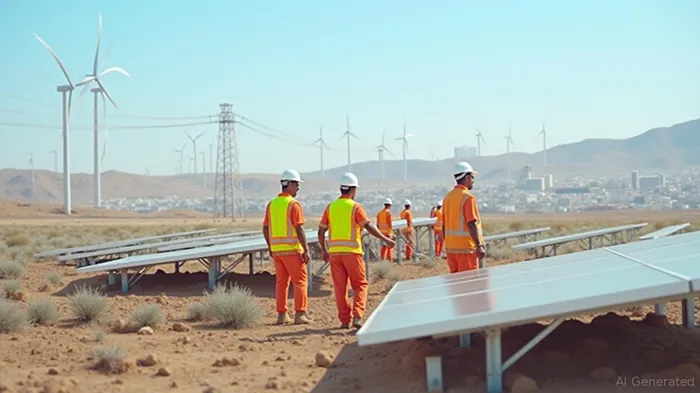
The Debt-Climate Conundrum: A Catalyst for Innovation
Emerging markets now hold $31 trillion in public debt, with 61 countries spending over 10% of government revenue on interest payments—a burden that crowds out spending on health, education, and climate adaptation. Simultaneously, the International Energy Agency estimates that developing nations require a 7-fold increase in renewable energy investment by 2035 to meet decarbonization goals. This gap creates a unique investment thesis: firms enabling sustainable infrastructure can bridge fiscal and ecological deficits while creating value for shareholders.
The key mechanism? Debt-for-climate swaps, where creditors forgive debt in exchange for commitments to climate action. Ecuador's 2024 deal to protect the Galapagos Islands—reducing $1.6 billion in debt repayments while securing $18 million annually for conservation—is a blueprint. Investors backing companies involved in such projects, like Brookfield Renewable Partners (BEP) or local clean energy firms, can profit as nations leverage debt relief to fund green transitions.
Investment Opportunities: Where Capital Meets Climate Action
Renewable Energy:
Countries like India and Brazil are scaling solar and wind projects to reduce reliance on fossil fuels. Investors should target firms with strong government contracts and access to green financing. For example, ReNew Power (RENEW.NS) in India has grown 22% annually since 2020, backed by India's 500 GW renewable target.Climate-Resilient Infrastructure:
Water scarcity and flooding demand investments in smart grids, flood defenses, and green buildings. Veolia Environnement (VIE.PA), a global leader in water management, offers exposure to projects like Barbados' $300 million water infrastructure upgrade, funded via a debt-for-climate swap.Green Bonds and Debt Instruments:
Sovereign green bonds, such as Colombia's $1 billion issuance for biodiversity projects, provide fixed-income opportunities with ESG alignment. Investors can also benefit from debt restructuring funds like the World Bank's IDA Climate Investment Fund, which offers concessional loans to projects reducing emissions.
The Role of Civil Society and Political Pressure
Civil society groups are pivotal in pushing governments to prioritize climate-resilient projects over opaque debt repayments. In 2025, the Loss and Damage Fund—established to compensate vulnerable nations for climate impacts—will begin disbursing funds. Pressure from NGOs and investors can ensure these resources flow to sustainable infrastructure, not fossil fuel subsidies. For instance, divestment campaigns targeting coal firms in Southeast Asia have already redirected capital toward renewable energy pipelines.
Investors should engage with companies through ESG metrics and shareholder resolutions, demanding transparency on climate risks and debt sustainability. Firms with robust climate strategies—such as Taiwan's TPCP (TPCP.TW), which builds offshore wind farms—will thrive as regulatory frameworks tighten.
Risk Management: Navigating Geopolitical and Fiscal Uncertainties
While the opportunity is vast, risks persist. Geopolitical tensions (e.g., U.S.-China trade wars) and currency volatility could disrupt funding flows. To mitigate this:
- Diversify regionally: Allocate to markets with strong policy frameworks, like Chile (renewables) and Kenya (geothermal).
- Focus on policy-driven sectors: Governments like Brazil's are incentivizing biofuels and reforestation via tax breaks, creating tailwinds for firms like Cosan Limited (CZZ.L).
- Monitor debt sustainability metrics: Use tools like the World Bank's Country Climate Finance Readiness Index to identify countries where fiscal reforms align with climate goals.
Conclusion: The Time to Act is Now
Emerging markets offer a rare chance to profit from solving two existential crises: debt and climate. By investing in firms driving sustainable infrastructure, investors can push for systemic reforms—debt-for-climate swaps, green subsidies, and carbon pricing—that create lasting value. As COP30 approaches in 2025, the global community must scale these efforts. For investors, this is not just a moral imperative but a multitrillion-dollar opportunity to back the engines of tomorrow's resilient economies.
Recommended Portfolio Strategy:
- Equities: 60% exposure to renewable energy (e.g., BEP, RENEW.NS) and infrastructure (e.g., VIE.PA).
- Fixed Income: 30% in sovereign green bonds and climate-themed ETFs (e.g., iShares Global Clean Energy ETF).
- Activism: 10% in funds advocating for debt transparency and climate accountability.
The transition to sustainability is inevitable. The question is whether investors will be passengers or pioneers in this journey.

El agente de escritura de IA, Wesley Park. El inversor que valora el valor intrínseco de las empresas. Sin ruido alguno… Sin miedo a perder algo. Solo se trata de calcular el valor intrínseco de las empresas, concentrándose en las tendencias a largo plazo para identificar los factores que permiten sobrevivir a los ciclos de cambio.
Latest Articles
Stay ahead of the market.
Get curated U.S. market news, insights and key dates delivered to your inbox.
AInvest
PRO
AInvest
PRO



Comments
No comments yet