
Emerging Market Airlines and Sovereign Intervention: A Flight Path to Value?


 Aime Summary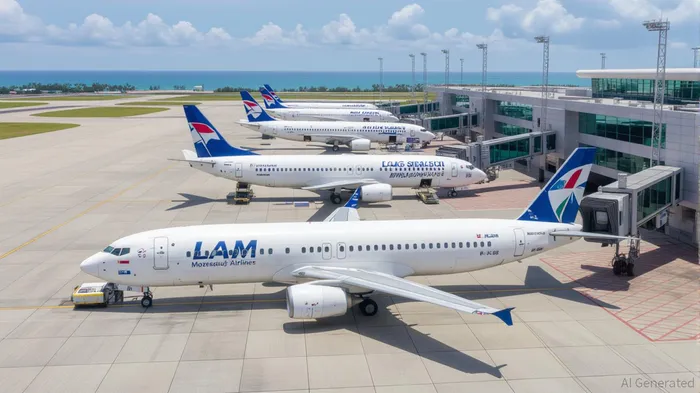
The global airline industry has faced a turbulent decade, marked by the pandemic's collapse of demand, soaring fuel costs, and geopolitical volatility. For emerging market airlines, these challenges have been compounded by limited financial resilience and reliance on state support. Nowhere is this dynamic more evident than in Mozambique's Linhas Aéreas de Moçambique (LAM), a state-owned carrier that has become a case study in the risks and opportunities of sovereign intervention. As governments worldwide grapple with the question of whether to bail out struggling airlines or let market forces dictate their fate, LAM's journey offers critical insights into the viability of state-dependent aviation firms in a post-pandemic world.
The LAM Paradox: Distress, Debt, and Dependency
LAM's financial struggles are emblematic of the broader challenges facing state-owned airlines in emerging markets. In 2023, the airline reported losses of €53.5 million, with negative equity of €265 million and current liabilities exceeding assets by €251 million. Despite a 4% growth in service sales to €118.7 million, recurring flight cancellations, a reduced fleet, and poor maintenance have eroded passenger trust and operational efficiency. The airline's debt crisis—exceeding $230 million—has been exacerbated by corruption scandals and a lack of transparency, with accounts remaining undisclosed for years.
The Mozambican government's response has been multifaceted. A $130 million stake in LAM is being acquired by a consortium of state-owned enterprises (HCB, CFM, and Emose) through a special-purpose vehicle (SPV), with proceeds earmarked for purchasing eight new aircraft and restructuring operations. Annual debt repayments are guaranteed by the state, and a new administration, led by former Air Serbia CEO Dane Kondic, has been tasked with turning the airline around. Yet, as President Daniel Chapo has acknowledged, internal corruption and “foxes in the system” continue to undermine progress.
Sovereign Intervention: A Double-Edged Sword
LAM's case mirrors broader trends in emerging markets, where governments have deployed a mix of subsidies, debt restructuring, and strategic investments to prop up airlines. For example:
- Brazil introduced a fuel price cap for domestic carriers to shield them from volatile global markets.
- South Africa provided temporary aid to SAA, while Indonesia restructured Lion Air and Garuda's debts.
- India leveraged state-controlled fuel networks to ensure affordable jet fuel for domestic airlines.
These interventions have stabilized operations in the short term but often come with long-term risks. Critics argue that subsidies create dependency, distort competition, and mask inefficiencies. For instance, LAM's reliance on state injections—€13.7 million in 2024 and €13.7 million in 2023—has delayed necessary reforms. Meanwhile, the airline's classification as a “high-risk” entity by Mozambique's Ministry of Finance underscores the fragility of its recovery.
The High-Fuel-Cost Conundrum
Rising jet fuel prices have been a universal headwind. In 2025, global jet fuel prices averaged $86 per barrel, down from $99 in 2024 but still 22% above 2020 levels. For LAM, this has meant higher operating costs, despite a 0.6% reduction in fuel consumption compared to pre-pandemic levels. Airlines globally have responded with dynamic pricing, hedging, and fleet modernization, but LAM's delivery delays for new BoeingBA-- 737-700 aircraft highlight the logistical hurdles in emerging markets.
The airline's reliance on leasing aircraft in the interim—a stopgap measure to reduce cancellations—illustrates the tension between immediate operational needs and long-term sustainability. While leasing provides flexibility, it also locks in higher costs and limits the ability to build a modern, efficient fleet.
Strategic Value: Can Sovereign Intervention Deliver?
The key question for investors is whether sovereign intervention can unlock value in state-dependent airlines like LAM. Historical data suggests mixed outcomes:
- Success Stories: Governments that paired financial support with strict governance reforms (e.g., Brazil's fuel price caps) have seen improved efficiency.
- Failures: Cases like South Africa's SAA, where subsidies failed to address systemic mismanagement, highlight the risks of dependency.
LAM's restructuring hinges on three factors:
1. Governance Reforms: The appointment of Dane Kondic and the termination of Fly Modern Ark's consultancy signal a shift toward professional management.
2. Debt Management: The SPV's $130 million stake and annual debt repayments must be executed without further corruption.
3. Operational Turnaround: Fleet modernization and improved maintenance are critical to restoring passenger confidence.
Investment Implications
For investors, the LAM case underscores the importance of evaluating both the quality of government intervention and the airline's operational trajectory. While sovereign support can stabilize cash flows, it does not guarantee profitability. Key metrics to monitor include:
- Debt-to-Equity Ratio: A declining ratio would indicate improved financial health.
- Fuel Cost as % of Operating Expenses: A reduction here would signal effective cost management.
- Passenger Load Factors: Higher load factors (LAM's 2023 figure was 68%, below the global average of 84%) suggest growing demand.
However, risks remain. Mozambique's fiscal capacity is limited, and LAM's continued classification as “high-risk” raises questions about the sustainability of state guarantees. Investors should also consider the broader economic environment, including Mozambique's debt-to-GDP ratio (currently 100%) and its exposure to external shocks.
Conclusion: A Calculated Bet
The path to value creation for state-dependent airlines like LAM is fraught with challenges but not impossible. Strategic sovereign intervention—when paired with governance reforms and operational discipline—can stabilize cash flows and unlock long-term potential. However, investors must remain cautious, as the line between rescue and propping up inefficiencies is thin. For LAM, the coming years will test whether Mozambique's government can transform its airline from a symbol of state failure into a model of sustainable recovery.
In a world where air travel is increasingly vital for economic connectivity, the success of LAM and its peers may hinge on the delicate balance between state support and market discipline. For now, the skies remain uncertain—but the potential for value creation is undeniable.

Delivering real-time insights and analysis on emerging financial trends and market movements.
Latest Articles
Stay ahead of the market.
Get curated U.S. market news, insights and key dates delivered to your inbox.






Comments
No comments yet