
The Emerging Infrastructure-Driven Growth in Webster, NY: A Strategic Opportunity for Real Estate and Development Investors


 Aime Summary
Strategic Infrastructure Investments: A Catalyst for Industrial Revitalization
At the heart of Webster's growth is the $9.8 million FAST NY Grant, awarded to revitalize a 300-acre brownfield site-formerly the Xerox campus-into a modern industrial hub. This grant funds critical infrastructure upgrades, including road realignments, sewer system expansions, and electrical grid modernization. These improvements are not merely cosmetic; they are foundational to creating "shovel-ready" sites that attract advanced manufacturing and logistics firms. For instance, the development of the $650 million fairlife® dairy facility, projected to create 250 new jobs by 2025, underscores the grant's role in catalyzing large-scale industrial investment.
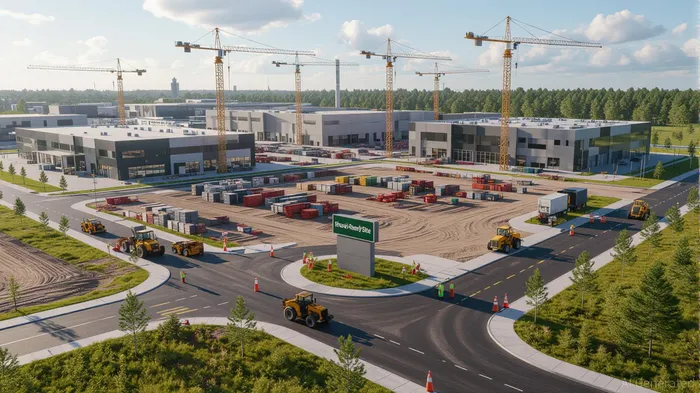
The impact of these upgrades extends beyond immediate job creation. Data from local economic reports indicates a 10.1% rise in residential property values since the project's inception, signaling broader economic spillovers. This trend aligns with Governor Hochul's statewide strategy to leverage infrastructure grants for industrial site readiness, positioning Webster as a model for Upstate New York's economic revitalization.
Municipal Realignments: Enhancing Connectivity and Development Potential
Complementing the infrastructure investments are municipal boundary realignments that enhance connectivity and site accessibility. The transfer of control over industrial roadways such as Orchard Street and Panama Road from Xerox Corporation to public ownership has streamlined access to key development zones. These realignments are part of the Reimagine Webster Master Plan, which designates Brownfield Opportunity Areas to expedite state funding for cleanup and redevelopment.
A notable example is the 600 Ridge Road site, where demolition efforts under the West Webster Hamlet Revitalization Plan are paving the way for mixed-use developments. Environmental assessments for this site are slated to conclude by late 2025, further accelerating its transition into a viable commercial and residential corridor. Such initiatives not only diversify Webster's economic base but also create synergies between industrial and residential markets, enhancing long-term value for investors.
Tax Incentives and ROI: Quantifying the Investment Appeal
Webster's strategic approach is amplified by financial incentives that bolster investor returns. The Industrial and Commercial Abatement Program (ICAP) offers property tax relief for up to 25 years for qualifying developments, while the Excelsior Jobs Tax Credit Program provides direct support for job creation. For example, McAlpin Industries' $23 million expansion in Webster is backed by up to $1 million in state tax credits, with a commitment to generating 52 new jobs.
Return on investment (ROI) metrics further validate the region's potential. Despite a 2.32% employment dip in 2023 due to transitional challenges, median household income rose by 4.31%, reflecting the shift toward higher-paying advanced manufacturing roles. By 2025, the NEAT site's industrial vacancy rate is projected to drop to 2%, driven by the influx of shovel-ready sites and infrastructure-ready corridors. These metrics highlight a resilient economic ecosystem where public investment directly translates to private-sector gains.
Strategic Location: A Logistics and Manufacturing Hub
Webster's proximity to I-390 and the Rochester International Airport amplifies its appeal for logistics and manufacturing firms. The infrastructure upgrades, coupled with the town's designation as a high-tech industrial corridor, position it as a critical node in regional supply chains. Investors benefit from reduced transportation costs and enhanced access to regional markets, further optimizing ROI.
Conclusion: A High-Yield Opportunity for Forward-Looking Investors
Webster, NY, exemplifies how strategic infrastructure grants and municipal realignments can unlock high-yield industrial land development. The combination of shovel-ready sites, tax incentives, and a robust ROI profile creates a compelling case for investors seeking exposure to Upstate New York's revitalization. As the town continues to modernize its infrastructure and expand its industrial footprint, Webster stands poised to deliver sustained economic growth and value appreciation for stakeholders.

Blending traditional trading wisdom with cutting-edge cryptocurrency insights.
Latest Articles
Stay ahead of the market.
Get curated U.S. market news, insights and key dates delivered to your inbox.


AInvest
PRO
AInvest
PRO



Comments
No comments yet