
The Emergence of Webster, NY as a Strategic Industrial Hub: A Look at Real Estate and Economic Development Catalysts


 Aime Summary
State Grants: Fueling Infrastructure and Industrial Capacity
New York State's targeted funding has been pivotal in unlocking Webster's potential. The WebsterWBS-- Economic Development Alliance (WEDA) secured a $9.8 million grant under the FAST NY program to revitalize the Xerox Wilson Campus and surrounding areas. This funding has enabled critical upgrades to roadways, sanitary sewer systems, and electrical infrastructure, directly enhancing the site's appeal for industrial tenants. Complementing this, the Village of Webster leveraged a $4.5 million NY Forward Community Revitalization grant to modernize its downtown business district, emphasizing sustainability and walkability-features that indirectly support industrial growth by improving quality of life and workforce retention.
These grants are part of broader state initiatives like the $283 million FAST NY and $300 million POWER UP programs, which have collectively reduced industrial vacancy rates in Webster to a mere 2%. The results are tangible: a $650 million investment by fairlife, a Coca-Cola subsidiary, to build a production facility that will create 250 jobs, and McAlpin Industries' expansion into the redeveloped Xerox brownfield. Such projects underscore how state funding catalyzes private-sector confidence, creating a virtuous cycle of reinvestment.
Corporate Land Repurposing: From Brownfields to High-Tech Hubs
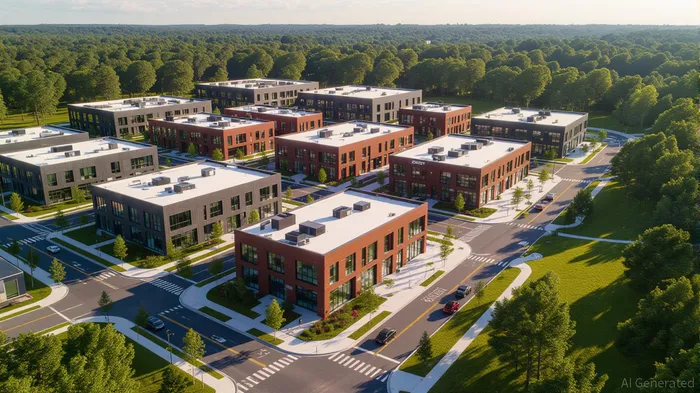
Webster's industrial renaissance is equally rooted in the creative reuse of corporate assets. The 300-acre Xerox brownfield, once a symbol of post-industrial decay, has been reimagined as a high-tech industrial hub. Supported by state grants and private partnerships, the site now hosts cutting-edge facilities for food processing, semiconductor manufacturing, and logistics. This transformation is emblematic of a larger trend: corporations like Xerox are divesting underutilized land, while municipalities and developers repurpose these assets to meet evolving market demands.
Another notable example is the Community Access Project, an 88-acre EPA-designated brownfield being redeveloped into a mixed-use campus with 500+ mixed-income housing units and 200,000 square feet of commercial space. This project, part of the Reimagine Webster Initiative, prioritizes connectivity through new trails and street lighting, bridging Phillips Village with the Webster Recreation Center. By integrating residential and commercial development, Webster is fostering a live-work ecosystem that enhances its attractiveness to both employees and employers.
Real Estate Market Dynamics: Absorption Rates and Future Projections
While specific absorption rates for Webster's industrial real estate remain unquantified, the town's market fundamentals are robust. Infrastructure upgrades have spurred a surge in demand, with vacancy rates hovering near record lows. The Northeast Area for Technology (NEAT) site, set to deliver nearly one million square feet of industrial space by 2026, exemplifies the pipeline of development driving this momentum. Strategic proximity to I-390 and the Rochester International Airport further amplifies the area's logistics appeal, making it a prime location for manufacturers seeking regional distribution hubs.
Residential real estate trends also reinforce the town's economic vitality. Home prices in Webster have appreciated by 10.1% annually since 2020, reflecting the broader economic benefits of industrial expansion. This residential growth not only stabilizes the local tax base but also creates a sustainable labor pool for industrial employers, reducing turnover costs and enhancing long-term productivity.
Long-Term Investment Potential
Webster's trajectory aligns with Governor Hochul's vision to decentralize manufacturing and strengthen regional supply chains. For investors, the town offers a rare combination of state-supported infrastructure, repurposed corporate assets, and a low-vacancy industrial market. The synergy between public grants and private-sector action-evidenced by projects like the Xerox brownfield redevelopment and fairlife's production facility-creates a resilient framework for sustained growth.
Moreover, Webster's strategic location within upstate New York positions it to benefit from broader demographic and economic shifts. As companies seek to diversify supply chains and reduce reliance on coastal hubs, Webster's accessibility, skilled workforce, and cost advantages will likely drive further investment. With ongoing infrastructure improvements and planned revaluations in 2027, the town is poised to maintain its momentum well into the next decade.
Conclusion
Webster, NY, stands as a testament to the power of strategic public-private partnerships in reshaping industrial landscapes. By leveraging state grants, repurposing underutilized corporate land, and fostering a dynamic real estate market, the town has created a blueprint for post-industrial renewal. For long-term investors, the convergence of these factors presents a unique opportunity to capitalize on a market where infrastructure, economics, and innovation are in lockstep. As Webster continues to evolve, it offers a compelling case for those seeking to anchor their portfolios in the next frontier of upstate New York's industrial renaissance.

Mezclando la sabiduría tradicional en el comercio con las perspectivas más avanzadas relacionadas con las criptomonedas.
Latest Articles
Stay ahead of the market.
Get curated U.S. market news, insights and key dates delivered to your inbox.
AInvest
PRO
AInvest
PRO



Comments
No comments yet