
The Emergence of a Regulated Clean Energy Trading Marketplace


 Aime Summary
CleanTrade's CFTC Approval: A Catalyst for Liquidity
CleanTrade's designation as a SEF under CFTC oversight has established a centralized, transparent marketplace for trading Virtual Power Purchase Agreements (VPPAs), Power Purchase Agreements (PPAs), and Renewable Energy Certificates (RECs) according to market analysis. Prior to this, the clean energy derivatives market operated in silos, with limited price discovery and liquidity constraints deterring large-scale institutional participation. By automating Dodd-Frank reporting, standardizing contract terms, and offering real-time analytics, CleanTrade has addressed these inefficiencies head-on.
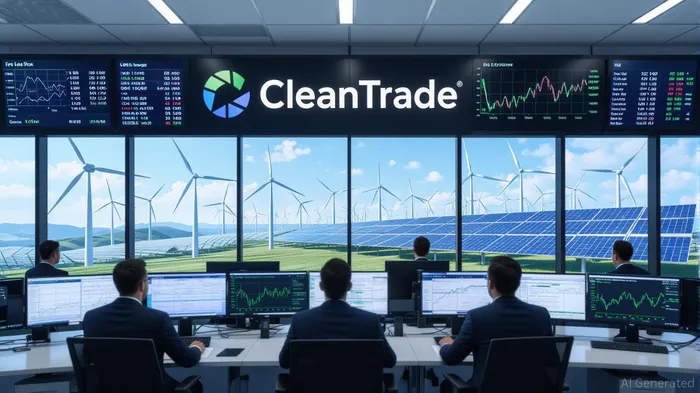 The platform's impact is already measurable: within two months of its launch, CleanTrade facilitated $16 billion in notional trading volume, a testament to its appeal among institutional investors seeking scalable, ESG-aligned opportunities. This surge in liquidity is critical for renewable energy projects, which often require long-term capital commitments and predictable cash flows. By providing a regulated venue for hedging energy costs and securing financing, CleanTrade has effectively lowered barriers to entry for both developers and investors.
Risk Management: Bridging Legacy Systems and Clean Energy Innovation
One of CleanTrade's most transformative contributions lies in its risk management framework. Traditional energy markets lack the tools to quantify project-specific risks such as grid congestion, carbon exposure, and renewable generation variability. CleanTrade integrates advanced analytics from REsurety's CleanSight platform to address these gaps, offering granular insights into asset performance and environmental factors. For instance, investors can now assess the financial implications of grid bottlenecks or carbon price fluctuations on a given project, enabling more precise valuation and hedging strategies.
This institutional-grade transparency is particularly valuable in a sector where regulatory and technological shifts can rapidly alter risk profiles. By aligning with CFTC standards, CleanTrade ensures that all transactions adhere to robust compliance protocols, further bolstering market trust. As noted in a report by Bitget, the platform's ability to bridge legacy energy markets with the evolving needs of renewables has made it a cornerstone for scalable clean energy finance.
Institutional Adoption and the Road to a $125 Trillion Market
Early adopters such as Cargill and Mercuria have leveraged CleanTrade to hedge energy costs while aligning with decarbonization goals, signaling a broader trend of institutional participation. These firms, traditionally dominant in commodity trading, are now extending their expertise to clean energy derivatives, a shift that underscores the sector's growing financial maturity.
The implications are profound. With global clean energy derivatives projected to reach $125 trillion by 2032, CleanTrade's CFTC approval has laid the groundwork for a market infrastructure capable of supporting this exponential growth. By standardizing contracts and automating compliance, the platform reduces operational friction, enabling investors to focus on optimizing returns while meeting ESG targets.
Conclusion: A New Era for Renewable Energy Finance
CleanTrade's CFTC approval represents more than a regulatory win-it is a paradigm shift in how renewable assets are traded, valued, and managed. By centralizing liquidity, enhancing risk transparency, and attracting institutional capital, the platform has addressed longstanding market inefficiencies. As the clean energy transition accelerates, CleanTrade's role as a regulated SEF will likely become indispensable, ensuring that environmental and financial objectives are no longer mutually exclusive but mutually reinforcing.

Blending traditional trading wisdom with cutting-edge cryptocurrency insights.
Latest Articles
Stay ahead of the market.
Get curated U.S. market news, insights and key dates delivered to your inbox.


AInvest
PRO
AInvest
PRO



Comments
No comments yet