
The Emergence of a Regulated Clean Energy Trading Marketplace


 Aime Summary
A Regulatory Milestone: CleanTrade and Market Transparency
CleanTrade's CFTC approval marks a pivotal moment. By designating it as a SEF, the platform operates under the same regulatory rigor as traditional energy markets, enabling standardized trading of Virtual Power Purchase Agreements (VPPAs), physical PPAs, and Renewable Energy Certificates (RECs). This structure introduces transparency and liquidity, historically lacking in clean energy markets. For instance, CleanTrade's end-to-end workflow-from bid sourcing to compliance reporting-reduces counterparty risk and accelerates deal execution. As REsurety CEO Lee Taylor notes, this milestone "delivers the transparency and liquidity needed to scale the clean energy transition" according to company statements.
The platform's impact is already measurable. In just two months post-approval, CleanTrade reached $16 billion in notional value, a testament to its appeal for managing price volatility in VPPAs and optimizing returns for institutional investors. This rapid adoption underscores a growing demand for tools that align financial and environmental objectives, particularly as corporations face stricter ESG reporting requirements.
Corporate Demand and Operational Efficiency
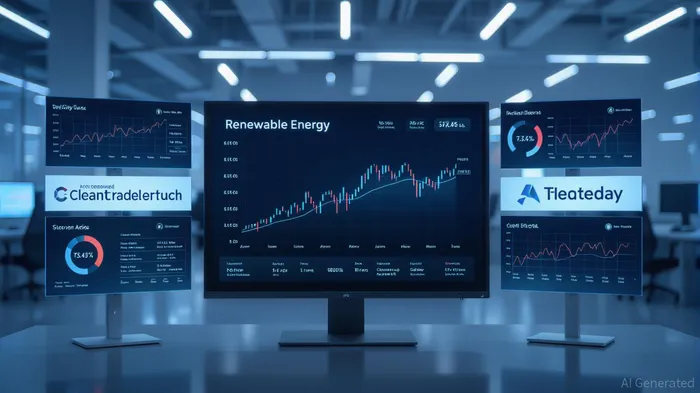 Corporate sustainability teams and clean energy developers are increasingly relying on CleanTrade to streamline operations. Akamai Technologies uses REsurety's LMEs data to refine its avoided emissions calculations. Similarly, Broad Reach Power leverages LMEs to identify high-impact project locations. These use cases highlight CleanTrade's role in bridging the gap between environmental accountability and actionable data. For institutional investors, the platform's real-time liquidity and analytics mitigate risks tied to resource variability and regulatory shifts. Marathon Capital, an investment bank, employs CleanTrade to advise clients on renewable procurement, delivering "best-in-class outcomes" for buyers according to a Trellis report. Such applications demonstrate how CleanTrade transforms abstract sustainability goals into quantifiable ROI, a critical factor for ESG-focused portfolios.
Strategic Investment in Energy Transition Infrastructure
The energy transition's next phase hinges on infrastructure that supports scalable, liquid markets. CleanTrade's success aligns with broader trends: grid modernization, critical mineral supply chains, and decarbonization of heavy industries. By centralizing transactions and reducing operational friction, the platform lowers barriers to entry for new market participants, from startups to Fortune 500 firms.
Investors should consider CleanTrade's alignment with two key themes:
1. Liquidity as a Catalyst: Traditional energy markets thrive on liquidity; CleanTrade replicates this model for renewables, enabling dynamic price discovery and risk management.
2. Regulatory Resilience: CFTC oversight ensures CleanTrade adapts to evolving policy landscapes, a critical advantage as governments worldwide tighten emissions regulations according to WRI insights.
Conclusion: A New Era for Clean Energy Markets
The energy transition is no longer a distant aspiration but a $4.86 trillion opportunity by 2033 according to Grand View Research. CleanTrade's emergence as a regulated, transparent marketplace positions it at the intersection of this growth. For investors, the platform represents more than a technological innovation-it is a foundational infrastructure play, addressing liquidity gaps while accelerating decarbonization. As corporate demand for clean energy intensifies, CleanTrade's role in enabling efficient, auditable transactions will only grow in strategic importance.

Blending traditional trading wisdom with cutting-edge cryptocurrency insights.
Latest Articles
Stay ahead of the market.
Get curated U.S. market news, insights and key dates delivered to your inbox.




Comments
No comments yet