
The Emergence of a Regulated Clean Energy Market: REsurety's CleanTrade and the Future of Green Finance
 Aime Summary
A Regulatory Breakthrough with Market Implications
CleanTrade's approval by the Commodity Futures Trading Commission (CFTC) as a Swap Execution Facility (SEF) represents a four-year regulatory odyssey that culminated in a 986-page application process. This rigorous scrutiny ensured the platform met institutional-grade standards for transparency, compliance, and market integrity. The result is a centralized hub for trading VPPAs, physical power purchase agreements (PPAs), and project-specific RECs, with end-to-end workflows that automate document generation, Dodd-Frank reporting, and real-time analytics.
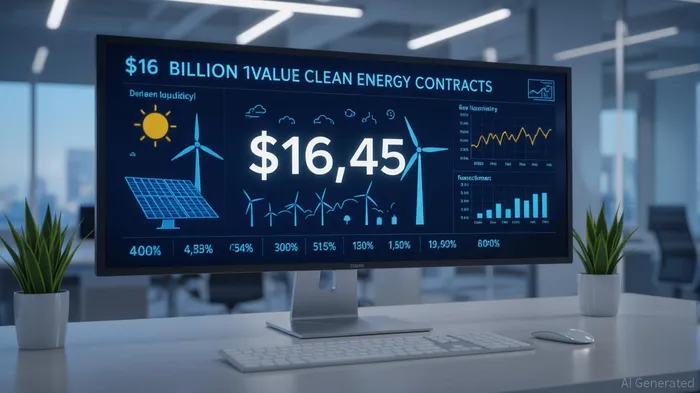
The platform's rapid adoption underscores its market relevance. Within two months of its launch, CleanTrade attracted a $16 billion notional value, a figure that highlights the pent-up demand for structured clean energy investments. This liquidity is critical for scaling renewable projects, as it reduces transaction costs and mitigates counterparty risks that have historically deterred institutional participation. For example, advanced analytics on carbon risk and grid congestion-features embedded in CleanTrade-enable precise risk modeling, accelerating project financing and asset valuation.
Transforming VPPAs into Tradable Commodities
One of CleanTrade's most transformative contributions is its ability to convert VPPAs into standardized, tradable assets. Traditionally, VPPAs have been complex, long-term contracts between renewable energy generators and off-takers, often requiring bespoke negotiations and opaque pricing. CleanTrade's regulated framework introduces real-time pricing discovery and standardized contract templates, effectively transforming these agreements into securities-like instruments.
This shift has profound implications for institutional investors. Pension funds, sovereign wealth funds, and ESG-focused portfolios-historically cautious about green energy due to its perceived illiquidity-can now deploy capital with confidence. According to REsurety's report, the platform's infrastructure reduces transaction times from months to days, while its CFTC oversight ensures compliance with federal regulations, a critical factor for fiduciaries managing fiduciary duties. Furthermore, by bridging traditional energy markets with renewables, CleanTrade aligns with the global push for decarbonization, enabling corporations and utilities to meet net-zero targets through cost-effective, scalable solutions.
The Infrastructure Revolution in Clean Energy
The broader clean energy infrastructure market is projected to exceed $1.8 trillion by 2033, driven by policy tailwinds and technological advancements. CleanTrade's role in this growth cannot be overstated. By addressing historical challenges such as greenwashing and fragmented negotiations, the platform is establishing a benchmark for market integrity. For instance, its centralized trading environment provides real-time visibility into project performance and carbon attributes, ensuring that investments are both environmentally and financially sound.
This infrastructure revolution also extends to risk management. CleanTrade's analytics tools allow investors to hedge against grid congestion and carbon price volatility, factors that have traditionally complicated renewable asset valuation. As noted by industry analysts, these capabilities are attracting a new class of participants, including hedge funds and energy transition-oriented private equity firms, which are now treating clean energy as a core asset class rather than a peripheral ESG play.
Conclusion: A New Frontier for Sustainable Investing
REsurety's CleanTrade is more than a technological innovation-it is a regulatory and financial infrastructure milestone that redefines the clean energy market. By unlocking liquidity, standardizing contracts, and attracting institutional capital, the platform is accelerating the transition from fragmented green finance to a robust, transparent ecosystem. For investors, this means unprecedented access to a sector poised for exponential growth. As the clean energy transition gains momentum, CleanTrade's role in shaping this future will likely be as foundational as the stock exchanges that underpin traditional markets.

Blending traditional trading wisdom with cutting-edge cryptocurrency insights.
Latest Articles
Stay ahead of the market.
Get curated U.S. market news, insights and key dates delivered to your inbox.


AInvest
PRO
AInvest
PRO



Comments
No comments yet