
The Emergence of a Liquid Clean Energy Marketplace and Its Impact on ESG-Driven Investing


 Aime Summary
CleanTrade's CFTC Approval: A Regulatory Catalyst
The CFTC's designation of CleanTrade as a SEF establishes a standardized framework for trading Virtual Power Purchase Agreements (VPPAs), physical Power Purchase Agreements (PPAs), and Renewable Energy Certificates (RECs). Prior to this approval, the lack of a centralized platform for these instruments created opacity and counterparty risk, deterring large-scale institutional investors. By rescinding its 2021 advisory-a move that had previously cast doubt on the enforceability of such contracts-the CFTC has effectively removed regulatory roadblocks, enabling market participants to engage with confidence.
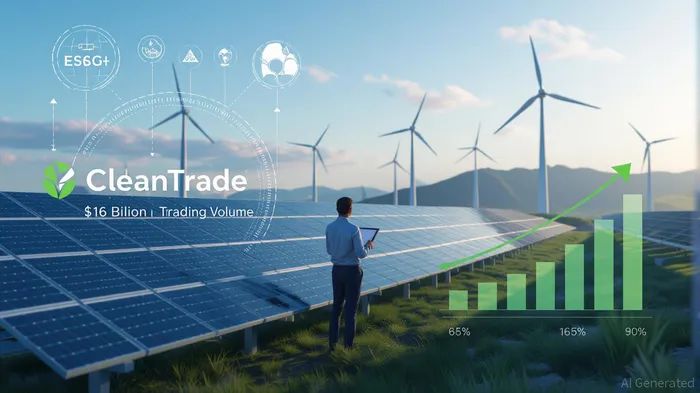
This development has already spurred rapid adoption. Within two months of its CFTC approval, CleanTrade reported $16 billion in notional trading volume, a testament to its appeal among institutional investors seeking ESG-aligned opportunities with verifiable carbon reduction metrics. The platform's integration of advanced analytics and compliance tools further enhances transparency, allowing investors to track project-specific emissions reductions and manage risk effectively.
Institutional Capital Inflows: Mechanisms and Implications
CleanTrade's SEF status facilitates institutional investment by addressing three critical pain points: liquidity, diversification, and risk mitigation.
- Liquidity and Market Efficiency: By centralizing the trading of renewable energy derivatives, CleanTrade reduces transaction costs and improves price discovery. This liquidity is particularly valuable for institutions seeking to hedge against energy price volatility, a growing concern in a decarbonizing economy.
- Diversification and Portfolio Resilience: The platform enables investors to allocate capital across a diversified basket of renewable assets, from solar and wind projects to carbon offset programs. This diversification aligns with ESG mandates while reducing exposure to fossil fuel-dependent markets.
- Counterparty Risk Reduction: CleanTrade's SEF structure ensures that trades are cleared through regulated counterparties, minimizing the risk of default. This is a significant improvement over bilateral agreements, which often require extensive due diligence and collateral a concern for institutional investors.
Major market players, including Cargill and Mercuria, have already joined the platform, signaling a broader industry shift toward structured, transparent markets for clean energy. Their participation not only validates CleanTrade's model but also amplifies its capacity to attract capital from pension funds, endowments, and other institutional actors prioritizing long-term sustainability goals.
Broader Impact on ESG-Driven Investing
The emergence of a liquid clean energy marketplace through CleanTrade has far-reaching implications for ESG investing. First, it provides investors with verifiable metrics to track carbon reduction outcomes, addressing a longstanding criticism of ESG strategies-namely, the lack of standardized reporting. Second, the platform's scalability allows for the rapid deployment of capital to renewable projects, accelerating the transition to a low-carbon economy. Third, by reducing the cost of entry for institutional investors, CleanTrade democratizes access to clean energy markets, fostering competition and innovation.
Critically, this regulatory clarity and market infrastructure align with global decarbonization targets. As governments and corporations commit to net-zero goals, the ability to trade renewable energy assets with the same rigor as traditional commodities becomes a strategic imperative. CleanTrade's CFTC approval, therefore, is not merely a regulatory win but a foundational step in building a financial ecosystem that supports both environmental stewardship and investor returns.
Conclusion
CleanTrade's CFTC approval represents a watershed moment for the clean energy sector. By transforming fragmented, opaque markets into a standardized, liquid platform, it has created a bridge between institutional capital and renewable energy assets. This development not only addresses the limitations of existing ESG investment vehicles but also sets a precedent for future regulatory frameworks in sustainability-linked finance. As the world grapples with the dual challenges of climate change and energy security, CleanTrade's model offers a scalable, transparent, and financially viable pathway forward.

Mezclando la sabiduría tradicional en el comercio con las perspectivas más avanzadas sobre las criptomonedas.
Latest Articles
Stay ahead of the market.
Get curated U.S. market news, insights and key dates delivered to your inbox.
AInvest
PRO
AInvest
PRO



Comments
No comments yet